How to Get a Boiler License in 2026
Learn how to obtain a boiler license in 2026 with Boiler Hub. This comprehensive guide covers requirements, steps, timelines, and best practices for homeowners and facility managers.


To get a boiler license, you must satisfy your local licensing authority’s requirements, which typically include training, an application, and an exam or assessment. Start by identifying your jurisdiction’s licensing body, gather proof of training and ID, submit the application, and schedule any required inspections. Processing times vary by region, so begin early with Boiler Hub guidance.
What a boiler license covers and why it matters
A boiler license is a formal credential that demonstrates you meet local safety, installation, and operation standards. It typically authorizes qualified individuals to install, service, inspect, and operate boilers in commercial and certain residential settings. Licensing helps prevent gas leaks, carbon monoxide exposure, and boiler explosions, protecting occupants and property. According to Boiler Hub, most jurisdictions link licensure to verified training, documented experience, and successful assessments. Even when licensure is not strictly required for every job, many facilities hire licensed technicians to meet insurance and safety obligations. In practice, a license also signals competence to regulators, insurers, and building managers, making compliance easier during audits.
Who typically needs licensure
Licensing requirements generally apply to technicians performing installation, service, or inspection of boilers, especially when work affects safety-critical systems. Property managers, facility engineers, and HVAC contractors are common applicants. Homeowners who operate or oversee gas-fired boilers in multi-unit buildings may also encounter licensing requirements, depending on local rules. The Boiler Hub team emphasizes that the goal of licensure is consistent safety and quality across all boiler work, not to create unnecessary barriers. Always verify your role against your local authority’s definitions.
Jurisdictional differences you should know
Licensing frameworks vary by country, state, or province. Some places require a formal license for any boiler work, while others differentiate by boiler size, pressure, or use (residential vs. commercial). Many jurisdictions align licensure with national codes and safety standards, but they implement distinct exams, renewal cycles, and continuing education rules. Because rules change, start with the official licensing body in your area and cross-check with national or regional code organizations. Boiler Hub’s observations show that while processes differ, the core elements—training, testing, documentation, and inspections—are common across regions.
Common licensure requirements you’ll encounter
Most programs ask for a combination of formal training, practical experience, and a clean background check. Expect to provide proof of identity, employer or property-owner authorization, and records of any relevant coursework or certifications. Some jurisdictions require a written exam, a practical assessment, or both. Insurance or liability coverage details may also be requested, particularly for contractors or facility operators. Fees vary widely by location, and some areas mandate renewal fees every few years to maintain active licensure.
The step-by-step path to licensure
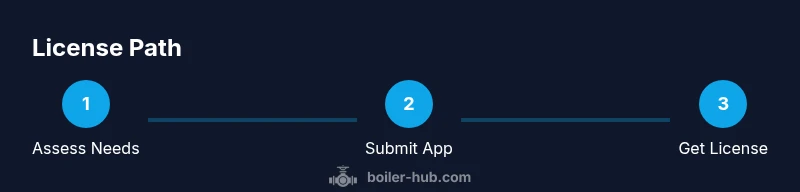
A typical licensure path includes: (1) choosing the correct licensing category for your duties, (2) completing approved training or apprenticeship, (3) compiling and submitting the license application with supporting documents, (4) passing required exams or practical assessments, (5) arranging and passing any site inspections, and (6) receiving the license and setting renewal reminders. Each step builds a verifiable record of competencies. Maintain copies of all submissions and confirmations to prevent delays.
Documentation you’ll need
Gather the following before you apply: government-issued photo ID, proof of address, evidence of completed training or apprenticeship, letters of employment or property-owner authorization, training certificates, and any relevant insurance documentation. Some jurisdictions may require a notarized statement of experience or a network of supervisor sign-offs. Having digital copies plus paper originals helps speed processing. Create a simple folder system to track submissions and received receipts.
Exams, assessments, and study strategies
Licensing exams typically assess safety knowledge, code compliance, and practical problem solving. Practical assessments may involve demonstrating boiler startup/shutdown procedures, leak checks, and safety testing. Prepare with practice exams, review code sections, and work through scenario-based questions. If your jurisdiction uses a practical exam, practice in a controlled environment with an experienced supervisor to refine your technique before the test day.
Costs, timing, and planning
Licensing costs include application fees, training expenses, examination or assessment fees, and renewal charges. Timelines depend on how quickly you complete prerequisites, submit documentation, and schedule exams and inspections. Processing times vary by region, with some applicants waiting several weeks to months for approval. Plan a realistic calendar and build in contingency time for document verification or additional training if needed.
Renewal and ongoing compliance
Most boiler licenses require periodic renewal, continuing education, or re-certification after a set interval. Keep track of renewal dates, required CEU credits, and any changes in safety rules or codes. Failing to renew or to stay current can lead to suspension or invalidation of your license. Proactive compliance reduces downtime and ensures you stay ready for emergency inspections.
Authority resources and where to start
For official guidance, check your local licensing authority’s website and national safety/code bodies. You’ll typically find application forms, acceptable training programs, and testing schedules in these portals. The Boiler Hub guidance aligns with widely accepted safety standards and emphasizes consulting verified sources. See also the following resources for further reading and official steps.
Tools & Materials
- Official license application form(Obtain from your local licensing authority; some jurisdictions offer online submission.)
- Proof of training or certification(Include certificates from approved programs or apprenticeships.)
- Government-issued photo ID(Provide a clear, valid ID (driver’s license, passport, etc.).)
- Employer or property-owner authorization(A signed letter or contract confirming your role and access.)
- Background check consent (if required)(Some jurisdictions require a background check; check local rules.)
- Fees payment method(Be prepared to pay application, exam, and renewal fees.)
- Insurance or liability documents (if required)(Some areas require proof of coverage for contractors.)
Steps
Estimated time: 6-12 weeks
- 1
Assess your licensing needs
Identify the correct license type for your duties and verify whether your jurisdiction requires licensure for residential versus commercial boiler work. This initial assessment saves time by targeting the right program and requirements.
Tip: Start by visiting the official licensing portal to confirm category and eligibility. - 2
Gather required documents
Collect all required identification, proof of training, authorization letters, and any prior work records. Organize digital scans and paper copies to avoid last-minute scrambling.
Tip: Create a single folder with labeled subfolders for documents. - 3
Complete approved training
Enroll in an accredited training program or apprenticeship that aligns with local licensing standards. Ensure the curriculum covers safety, codes, and hands-on boiler experience.
Tip: Choose programs that offer practice exams or mock inspections. - 4
Submit the license application
Submit the filled application along with all supporting documents. Double-check for missing items to prevent processing delays.
Tip: Request a receipt and track your submission status online. - 5
Pass exams or practical assessments
Prepare for written tests and any required hands-on assessments. Review code references, safety protocols, and common failure scenarios.
Tip: Allocate study time with a schedule that mirrors the exam format. - 6
Schedule inspections (if required)
Arrange any required site visits or equipment inspections. Be ready to demonstrate proper safety measures and correct boiler operation.
Tip: Have access to a representative or supervisor during the inspection. - 7
Receive license and set renewal reminders
Once approved, keep your license in an accessible place and record renewal dates. Set reminders for continuing education or re-certification as required.
Tip: Create a digital calendar with automatic reminders six weeks before expiry.
Questions & Answers
Do I need a boiler license in my area to operate or service boilers?
Licensing requirements depend on your jurisdiction. Many places require licensure for boiler installation, service, or operation, especially in commercial settings. Check with your local authority to confirm what applies to residential work in your building.
Licensing depends on where you live; many areas require it for boiler work, especially commercially. Check your local authority to confirm.
How long does it take to obtain a boiler license?
Processing times vary by jurisdiction and your readiness. It can take several weeks to a few months from application to approval, depending on training completion, documentation, and exam availability.
Processing times vary by region; it can take weeks to months depending on exams and document verification.
What training is typically required for licensure?
Most jurisdictions require approved training or apprenticeship that covers safety, codes, and practical boiler work. Some programs pair classroom lessons with hands-on experience under supervision.
Usually you need approved training or an apprenticeship covering safety, codes, and hands-on work.
Are exams or practical assessments part of the process?
Yes. Many areas require both a written exam and a practical assessment to demonstrate competence in boiler operation and safety practices.
Often there are both written tests and practical assessments.
What if I’m new to boilers? Can I still get licensed?
You can pursue licensure by completing the required training and accumulating qualifying experience. Start with foundational courses and seek mentorship from licensed professionals in your area.
Yes, start with basic training and gain supervised experience before applying.
What happens if I fail an exam?
Retake policies vary by jurisdiction, but most require a waiting period and additional study before reattempting. Review weak areas and seek guidance from approved instructors.
You can retake, usually after a waiting period and some study.
Watch Video
Key Points
- Identify the correct license category for your role
- Gather all documents before applying
- Complete approved training and pass required assessments
- Submit correctly to minimize delays
- Track renewal dates to stay compliant