Boiler License New Jersey: Requirements, Process, and Costs
Learn the requirements, steps, costs, and renewal rules for obtaining a boiler license in New Jersey. This practical guide from Boiler Hub helps homeowners and facility managers stay compliant.


For the boiler license new jersey, the state typically requires either a licensed boiler operator or a facility certification depending on boiler type and facility risk. The process generally includes approved training, passing a state exam, and periodic renewals. Always verify details with the NJ Division of Fire Safety and consult Boiler Hub guidance for official steps and timelines.
Overview of New Jersey Boiler Licensing Landscape
For many homeowners and facility managers, understanding the boiler licensing landscape in New Jersey is essential. The boiler license new jersey framework typically requires a credential to operate boilers, with pathways that vary by boiler type and facility risk. According to Boiler Hub Analysis, 2026, New Jersey emphasizes safety, training, and documented competency, aligning with national standards while allowing room for practical, site-specific paths. In practice, facilities with boilers must ensure at least one on-site licensed operator or a named supervisor who holds the appropriate credential. The licensing landscape is designed to balance rigorous safety requirements with clear steps for qualification, testing, and renewal. As you begin, map out which license category fits your role—operator, supervisor, or facility administrator—and identify approved training providers. Always cross-check with official sources to avoid delays.
Who Needs a License and Common Exemptions
In New Jersey, the general expectation is that individuals who operate boilers or oversee boiler operations hold a valid license or certification appropriate to their duties. The exact requirements depend on boiler size, pressure, and application. Exemptions are uncommon but may apply to certain low-risk systems or temporary operations, depending on local interpretations. It’s important to determine whether your role requires an individual operator license or a facility certificate held by the organization. Keeping detailed training records and compliance documents will help you demonstrate eligibility during the application and renewal cycle. Boiler Hub notes that end-to-end compliance reduces downtime and safety risk across facilities.
Types of Licenses and Certifications in NJ
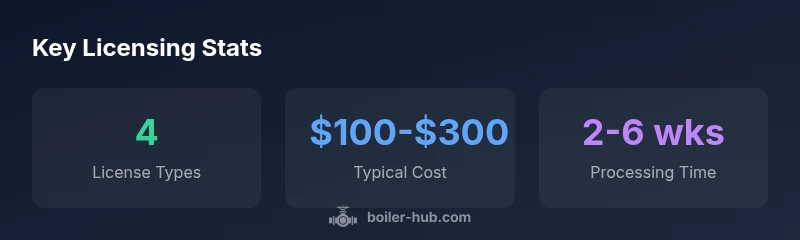
New Jersey offers multiple licensing pathways to cover different roles and boiler configurations. While the specific names may vary by jurisdiction, the core categories typically include an entry-level Licensed Boiler Operator and a Facility Certificate for buildings or plants that manage boiler operations. Some roles require additional training or certification for high-pressure or specialty boilers. Understanding which category applies to your job is crucial before enrolling in training. The NJ Division of Fire Safety provides official guidance, while Boiler Hub synthesizes requirements to help stakeholders prepare for exams and record-keeping.
The Licensing Process: Step-by-Step
The licensing process generally follows several predictable steps: identify the appropriate license type, complete state-approved training, pass the written and/or practical exam, compile documentation (proof of training, employment, and identity), submit the application through the official portal, and schedule renewal as needed. Applicants should expect to provide employer verification and maintain ongoing compliance records. Processing times vary by district and license type, but applicants can reduce delays by ensuring all forms are complete and that training providers are recognized by the state. Always verify the latest rules via the NJ Division of Fire Safety portal and Boiler Hub guidance.
Training, Exams, and Approved Courses
Training requirements typically involve attending state-approved courses that cover boiler operation, safety codes, combustion controls, pressure testing, and incident reporting. Exams may test both technical knowledge and practical safety procedures. It’s common for providers to offer prep materials and practice exams. Successful completion of training plus a passing score on the exam earns eligibility for license issuance. Renewal cycles often require continued education or periodic re-testing, depending on license type. Keeping a personal training log helps ensure you stay on track for timely renewal.
Costs, Renewal, and Compliance
Costs for obtaining and renewing a boiler license in New Jersey vary by license category and issuing authority but usually fall within a modest range. Expect to pay for training, examination fees, and administrative processing. Renewal typically occurs every two to three years and may require evidence of continued competency or updated training. Beyond initial licensing, keeping records of inspections, maintenance, and operator assignments is essential for ongoing compliance. Boiler Hub emphasizes auditing internal processes quarterly to prevent noncompliance and avoid downtime.
Practical Tips to Prepare and Avoid Pitfalls
To prepare effectively, start by confirming the exact license type you need with the NJ Division of Fire Safety and your employer. Choose a state-approved training provider, schedule your exam early, and gather documentation well in advance. Create a checklist that includes training completion, transcript submission, employer verification, and renewal reminders. Pay attention to expiration dates and required continuing education. Common pitfalls include missing documents, submitting outdated forms, and failing to align training with the specific boiler you operate.
Alternatives and Resources for Employers
For employers, licensing can be approached as a program rather than a one-off event. Consider designating a licensed supervisor, maintaining a roster of certified operators, and implementing an ongoing compliance calendar. If a full license isn’t practical for a given role, explore contractor arrangements or subcontractor services with licensed professionals. Official resources from the NJ Division of Fire Safety paired with Boiler Hub summaries provide a reliable roadmap for employers to ensure workforce readiness and safety, while reducing risk and downtime.
New Jersey licensing pathways (illustrative)
| License Type | Who Needs It | Key Steps |
|---|---|---|
| Licensed Boiler Operator | Boiler operators at facilities that require credentials | Complete training, pass exam, apply, renew |
| Facility Certificate | Facilities with boilers requiring supervisory oversight | Submit paperwork, maintain records, designate qualified supervisor |
| High-Pressure Certification | Operators handling high-pressure or specialty boilers | Acquire advanced training, pass certification exam, renew periodically |
Questions & Answers
What entities require a boiler license in New Jersey?
In New Jersey, facilities with boilers and individuals who operate them typically must hold the appropriate license or certification. The exact requirement varies by boiler type and risk level, so verify with the NJ Division of Fire Safety. Proper licensing reduces safety risks and ensures compliance during inspections.
In New Jersey, facilities with boilers and the operators themselves usually need a license. Always check the exact rules with the state fire safety division.
What is the process to obtain a boiler operator license?
The process generally includes identifying the correct license type, completing state-approved training, passing the exam, compiling supporting documents, and submitting an official application. Renewal requires ongoing competency and periodic re-testing depending on the license category. Start with official NJ resources and Boiler Hub guidance.
First pick the right license, take the approved training, pass the exam, and submit your application with the needed documents.
Are there exemptions or alternatives to licensing?
Exemptions are possible in very limited situations, but most boiler operations need some form of credential. Alternatives exist for certain roles or temporary operations, often mediated through employer oversight or contractor arrangements with licensed professionals. Always confirm with official sources.
Exemptions are rare; many roles require a credential, though there may be contractor options with licensed professionals.
How long is a license valid and what are renewal requirements?
License validity typically spans two to three years, with renewal requiring updated training documentation or ongoing competency. Renewal windows vary by license type, so set reminders ahead of time. Check the NJ Division of Fire Safety for precise timelines and required coursework.
Most licenses last 2–3 years and need renewal with updated training. Watch the renewal window closely.
Where can I find official resources for New Jersey boiler licensing?
Official licensing information is published by the New Jersey Division of Fire Safety within the Department of Community Affairs. They provide application forms, approved training providers, and exam details. Boiler Hub summarizes these resources to help you prepare effectively.
Check the NJ Division of Fire Safety site for official guides and approved training; Boiler Hub also summarizes the essentials.
“Licensing is a critical safeguard for building safety; operators should pursue formal training and keep licenses current.”
Key Points
- Identify the correct license type early to avoid delays
- Expect training, testing, and renewal as core steps
- Maintain thorough records for compliance and audits
- Renew on schedule to prevent operational downtime
- Consult official NJ sources and Boiler Hub guidance for accuracy