High Pressure Boiler License: How to Get Licensed
A practical, step-by-step overview for obtaining a high pressure boiler license. Learn prerequisites, study options, exam formats, renewal rules, and essential safety obligations for homeowners and facilities.


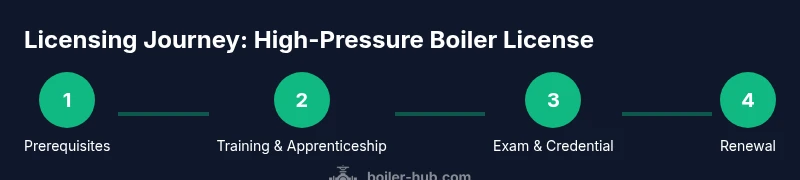
According to Boiler Hub, obtaining a high pressure boiler license requires meeting local prerequisites, completing approved training, passing a licensing exam, and fulfilling renewal requirements. This quick guide outlines typical steps, expected costs, and ongoing safety obligations for homeowners and facility managers.
What is a high-pressure boiler license?
A high-pressure boiler license is a credential that authorizes the operation, maintenance, and servicing of boilers that operate above specific pressure thresholds, typically defined by your jurisdiction. The license demonstrates that the operator understands safe startup and shutdown procedures, proper valve and safety-relief operations, and routine maintenance requirements. Licensing programs generally assess knowledge of relevant codes (such as national or local boiler and pressure vessel standards), safety procedures, and the ability to respond to emergencies. While requirements vary by state or province, most programs share common elements: formal training, practical experience, a government or board-approved exam, and ongoing renewal to maintain competence. For homeowners and facility managers, understanding this framework helps you plan training timelines, communicate with your boiler team, and ensure legal compliance when operating steam or hot-water systems. Boiler Hub emphasizes that while processes differ, the core goals remain safety, compliance, and professional accountability.
Why licensing matters for safety and compliance
Operating a high-pressure boiler without an appropriate license creates safety risks for workers and occupants and exposes building owners to penalties and liability. Licenses help ensure operators know how to start and shut down boilers safely, manage high-pressure systems, and respond correctly to emergencies such as overpressure, flame failure, or fuel leaks. Regulators, insurers, and inspection agencies rely on licensed personnel to maintain code compliance, proper recordkeeping, and routine inspections. Boiler Hub analysis indicates a trend toward standardized continuing education requirements across many jurisdictions, reflecting the evolving safety landscape. For facility managers, a license is not only a legal requirement but also a practical assurance that your team can manage boilers with appropriate supervision and documentation. Emphasize to staff that licensing supports reliability, reduces downtime, and protects occupants from dangerous failures.
Typical prerequisites by jurisdiction
Prerequisites differ, but most programs require a minimum age, legal eligibility to work, and a clean background check. Additional common requirements include completion of an approved boiler operator training course or apprenticeship, time on the job under supervision, and endorsement from an employer or licensed supervisor. Some jurisdictions require proof of medical fitness or safety training, such as hazard communication or respiratory protection. Expect to supply official transcripts or certificates, a government-issued ID, and application fees. Because boiler licensing is highly regulated, always verify the exact list of documents with your local licensing board or an accredited training provider. The goal is to establish that you have the foundational knowledge and the practical exposure needed to operate high-pressure equipment safely.
Training pathways and study options
Most candidates choose a blend of formal coursework, on-the-job experience, and self-study. Common paths include: accredited community college programs in industrial maintenance or boiler operation; employer-sponsored apprenticeships aligned with national or regional codes; and short, concentrated courses focused on boiler room safety, operations, and emergency response. For self-directed learners, reputable prep materials, practice exams, and code references (NFPA, ASME, or local equivalents) are valuable supplements. If your jurisdiction accepts multiple pathways, select the option that aligns with your current role and schedule. Remember to document completed training as you assemble your license application; missing certificates can stall the process.
The licensing exam: formats and preparation tips
Exam formats vary but typically include multiple-choice questions and, in some jurisdictions, a practical evaluation or oral confirmation of knowledge. Core topics usually cover boiler fundamentals, control systems, safety devices, fuel handling, shut-down procedures, and applicable codes or standards. The right prep plan combines review of official syllabi, structured practice tests, and hands-on review of a working boiler room. Create a study calendar, use a codebook or authorized references, and time yourself during practice to simulate exam conditions. On exam day, bring valid photo ID and any required authorization letters; double-check the permission to use reference materials if allowed.
Application steps and required documents
Begin by identifying your licensing authority and obtaining the official application packet. Gather required documents such as proof of identity, training certificates, employer verification, and any background check documents. Complete all forms accurately, attach evidence of experience, and pay the applicable fees. Some jurisdictions require a mentor or supervisor endorsement to validate on-the-job experience. Track submission receipts and anticipated exam dates, and be prepared for possible timelines dependent on background checks or backlog at the board. After approval, you will receive instructions to schedule the licensing examination.
Renewal, continuing education, and compliance
Licensing is generally not a one-time event; most jurisdictions require renewal every few years and ongoing continuing education to maintain eligibility. Plan to complete specified CEUs or refresher courses, at least one safety update per cycle, and timely license renewal to avoid lapses. Maintain up-to-date records, including training certificates, workplace approvals, and any changes to your supervising authority. Staying current helps protect your facility, supports insurance compliance, and reduces risk of penalties during inspections.
Safety responsibilities and common pitfalls
Licensed operators bear responsibility for safe boiler operation, routine maintenance, and timely reporting of faults or failures. Practice good lockout/tagout, verify gauges, observe pressure limits, and inspect safety valves regularly. Common pitfalls include underestimating the time required for training, neglecting renewals, and assuming experience alone substitutes for formal licensing. Keep an established log of inspections, repairs, and certification dates, and ensure your team is aligned with the same safety culture. A proactive approach reduces downtime and promotes a safe workplace.
Authority Sources
For further reading, consult these authoritative resources:
- OSHA: https://www.osha.gov
- National Board of Boiler and Pressure Vessel Inspectors: https://www.nationalboard.org
- ASME: https://www.asme.org
These sources provide regulatory context, safety standards, and professional guidance related to high-pressure boiler licensing and operation.
Tools & Materials
- Official licensing application form(Complete per jurisdiction; attach required documents)
- Proof of identity (government-issued ID)(Passport or driver’s license)
- Certificate of completion of approved boiler operator training(From an accredited program or apprenticeship)
- Employer sponsorship letter or verification(Some jurisdictions require validation of on-the-job experience)
- Code books or official references (NFPA/ASME)(Helpful for study and open-book sections)
- Personal protective equipment (PPE) for on-site work(Optional for on-site assessments or lab components)
Steps
Estimated time: 4-16 weeks depending on jurisdiction, training pace, and scheduling availability
- 1
Identify licensing requirements
Begin by locating your local licensing board and reviewing the official prerequisites. Document the exact forms, fees, and eligibility criteria. This sets realistic expectations and helps you build a compliant plan.
Tip: Bookmark the board’s page and subscribe to updates to catch changes in policy. - 2
Gather required documents
Collect proof of identity, training certifications, employer verification, and any background-check paperwork. Ensure documents are current and legible to prevent delays in processing.
Tip: Create a checklist and file documents in a dedicated licensing folder. - 3
Complete training or apprenticeship
Enroll in an approved boiler operation program or participate in an employer-sponsored apprenticeship. Track completed modules and practical hours for your application.
Tip: Ask about endorsements or supervisor sign-offs that may accelerate approval. - 4
Gain supervised work experience
Work under a licensed supervisor to gain the required hands-on exposure with high-pressure systems. Keep a detailed log of tasks performed and maintenance activities.
Tip: Aim for a minimum milestone—such as 6–12 months of supervised tasks—to strengthen your file. - 5
Submit application and fees
Fill out forms accurately, attach all documents, and pay the required fees. Confirm submission methods (online vs. in-person) and obtain a receipt.
Tip: Double-check for missing certificates or signatures before submission. - 6
Schedule and pass the licensing exam
Once approved, schedule the written and/or practical exam as directed by the board. Prepare with official syllabi and practice exams; ensure you know allowed reference materials.
Tip: Arrive early with ID and any required permits; plan for potential retakes if needed.
Questions & Answers
What is a high pressure boiler license?
A license authorizes safe operation of high-pressure boilers. Requirements vary by jurisdiction but typically include training, hands-on experience, an exam, and renewal.
A license lets you operate high-pressure boilers; you usually need training, hands-on time, an exam, and renewals.
Who needs a high pressure boiler license?
Operators who work with boilers above defined pressure thresholds or in regulated facilities usually require a license, regardless of title. Check your local licensing board for specifics.
Operators working with high-pressure boilers usually need a license; rules vary by location.
Do licensing requirements vary by jurisdiction?
Yes. Each state or province sets its own prerequisites, exam formats, and renewal cycles. Some regions share common codes, but always verify locally.
Rules change by location—always check with your local board.
Is prior work experience enough to qualify for the exam?
Experience helps, but most programs require formal training and a supervised period before you can sit the exam. Verification from a supervisor is often necessary.
Experience helps, but you typically need formal training and supervised time.
How often must I renew my license?
Renewal frequency varies by jurisdiction, commonly every 2–5 years, with ongoing continuing education required for each cycle.
Renewal happens every few years with continuing education.
What safety topics should I study for the license?
Study boiler fundamentals, safety devices, shutdown procedures, code standards (local or national), and incident response practices.
Focus on safety devices, procedures, and relevant codes.
Watch Video
Key Points
- Know your jurisdiction's exact licensing path
- Complete required training before applying
- Keep meticulous records of experience and documents
- Plan renewals early to avoid lapses
- Use official study materials and practice exams