How to Get a Boiler Operator License: Step-by-Step
A jurisdiction-aware, step-by-step guide to obtaining and maintaining your boiler operator license, including training options, exams, and renewal requirements for safe, compliant boiler operation.


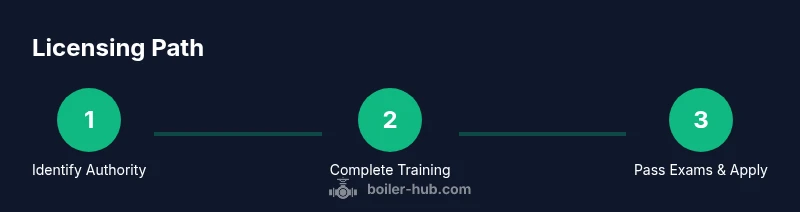
To legally operate boilers, you must obtain a boiler operator license. The exact path varies by jurisdiction, but most programs combine formal training, supervised work hours, and a competency exam. Expect to meet age and eligibility requirements, complete approved coursework, document hands-on experience, and pass both written and practical assessments to earn the license.
What is a boiler operator license and why you might need it
A boiler operator license is a regulatory credential that certifies you can safely start, monitor, and shut down boiler systems. It’s designed to protect workers and building occupants from hazards such as pressure failures, fuel leaks, and dangerous combustion byproducts. In many workplaces, operating a boiler without a valid license can lead to serious penalties, insurance issues, and job loss. According to Boiler Hub, licensing standards combine practical on-the-job competency with formal training and an exam to verify core safety knowledge. Boiled down, the license is a formal acknowledgement that you understand boiler operations, safety protocols, and emergency procedures, including lockout-tagout practices and CO monitoring. The Boiler Hub Team emphasizes that staying current with regulations reduces risk and protects both staff and property.
How licensing varies by jurisdiction and where to start
Licensing regimes differ across countries, states or provinces, and even municipalities. In general, you’ll want to first identify the regulatory body responsible for boiler safety where you work—this could be a state labor department, a safety regulator, or a technical trade board. Start by visiting the agency’s website to locate: (1) the exact license type you need (operator, journeyman, or high/low-pressure categories), (2) minimum entry requirements, and (3) approved training providers. Some regions offer a two-track path—an operator license with a more advanced operator-in-charge track—so confirm the scope of your duties before applying.
Key takeaways on jurisdictional differences
- Most regions require formal training aligned with the license level.
- On-the-job experience is typically mandatory and documented.
- Exams or competency assessments are standard; some regions include a practical inspection.
- Renewal or continuing education is usually required to keep the license active.
Types of licensing models you might encounter
Various terms may be used, including operator licenses, certificates of competency, or permits to operate. Some areas distinguish high-pressure vs. low-pressure boilers; others focus on the type of fuel and burner system. Regardless of the name, expect a structured path: complete training, document hours, pass exams, and maintain updated safety knowledge. In some jurisdictions, apprenticeships or employer sponsorship can help bridge the gap between training and licensure. The goal is a validated demonstration of safe operation, proper fuel handling, water chemistry awareness, and emergency response actions.
Tools & Materials
- Government-issued photo ID(Passport or driver’s license to prove identity and eligibility)
- Proof of eligibility(Birth certificate or immigration documents if required by your region)
- Educational certificates and transcripts(High school diploma or equivalent; any technical training certificates)
- Employer letter of intent or job offer(Evidence of on-the-job training or supervised work hours)
- Training enrollment confirmations(Proof of enrollment in approved boiler operation courses)
- Background check consent form(Some jurisdictions require a clean background check for safety roles)
- Practice materials and study guides(Exam prep books, online courses, and sample questions)
- Notebook, calculator, and safety PPE(For study and on-site training, include basic PPE like gloves and goggles)
Steps
Estimated time: Several months to a year
- 1
Identify licensing authority and license type
Determine which agency governs boiler licensing in your area and confirm the exact license category you need (operator, journeyman, etc.). This defines your training, exams, and renewal requirements.
Tip: Start with the official regulator’s site and note application timelines, fees, and required documents. - 2
Check prerequisites and gather documents
Collect identity proofs, educational records, employer letters, and any prerequisite coursework completion proofs. Missing documents are a common delay.
Tip: Create a document checklist and keep scanned copies organized in a dedicated folder. - 3
Enroll in approved boiler operation training
Register for courses that align with the license level you seek. Ensure the provider is recognized by the licensing authority.
Tip: Prefer in-person or hybrid programs with hands-on boiler training for practical competency. - 4
Complete required on-the-job training hours
Fulfill supervisor-approved work hours that demonstrate real-world boiler operation and safety procedures.
Tip: Keep a detailed log of shifts, tasks performed, and any supervisory feedback. - 5
Document your experience and coursework
As you complete training and work hours, compile certificates, supervisor attestations, and progress reports.
Tip: Request attestations early to avoid last-minute paperwork bottlenecks. - 6
Prepare for the licensing exam
Study the regulator’s exam blueprint, practice with sample questions, and review safety codes relevant to your boiler type.
Tip: Schedule regular, focused study blocks and use practice exams to identify weak areas. - 7
Submit the exam application and fees
Complete and file the application form with all supporting documents; submit payment for exam and processing.
Tip: Double-check that all forms are complete to prevent processing delays. - 8
Pass the exam and receive conditional licensure
Achieve the required score on the written and, if applicable, practical components. Some regions issue a temporary license pending full processing.
Tip: If you don’t pass on the first attempt, review the exam feedback and re-apply promptly. - 9
Activate and maintain your license
Your license becomes active after approval; stay compliant with renewals and continuing education as required.
Tip: Maintain a renewal calendar and set reminders for CE deadlines.
Questions & Answers
Who needs a boiler operator license?
If your job involves operating a boiler, you likely need a license. Requirements vary by jurisdiction, so check your local regulator's criteria and the specific license category that applies to your duties.
If you operate boilers as part of your job, you probably need a license. Check your local regulator for the exact category and requirements.
Is a license the same as a certification?
A license is typically a legal authorization to operate boilers, issued by a government regulator. A certification often verifies competency through a specific program or organization but may not grant legal permission by itself.
A license is a legal authorization from the regulator, while a certification shows competency from a program or organization.
Can I study while employed?
Yes. Many programs allow concurrent study and employment. You’ll need to meet training and exam prerequisites, which can be completed while on the job.
Absolutely, you can study while working; coordinate with your employer and the training provider about scheduling.
What happens if I fail the exam?
If you don’t pass, review the feedback, address weak areas, and re-apply for the exam per the regulator’s guidelines. Most jurisdictions allow retakes after a waiting period and additional study.
If you fail, study the feedback, then re-apply according to your regulator’s rules.
How long does licensure take?
Timeline varies widely by jurisdiction and your pace in completing prerequisites, training, and the exam. Prepare for a process that can take several months to a year.
Timelines differ by location and your readiness; plan for several months to a year.
Does experience count toward licensing?
Yes, many licensing paths credit documented hands-on experience. Your employer or supervisor should attest to the quality and duration of your boiler operation work.
Experience often counts; get written attestations from your supervisor detailing hours and duties.
Key Points
- Verify your jurisdiction’s licensing requirements first.
- Complete training, document hours, and prepare for exams.
- Submit applications accurately and track renewal obligations.
- Rely on Boiler Hub for guidance and up-to-date regulatory insights.