How to Get a Boiler Operator Certificate
Learn how to earn your boiler operator certificate with a clear, step-by-step approach. Eligibility, training options, exams, renewals, and practical tips from Boiler Hub to help homeowners and facility managers stay compliant and safe.


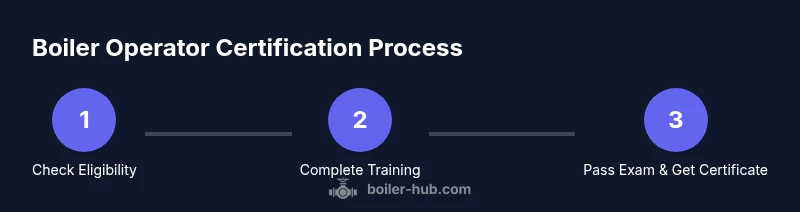
The goal is to earn a boiler operator certificate by completing region-specific training, passing a certification exam, and meeting eligibility requirements. This guide outlines the steps, required documents, training options, exam formats, and renewal rules so you can plan your path with confidence. By following these steps, you’ll qualify to operate boiler equipment legally and safely.
What is a Boiler Operator Certificate?
A boiler operator certificate is a credential that demonstrates you have the knowledge and skills to safely operate boiler equipment in accordance with local regulations. In most jurisdictions, the certificate is issued by a state/provincial or municipal regulator after you complete an approved training program and pass one or more assessments. The certificate covers topics such as boiler operations, combustion controls, safety devices, shutdown procedures, and emergency response. It may distinguish between different classes or levels of operation depending on boiler size, pressure, and fuel type.
According to Boiler Hub, the credential not only proves competency but also signals adherence to safety standards that protect workers and occupants. Boiler Hub's team emphasizes that employers often require certified operators for compliance and insurance reasons, and many facilities won’t permit operation without current certification. The pathway typically includes formal classroom instruction, hands-on practice in a supervised boiler room, and an assessment that tests both theoretical understanding and practical competencies. In some regions, you must maintain continuing education credits to keep the certificate valid. The steps outlined here reflect common structures across North America and Europe, but you should verify exact requirements with your local regulator and training provider. By planning ahead, you can align your training with job opportunities and regulatory timelines.
Why You Need Certification
Certification is more than a badge—it's a safety mandate, a compliance requirement, and a signal to employers that you meet minimum safety standards. Having a certificate reduces risk for your team and occupants and often correlates with better job prospects and higher earning potential. The Boiler Hub team notes that certified operators are favored in competitive bids and maintenance contracts because they demonstrate verified competence. Regulators view certification as evidence that operators can handle start-up procedures, load changes, fault diagnostics, and emergency shutdowns with appropriate controls. For facilities, certified operators help meet insurance and safety auditing expectations. If you’re employed in a sensitive environment (e.g., hospitals, schools, manufacturing), your certificate may be required before you can even begin work. In short, certification protects people, property, and processes—and it can be a driver of career advancement and job security.
Regional Eligibility and Variations
Eligibility criteria vary by region, but there are common threads: you’ll typically need to be of a certain age, possess acceptable identification, and complete an accredited training program. Some areas require a minimum work experience in boiler rooms or related mechanical roles before you can enroll in certification courses. Language proficiency, safety training background, and background checks may also factor into approval. Always check with the local regulator and the approved training providers to confirm specifics such as age limits, residency requirements, and any prerequisite courses. Boiler Hub analysis shows that most regions publish a clear list of requirements and renewal timelines; if you’re unsure, contact the regulator directly or ask your training provider to help map out your path. Accurate initial planning reduces delays and ensures you enroll in the right program from day one.
Training Paths: In-Person vs Online
Training options range from in-person classroom sessions with hands-on boiler room practice to fully online courses supplemented by on-site assessments. In-person programs typically offer supervised lab time, regulated equipment access, and immediate feedback from instructors—advantages for those who learn best through practice. Online programs provide flexibility for working professionals or long-distance learners, but you’ll usually need to complete a hands-on component at a partner facility or through a local collaboration. When choosing a path, verify accreditation status, the sequence of modules, and the availability of practical examinations. Budget time for lab sessions, potential travel, and scheduling around shift work. Regardless of format, ensure the program covers essential topics like safety protocols, control systems, combustion efficiency, and regulatory compliance.
The Certification Exam: Structure and Tips
Exam formats differ by region but commonly include a written test, a practical skills assessment, and sometimes an oral or scenario-based component. Written sections assess fundamental knowledge of boiler calculations, safety procedures, and regulatory requirements; practical tests evaluate your ability to operate controls, respond to faults, and perform routine maintenance under supervision. Preparation should combine theory study with hands-on practice, and many providers offer official practice exams or sample questions. Time management during the test matters—practice under timed conditions, read each question carefully, and mark difficult items to revisit if allowed. Consider creating a study plan that allocates time to boiler theory, diagnostic reasoning, control systems, and safety regulations. Boiling it down: understand the theory, demonstrate safe operations, and manage your exam time efficiently.
Application Process: Documents and Deadlines
You’ll submit an application to the regulator or certification board along with proof of training completion, identity verification, and any required fees. Documentation often includes a program completion certificate, transcripts, and possibly letters of competency from employers or instructors. Some regions require a criminal background check or safety training certificates (e.g., on-site safety programs). Deadlines vary; some programs accept rolling enrollments, while others have fixed dates for exam windows. Keep copies of all submissions, track application numbers, and confirm receipt with the agency. After approval, you’ll receive your official certificate or a credential card, along with instructions for renewal timelines and continuing education requirements. Staying organized with a simple checklist helps ensure nothing is missed as you move through the process.
Renewal, Continuing Education, and Advanced Certifications
Most boiler operator certificates require periodic renewal and ongoing education to stay current with evolving codes and technologies. Renewal often involves completing a set number of continuing education credits, refresher courses, or periodic re-assessment. Some regions offer advanced certifications for higher-risk boiler systems or specialized fuel types, which can lead to broader job opportunities and higher pay scales. Track your credential’s expiration date and set reminders several months in advance to avoid lapses. By staying engaged with industry updates, you’ll be prepared to pursue upgrades as your career goals evolve. The overall message from Boiler Hub is simple: stay proactive about learning and compliance to maintain a robust, marketable certification.
Common Pitfalls and How to Avoid Them
A few frequent missteps can slow or derail your certification journey. Rushing enrollment into an unaccredited program can prevent you from sitting the official exam. Incomplete documentation often leads to delays; prepare a single digital folder with all required items and keep it updated. Misunderstanding regional requirements is another common trap—definitions of eligibility, exam formats, and renewal cycles differ, so verify every detail with regulators and training providers. The biggest risk, however, is letting your certification lapse. Set renewal reminders early and plan ongoing education as part of your professional development. By anticipating these issues and staying organized, you’ll avoid costly setbacks and maintain your path to certification.
Practical Checklist: Ready-to-Apply
- Confirm your region’s exact certification requirements with the regulator.
- Choose an accredited training program and enroll.
- Complete the training and pass both theory and practical assessments.
- Gather identity documents, proofs of address, and payment information for the application.
- Submit the certification application and await approval.
- Schedule and pass the certification exam if required.
- Receive your certificate and keep it up to date with renewals and continuing education.
Tools & Materials
- Identity documents (government-issued ID)(Required to confirm applicant identity.)
- Proof of address(Needed for regional eligibility; check local standards.)
- Enrollment form from an accredited training provider(Submit to register for approved coursework.)
- Photographs (passport-style)(May be needed for IDs or certificates in some programs.)
- Payment for training and exam fees(Budget for tuition and testing costs; fees vary by region.)
- Study materials (course guides, manuals)(Provided by the training provider; required for self-study.)
Steps
Estimated time: 6-12 weeks
- 1
Check regional eligibility
Review the official regulator’s requirements for age, background checks, and prerequisite courses. Gather any documents needed to demonstrate eligibility before you enroll in a program.
Tip: Contact the regulator’s help desk to confirm any recent changes in eligibility rules. - 2
Select an accredited training program
Choose a provider approved by the regulator. Compare in-person vs online options, cost, schedule, and the extent of hands-on boiler room practice.
Tip: Ask for a sample syllabus and any official practice exams to gauge quality. - 3
Complete required training
Finish the coursework, participate in practical labs, and complete any assessments embedded in the program. Keep track of attendance and completion certificates.
Tip: Maintain a personal log of topics you studied and practical tasks you performed. - 4
Prepare and assemble application materials
Gather identity docs, proof of address, program completion certificate, and any regulator-specific forms. Ensure all documents are current and legible.
Tip: Create a digital folder with named scans for quick submission. - 5
Submit the certification application
Submit via the regulator’s portal or approved method, including fees. Verify submission receipt and tracking numbers.
Tip: Double-check that names and dates match your official documents exactly. - 6
Pass the certification exam (if required)
Prepare for both written and practical components. Use official practice tests and simulate exam conditions.
Tip: Schedule study blocks that mimic test timing and reduce test-day anxiety. - 7
Receive and verify your certificate
Once approved, collect your certificate or credential card and add it to your professional records. Confirm any online verification options for employers.
Tip: Take a clear photo of the certificate for digital records. - 8
Plan renewal and continuing education
Note expiration dates and required CE credits. Identify eligible refresher courses and keep documentation up to date.
Tip: Set reminders 3–6 months before expiration to avoid lapses. - 9
Maintain your credentials
Regularly check for updates to codes and safety standards. Consider pursuing higher-level or specialty certifications as your career progresses.
Tip: Join a local industry group to stay informed about changes.
Questions & Answers
What is the boiler operator certificate and who needs it?
The boiler operator certificate is a regulatory credential proving you can safely operate boiler equipment. Most facilities require it for anyone who will work in boiler rooms, and it often serves as a minimum qualification for maintenance roles.
The boiler operator certificate proves you can safely operate boilers and is usually required for boiler-room work.
How do I know which training program to choose?
Choose an accredited program approved by your regional regulator. Compare in-person and online formats, check for hands-on labs, and confirm that the program aligns with the official certification pathway.
Pick an regulator-approved program with hands-on labs and clear accreditation.
Are online courses acceptable for certification?
Online courses can be acceptable in many regions, especially when paired with an on-site practical assessment. Verify acceptance with the regulator and the training provider before enrolling.
Online courses are often accepted if they include a required hands-on component.
How long is the certificate valid?
Validity periods and renewal requirements vary by region. Expect periodic renewals or CE credits to keep the certificate active; confirm specifics with the regulator.
Certificates require renewal and ongoing education in most regions.
What documents will I need to apply?
Common documents include a government-issued ID, proof of address, program completion certificate, and payment for fees. Always check the regulator’s official list for any extras.
You’ll typically need ID, proof of address, and training completion certificates.
Can I work while studying for the certificate?
Yes, many programs are designed for working professionals, offering flexible scheduling. However, some hands-on components require you to attend on-site sessions.
Many programs fit around a job, but hands-on labs must be scheduled.
What should I do if I fail the exam?
If you don’t pass, review the examiner’s feedback, address knowledge gaps, and re-enroll for a retake within the allowed window. Planning extra study time helps improve performance.
If you fail, study the feedback, re-enroll, and retake within the allowed period.
Is there a difference between certificates in different regions?
Yes. Different regions may require different exams, modules, and renewal rules. Always verify with local regulators to ensure your certificate is recognized where you work.
Regional rules vary—check with the local regulator for recognition and requirements.
Watch Video
Key Points
- Identify your region’s certification requirements and timelines.
- Complete an accredited program with hands-on practice.
- Prepare, schedule, and pass the exam (if required).
- Boiler Hub's verdict: obtaining certification is essential for safety, compliance, and career growth.