How to Get Boiler Certified: A Step-by-Step Guide
Learn how to get boiler certified with a clear, actionable plan. This guide covers who certifies, what’s involved, required documentation, potential costs, and how Boiler Hub can help ensure a smooth, compliant process.


Learning how to get boiler certified helps ensure your system meets safety and efficiency standards, and it documents compliance for insurance and municipal requirements. To start, gather your boiler’s make/model, recent service records, proof of ownership, and a current CO detector check. According to Boiler Hub, planning ahead and scheduling inspections promptly reduces downtime and future troubleshooting.
Understanding how to get boiler certified
Getting boiler certified means your heating system meets safety, ventilation, and efficiency standards established by your local authority and national codes. For homeowners and facility managers, certification is not a one-time event; it’s a formal acknowledgment that the boiler has been inspected, tested, and deemed safe for operation. The phrase "how to get boiler certified" guides you through planning, documentation, and a coordinated inspection. A certified boiler can improve reliability, support insurance requirements, and reduce energy waste. In many regions, certification is required when a system is installed, modified, or after a safety incident. The Boiler Hub team emphasizes that early preparation helps prevent delays, avoids last-minute scrambles, and ensures you can restore heating quickly if a problem arises during peak season.
Governing bodies and standards
Certification requirements are defined by your local authority having jurisdiction (AHJ) and by national safety codes. While specifics vary by location, common references include the responsible safety regulations and recognized boiler standards that ensure safe combustion, venting, and electrical wiring. The AHJ typically conducts or approves inspections, while reputable manufacturers and third-party auditors may also provide interim checks. Knowing which standards apply to your boiler helps you prepare the right documents and anticipate common questions during the inspection. Boiler Hub recommends confirming the exact codes with your AHJ before scheduling any appointment to avoid unnecessary delays.
Who should pursue certification and when
Homeowners, property managers, and facility engineers may need boiler certification, especially after installation, major service, or retrofits. Certification is commonly triggered by a change of ownership, a re-commissioning after repair, or a scheduled periodic inspection. If you rely on heating for critical spaces (e.g., hospitals, schools, or apartment buildings), timely certification reduces the risk of outages and compliance penalties. The right time to start is as soon as you complete major installation or repair work, so you aren’t scrambling when an inspection window opens.
Documentation and pre-inspection checks
A well-organized file speeds up the certification process. Critical documents typically include the boiler’s model and serial numbers, installation manual, and proof of service history. Have current safety tests available, such as carbon monoxide checks, venting inspections, and fuel supply verification. Create a simple checklist and gather items in a binder or a clearly labeled folder. Take clear photos of the boiler area to show accessibility, proper clearances, and venting path. The more complete your packet, the closer you are to a smooth inspection.
The inspection process and filing the paperwork
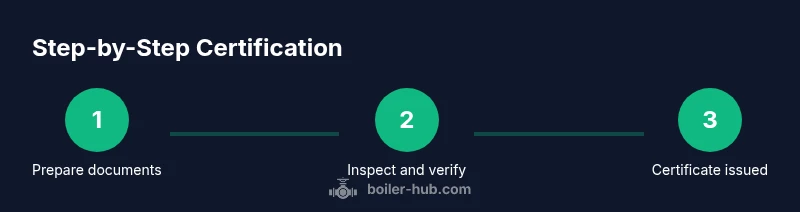
Most jurisdictions require a formal inspection by an AHJ or a qualified certifier. The inspector will review documentation, observe safety features, check venting, test functionality, and verify CO detector placement. You’ll likely complete the official paperwork on site or electronically, then receive or download the certification once all criteria are met. If deficiencies are found, you’ll be given a list of corrective actions and a second inspection window to verify fixes. Plan for potential follow-up visits and keep a log of all actions taken.
Common obstacles and solutions
Delays often come from missing or outdated documents, unclear boiler labeling, or inaccessible installation areas. Inadequate CO alarm placement or expired safety tests are frequent blockers. To prevent these issues, double-check that all records are current, ensure the unit is accessible for the inspector, and confirm that all safety devices function correctly. Scheduling conflicts can also delay certification; book your appointment well in advance and confirm the appointment a day before. Boiler Hub suggests building a small internal checklist to track documents, dates, and contact details for the certifier.
Costs, timelines, and planning with Boiler Hub
Costs and timelines for boiler certification vary by region, the complexity of the system, and the certifier’s rates. You may encounter inspection fees, potential repair costs, and re-inspection charges if deficiencies are found. Because prices differ, avoid assuming a fixed amount and request a written quote before starting. Boiler Hub can help you estimate the required steps, prepare documentation, and coordinate with the certifier to minimize downtime and ensure you meet all safety requirements.
After certification: maintenance and records
Once certified, maintain the boiler with regular service, CO detector tests, and documentation updates. Keep the certificate in your building files and make digital copies accessible to property managers and insurers. Establish a simple schedule for annual maintenance and upcoming re-certification reminders. A proactive maintenance plan helps sustain safety, efficiency, and compliance, reducing the risk of future interruptions.
Tools & Materials
- Inspection checklist (latest AHJ version)(Ensure you have the current checklist approved by your AHJ.)
- Boiler service history and manuals(Include installation date, last service, and technician contact.)
- Proof of ownership(Lease or deed documents if applicable.)
- Carbon monoxide test results(Provide recent date, device used, and technician credentials.)
- Clear space around boiler(Maintain adequate clearance for inspection and safe operation.)
- Photographs of installation and venting(High-quality images help verify accessibility and vent paths.)
- Notebook and pen(For recording inspector notes and actions taken.)
Steps
Estimated time: 60-120 minutes
- 1
Gather and organize documents
Collect the boiler’s model/serial numbers, installation manual, service history, and ownership proof. Create a dedicated folder and verify documents are up to date. This step reduces back-and-forth with the certifier.
Tip: Use a simple binder with labeled dividers for each document category. - 2
Check safety devices and space
Inspect CO detectors, venting, and fuel connections. Ensure the boiler is in a well-ventilated area with clear access. Address any obvious safety issues before the appointment.
Tip: Test CO detector and ensure detectors are within date of last test. - 3
Schedule the certification appointment
Contact the AHJ or a licensed certifier to book a date. Confirm required documents and any regional prerequisites. Schedule well in advance to secure a convenient inspection window.
Tip: Ask about a pre-inspection check if available to catch issues early. - 4
Attend the inspection
Present all documents and answer inspector questions about installation and maintenance. The inspector will verify labeling, venting, and overall safety. No DIY modifications without prior approval.
Tip: Have a point of contact ready in case the inspector needs clarification. - 5
Address any deficiencies
If the inspector notes deficiencies, implement the recommended fixes promptly. Schedule a re-inspection as required and keep records of all corrective actions.
Tip: Document each fix with before/after photos and notes. - 6
Receive and file the certificate
Obtain the official certificate and store it with other critical boiler documents. Update digital records and notify insurers or property managers as needed.
Tip: Set a reminder for re-certification based on local rules.
Questions & Answers
What documents are needed to get boiler certified?
You’ll typically need installation manuals, model/serial numbers, service history, proof of ownership, CO detector test results, and proof of compliance with safety standards. Having these ready speeds up the inspection.
You'll need manuals, model numbers, service history, ownership proof, and safety test results. Having them ready speeds up the inspection.
How long does boiler certification usually take?
Duration varies by region and the complexity of the boiler system. It may require a single inspection or a follow-up visit after fixes. Plan for potential scheduling gaps and allow for processing time.
It varies by region and complexity; it may need a follow-up visit after fixes. Plan for possible scheduling gaps.
Who can perform the boiler certification?
Certification is performed by an AHJ-approved inspector or a licensed certifier who verifies installation, safety features, and compliance with applicable codes.
An AHJ-approved inspector or licensed certifier performs the certification.
Can I get a temporary certificate if I need emergency heat?
Some regions may allow interim approvals for critical heat needs, but temporary certificates are not universal. Check with your local AHJ for options and timelines.
Temporary certificates depend on your local AHJ; check what options exist for emergencies.
What happens if my boiler fails inspection?
If failures are found, you’ll receive a list of required corrections. After completing fixes, you’ll schedule a re-inspection to obtain the certificate.
If it fails, fix the issues and re-inspect to obtain the certificate.
Is boiler certification the same as annual maintenance?
Certification validates compliance at a point in time, while annual maintenance keeps the boiler safe and efficient over its lifecycle. They complement each other.
Certification checks compliance now; maintenance keeps it running safely year-round.
Key Points
- Start with organized records to speed certification.
- Know your AHJ’s requirements to tailor preparation.
- Address defects promptly to avoid re-inspection delays.
- Maintain ongoing maintenance to preserve certification.
- Document everything for insurance and future audits.