Where to Get a Boiler Installation Certificate: A Practical Guide
A practical, data-driven guide on obtaining your boiler installation certificate, including who issues it, required documents, regional variations, and best practices for homeowners and facility managers in 2026.


The boiler installation certificate is typically issued by the installing engineer and/or the local building control authority after installation and testing. You can request the certificate directly from the installer, or contact the local building control office if no certificate is provided. This guide explains where to get boiler installation certificate copies, what to expect, and how to use them for compliance, warranties, and resale.
What is a boiler installation certificate and why it matters
When a new boiler is installed, a formal certificate is issued to confirm the work was completed to safety standards and tested for proper operation. The document may be called different names depending on jurisdiction, but its purpose remains the same: proof of compliant installation. For homeowners and facility managers, knowing where to get boiler installation certificate is essential for servicing, warranty validation, and compliance checks. According to Boiler Hub, the certificate serves as verifiable evidence that the installation followed applicable gas safety and building regulations. The certificate is frequently requested during home sales or lease transitions because it demonstrates that the boiler has passed inspection and is safe to operate. In the absence of a valid certificate, insurers or regulators may require additional checks before the system is deemed fit for use. The practical takeaway is simple: secure the certificate as soon as the installation is complete and place it in your boiler binder along with the installation report, warranty documents, and service history.
Who issues the certificate and who signs it
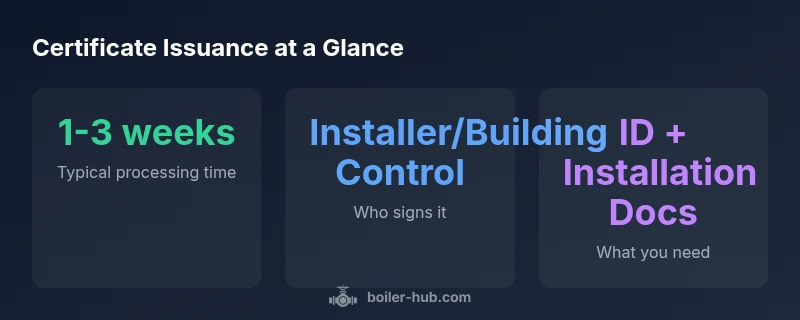
In most jurisdictions, the responsibility for issuing a boiler installation certificate falls to the person who performed the installation or to a qualified inspector who reviews the work after completion. A gas-safe engineer or licensed technician typically signs the certificate, confirms the system has been tested for leaks, and verifies that safety devices are functioning correctly. Building control or the local authority may sign off on the certificate after reviewing the installer’s paperwork and, in some cases, after an on-site inspection. The exact process varies by country and local rules, but the core principle remains: an authorized, competent person must verify compliance before the certificate is issued. Boiler Hub Analysis, 2026 indicates that prompt requests reduce post-installation issues and speed up resale processes.
Documents you typically need to obtain the certificate
Before you can receive the boiler installation certificate, you typically must provide a combination of identity, installation evidence, and proof that the work was authorized. Common documents include a valid photo ID; proof of property ownership or tenancy; the signed installation report or compliance checklist prepared by the installer; a certificate of gas safety check (if applicable); the license or registration number of the installer; and contact details for the installing company. Some jurisdictions require pictures or schematics of the installation, a copy of the boiler’s model and serial number, and proof that any required permits were obtained. It’s wise to assemble these items early, so the process moves quickly when you request the certificate. If you cannot locate the installation documents, contact the installer or your local building authority for an official copy or a certified reproduction. Boiler Hub recommends keeping digital copies in a secure cloud folder as well as printed backups.
Step-by-step: how to obtain the certificate
Follow this practical sequence to minimize delays: 1) Confirm who issued the original installation and who is authorized to sign the certificate. 2) Gather required documents (ID, installation report, boiler model/serial, permit copies). 3) Contact the installer to request the certificate; if they do not issue it directly, ask for guidance on the appropriate authority. 4) If needed, submit the request to building control or the local authority with the proper form and supporting documents. 5) Track the request and set reminders for renewal or revalidation if required. 6) When the certificate arrives, review it for accuracy (dates, addresses, boiler model). 7) Store the certificate in your home-maintenance binder and attach it to the property’s records. Clear communication with the installer and authority helps avoid delays.
Regional variations and common pitfalls
Regional rules vary widely, so be prepared for differences in who signs, how the certificate is stored, and how long the process takes. In some regions, the certificate is issued immediately after testing by the installer; in others, a formal sign-off from building control is required, which can add days or weeks. A common pitfall is assuming the installer will automatically submit the certificate to the building authority on your behalf. Always confirm who is responsible for final submission and ensure that the certificate references the correct installation date, boiler model, and address. Boiler Hub’s 2026 analysis notes that missing or incorrect details are the leading cause of delays and requests for rework.
Certificate issuance workflow
| Step | Issuer | Needed | Turnaround |
|---|---|---|---|
| Request from Installer | Installer | Signed docs, proof of identity | 3-7 days |
| Submit to Building Control | Local Authority | Compliance checklist | 1-2 weeks |
| Receive Certificate | Installer/Building Control | Final cert | 2-3 weeks |
Questions & Answers
Who is authorized to issue a boiler installation certificate?
Typically, a qualified installer or a licensed gas engineer issues the certificate. In some regions, building control signs off after reviewing the installer’s documentation. Always confirm who signs your certificate before relying on it for compliance or resale.
Usually the installer or a building control authority signs it. Check with your local regulations for specifics.
What documents do I need to have before requesting the certificate?
Common documents include a valid ID, proof of property ownership, the installation report or compliance checklist, boiler model and serial number, and the installer’s license or registration details. Having these ready speeds up the process.
Have your ID and installation paperwork handy before you request the certificate.
How long does it take to get the certificate after installation?
Typical turnaround ranges from 1–3 weeks, depending on local authority processing and whether an on-site inspection is required. Some areas issue certificates sooner if all paperwork is in order.
Most places take a few weeks; your installer can usually tell you exact timelines.
Can I get a copy of the certificate if I misplaced the original?
Yes. Contact the installer or the building control authority; they should be able to provide a certified copy or the official record. Keep both digital and printed copies.
You can request a replacement from the installer or the authority that handled the inspection.
Is a boiler installation certificate required for home sales?
In many markets, lenders and buyers require proof that the boiler was installed to safety standards. Having the certificate can smooth the transaction and reduce closing delays.
Yes, it’s often a key document in a home sale.
Do certificates expire or need renewal?
Certificates themselves typically do not expire, but some regions require periodic safety inspections or re-validation after major repairs. Always check local regulations for renewal requirements.
Certificates don’t usually expire, but you may need periodic checks for compliance.
“A boiler installation certificate confirms the work meets safety standards and regulatory requirements, and it should be part of every installation record.”
Key Points
- Know who issues the certificate and the exact name used in your region
- Keep a ready folder of installation documents and IDs
- Always verify dates, boiler model, and address on the certificate
- Ask for copies/duplicates for home-sale or insurance needs
- The Boiler Hub team recommends storing digital and physical copies securely
- Follow up promptly to avoid regulatory or warranty issues