How to Boiler: A Practical Guide for Safe Heating
Learn how to boiler safely, troubleshoot common issues, and optimize efficiency with practical, step-by-step guidance from Boiler Hub for homeowners and facility managers.


Learn how to boiler safely and efficiently with practical, step-by-step maintenance tips. This guide covers essential checks, common troubleshooting, and when to call a professional. By the end, you'll understand basic safety practices and simple diagnostics for everyday boiler care.
What a boiler does and why maintenance matters
A boiler is the heart of many homes' heating and hot water systems. It uses fuel to heat water or air that is circulated through radiators or vents. Regular maintenance keeps the system safe, efficient, and reliable, reducing the risk of breakdowns during peak season. According to Boiler Hub, boilers convert fuel into heat with high efficiency when clean and properly vented, and routine checks help prevent dangerous failures such as gas leaks or carbon monoxide buildup. If you are asking how to boiler, this guide walks you through the essential steps, safety checks, and practical diagnostics you can perform as a homeowner or facility manager. The goal isn't to replace professional service but to empower you with knowledge to spot issues early, save energy, and extend equipment life. Start with a simple plan: know your boiler type, keep records, and schedule annual service with a licensed technician.
This article is written for homeowners and facility managers who want a clear, actionable path to better boiler health. It blends safety best practices with practical DIY checks, and it emphasizes when professional intervention is necessary. By approaching boiler care methodically, you’ll reduce risk, cut energy waste, and extend the life of your heating system.
Safety first: essential precautions before inspecting a boiler
Safety comes first when working with boilers. Before touching any panel, shut off power, switch off the gas supply if safe to do so, and close the boiler's shutoff valve. Wear protective gloves and eye protection, and ensure your workspace is dry and well lit. Keep a CO detector on every floor and test alarms monthly. Do not attempt repairs beyond your training; gas and electrical faults require licensed professionals. If you smell gas, leave the area immediately and contact the gas supplier or emergency services. These precautions protect you and others while you assess potential issues or routine maintenance.
Regular maintenance tasks you can do
Even without a full service visit, you can perform several routine checks to keep a boiler running smoothly. Check the pressure gauge on the front panel; most systems prefer a mid-range between 1 and 1.5 bar when cold. If the pressure is low, you may need to bleed radiators or top up with the correct type of water; never force beyond the manufacturer’s recommended range. Inspect the burner and flame when safe; a steady blue flame indicates good combustion, while a yellow flame or soot signals dirty burners or poor ventilation. Clean accessible surfaces with a dry cloth and vacuum away dust around the burner, flue, and condensate drain. Test the thermostat and controls to ensure the system responds to temperature changes, and verify your CO detector is functioning. Keep logs of readings and any anomalies to help a pro diagnose later.
Diagnosing common faults: what to check
How to boiler checks start with recognizing warning signs. If the boiler trips or a red/amber light is on, consult the user manual for error codes. Common issues include low water pressure, blocked condensate lines, and air in the system. A banging radiator or kettling noise often means mineral buildup or air pockets; bleed air from radiators, and inspect for trapped air; if noises persist, a professional service may be required. If the boiler refuses to start, check the switch, power supply, and thermostat settings first. For gas boilers, a weak flame or intermittent ignition can indicate gas supply problems or a dirty burner; never attempt to fix gas flow alone.
Step-by-step quick checks you can perform
In this section, we present quick checks that you can perform to determine if you are dealing with a minor issue or a potential hazard. Verify that all power and gas supplies are secured before any inspection. Check the main boiler pressure reading and listen for unusual noises during operation. If you notice leaks, shut the system down and contact a professional. Simple tasks like cleaning the burner area and ensuring vent pathways are clear can prevent inefficiencies and future problems. Record initial readings and planned maintenance dates in a log for easy reference.
Efficiency and cost considerations
Energy efficiency matters for both comfort and operating costs. Small changes can yield noticeable savings, such as keeping the heating schedule consistent with occupancy, preventing heat loss from poorly insulated pipes, and maintaining correct burner settings. Regular servicing improves heat transfer by removing soot and deposits that hamper performance. Upgrading to a smarter thermostat can optimize fuel use, while sealing leaks and insulating the pipework reduces standby losses. Boiler Hub analyses suggest that proactive maintenance correlates with fewer emergency calls and steadier performance, which translates to lower annual energy costs over time.
Troubleshooting: signaling error codes and alarms
Boilers use LED indicators or audible alarms to signal issues. Common error patterns include flame failure, ignition lockout, and circulation faults. When you see an error code, note it and consult the manufacturer guide; many codes map to specific problems like pressure irregularities, blocked flues, or sensor faults. If codes persist after basic checks, contact a licensed technician. Always prioritize safety—do not bypass safety devices to test systems, especially on gas boilers. Keeping a log of error codes and interventions helps technicians diagnose faster in future maintenance visits.
When to replace vs repair
Deciding whether to repair or replace a boiler depends on age, efficiency, and repair costs. If the unit is over 12-15 years old and requires frequent service, upgrading to a more efficient model may reduce long-term costs and emissions. Replacing parts like the heat exchanger can be expensive, and some failures are not cost-effective to repair. Consider lifecycle cost, warranty coverage, and potential safety risks when making this decision. A professional can provide a precise assessment, including system sizing and fuel considerations.
Creating a maintenance plan and record-keeping
A documented maintenance plan helps you stay organized and proactive. Create a simple schedule that covers the boiler environment, filter checks, vent and flame inspections, pressure readings, and CO detector tests. Keep a running log of dates, readings, and parts replaced. Review the log annually and before each heating season to adjust maintenance frequency. This habit reduces emergency calls, extends equipment life, and supports energy efficiency goals.
Tools & Materials
- Screwdriver set (Philips and flat-head)(Philips #2 and flat-head for access panels)
- Wrench set(Metric and SAE sizes for service valves)
- Multimeter(For testing electrical circuits and controls)
- Soft brush and dry cloth(For cleaning burner surfaces and panels)
- Vacuum with nozzle(Remove dust around burner, flue, condensate line)
- Gloves and eye protection(Personal protective equipment (PPE))
- CO detector and battery(Place on every floor; test monthly)
- Drain pan or container(For condensate or minor leaks during checks)
- Maintenance log(Template or notebook to record readings)
Steps
Estimated time: 60-90 minutes
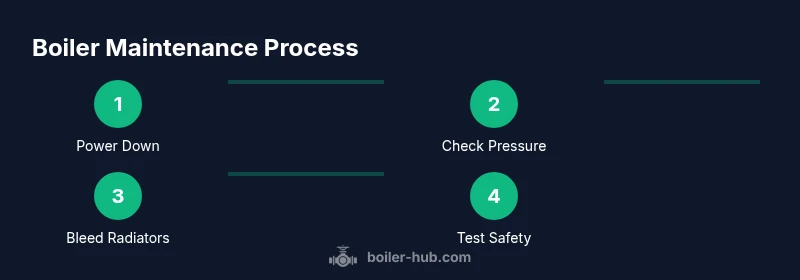
- 1
Power down and secure the system
Shut off the boiler at the main power switch. If safe, switch off the gas valve and close any isolation valve to prevent leaks during inspection. Verify that the area is dry and well-lit, and put on PPE before starting any work.
Tip: Always double-check that the boiler is completely powered down before touching any components. - 2
Check pressure and thermostat settings
Locate the pressure gauge; note the reading when the system is cold. Compare against the manufacturer’s recommended range. If pressure is low, top up per the manual or bleed radiators to restore balance. Ensure the thermostat responds to temperature changes.
Tip: Only re-pressurize to the target range specified by your boiler's manual. - 3
Bleed radiators and remove air
Starting with the highest radiator, use a bleed key to open the valve slowly until you hear air release, then close when water appears. Re-check the system pressure and top up if needed. Repeat on all radiators until no air remains.
Tip: Work in a well-lit area and have a cloth ready for any drips. - 4
Inspect burner and flame
Carefully remove access panels to view the burner. A steady blue flame indicates proper combustion; a yellow flame or soot suggests dirty burners or ventilation issues. If needed, gently clean accessible areas and ensure air intake paths are clear.
Tip: If you see soot or a yellow flame, stop and contact a professional for cleaning. - 5
Check condensate drain and venting
Inspect the condensate drain for clogs and ensure it leads to a proper drain. Look for signs of blockage or slow drainage. Confirm vent pipes are secure and free of obstructions.
Tip: Blockages in condensate lines can cause lockouts; clear them only if you can do so safely. - 6
Test safety controls and detectors
Trigger the high-limit switch and test the CO detector to confirm proper operation. Verify all safety devices reset correctly after testing. If any device fails, arrange a professional inspection.
Tip: Never bypass safety devices to test system reliability. - 7
Clean and reassemble
Wipe down accessible surfaces, clean debris from around the burner and vents, and reassemble panels securely. Restore power and gas supply, then run a short test cycle to observe normal operation.
Tip: Ensure all screws and panels are properly seated to avoid leaks or drafts. - 8
Document results and schedule next maintenance
Fill in the maintenance log with readings, actions taken, and any parts replaced. Schedule the next service in advance and set reminders for seasonal checks.
Tip: A clear log helps technicians track performance and plan future interventions.
Questions & Answers
How often should I service my boiler?
Most residential boilers benefit from an annual professional service, with homeowners performing regular visual checks and basic maintenance monthly. A professional can verify safety devices, clean critical components, and ensure optimal efficiency.
Most boilers should get a yearly professional service, with monthly DIY checks to stay safe and efficient.
Can I service my boiler myself?
You can perform basic visual inspections, check pressure, bleed radiators, and test safety devices. Complex tasks like burner cleaning or combustion analysis should be done by a licensed technician to avoid safety risks.
You can do simple checks yourself, but complex tasks require a professional.
What are common signs my boiler is failing?
Look for frequent cycling, cold radiators, kettling noises, yellow flames, leaks, or rising energy bills. These indicate inefficiency or component failure requiring inspection.
Frequent cycling, cold radiators, or unusual noises can mean trouble.
How do I reset a boiler safety lockout?
Consult your model's manual. Typically, you power down, wait, and reset the control, then observe the ignition sequence. If issues persist, avoid repeated resets and contact a pro.
Power down, wait, reset per the manual, then test; contact a pro if it continues.
What is boiler efficiency and how can I improve it?
Efficiency is the ratio of useful heat to energy input. Improve by regular cleaning, proper venting, correct thermostat settings, and reducing heat losses in pipes and storage.
Efficiency is heat gained divided by energy used; clean, vent correctly, and insulate.
When should I call a professional?
If you smell gas, hear gas leaks, see persistent leaks, get frequent lockouts, or cannot restore safe operation, contact a licensed technician immediately.
Call a licensed technician if there’s a gas smell or persistent unsafe behavior.
Watch Video
Key Points
- Know safety shutoffs and how to access them
- Perform regular visual checks to catch corrosion early
- Keep a maintenance log with dates and readings
- Bleed radiators and check pressure to maximize efficiency
- Call a licensed pro for complex issues or gas-related concerns