Boiler Brewing: Safe Startup Guide for Homes
Learn how to safely start a boiler with Boiler Hub's authoritative, step-by-step guide. Pre-start checks, safety tips, and practical startup steps for residential and small commercial systems.


Boiler brewing means safely starting a boiler to produce steam or hot water. This quick, practical guide shows you the essential pre-start checks, safety precautions, and step-by-step actions to bring a residential boiler online, while minimizing risk. You'll understand water level, fuel supply, venting, and pressure targets needed for a safe initial run.
What is boiler brewing?
Boiler brewing describes the process of safely starting a boiler to begin producing steam or hot water. For homeowners and facilities managers, this means verifying that the system is ready, that safety interlocks are functional, and that the fuel, venting, and water supply are correctly configured. In this guide we focus on residential boilers and small commercial units, where startup mistakes can lead to inefficient operation or safety risks. Because water chemistry, pressure control, and flame stability all influence the outcome, a disciplined startup routine reduces wear and extends equipment life. Throughout, we’ll reference practical checks you can perform with common tools, without specialized lab instrumentation.
Safety first: prerequisites before startup
Before you touch any controls, ensure the space around the boiler is clear, ventilated, and free of combustible materials. Wear eye protection and gloves when handling systems with exposed pipes or valves. Confirm that main power, gas supply, and fuel shutoffs are accessible and labeled. Check that all safety relief devices are functional and that carbon monoxide alarms are working in connected spaces. By completing these prerequisites, you reduce the risk of leaks, misfires, and accidental exposure to hazardous gases.
Core principles: water, heat, and pressure
A boiler operates by heating water to produce steam or hot water for heating and domestic use. The balance among water level, feedwater, burner heat, and pressure determines efficiency and safety. An expansion/pressure tank helps manage changes in water volume, while a gauge indicates the system pressure against rated limits. Proper venting prevents flue gases from backing up and ensures complete combustion. Understanding these fundamentals helps you diagnose anomalies during startup and prevents short cycling or overheating.
Pre-start checks you should perform
Make a routine of these checks before initiating a startup. Verify water level in the boiler and in the expansion tank, ensuring no visible leaks. Inspect gaskets and drains for signs of wear. Confirm that the fuel supply valve is open and that the gas line pressure matches the boiler’s rating. Ensure vent pipes are clear and that there is adequate combustion air. Document any irregularities and postpone startup if any safety concern exists.
Tools and materials you'll need
Keep a basic tool kit and reference sheet nearby. You’ll typically use a pressure gauge, a moisture or water-quality tester, a flashlight, and a non-contact voltage tester for quick safety checks. Ensure you have clean protective gloves, safety glasses, and a calibrated thermometer for measuring water temperature. Optional but helpful items include a manometer for precise pressure, a draft gauge to assess venting, and a spare gasket kit for leaks. Having these on hand keeps the startup organized and reduces downtime if adjustments are needed.
Step-by-step startup overview
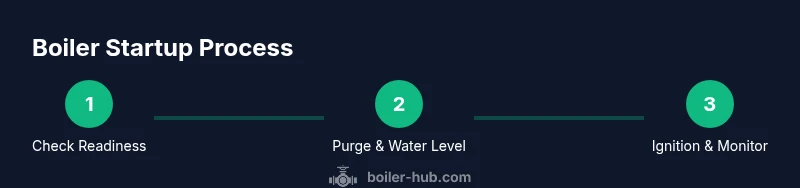
The following steps outline a practical startup routine you can perform in order, noting why each action matters and how long to expect for certain operations. The sequence emphasizes safety-first decisions, correct sensor readings, and controlled ignition. After completing the sequence, monitor the system for a steady flame, stable pressure, and consistent heat delivery. If anything deviates from expected values, stop the startup and reassess.
Step 1: Verify readiness and safety devices
Action: Confirm all safety interlocks are engaged and that emergency shutoffs are accessible. Verify that the boiler's electrical supply is on and that control panels display normal readings. Why: If safety systems fail to engage, your boiler could run without protection, increasing the risk of overpressure or flame rollouts. Take 5–7 minutes for this initial check and note any alarm codes.
Step 2: Purge air and verify water level
Action: Open the purge valve or air release valve as appropriate and observe a steady stream of water or a gentle purge without air pockets. Why: Air trapped in the lines can cause inconsistent burner ignition and erratic flame behavior. Close the valve once water runs clear and the system shows a stable water level—this typically takes 2–5 minutes.
Step 3: Check fuel supply and venting
Action: Ensure the gas or oil supply is steady, the shutoff valve is fully open, and the venting path is unobstructed. Why: Interruptions in fuel or blocked vents can cause incomplete combustion, sooty flames, and dangerous gas accumulation. If you detect a gas odor, evacuate and contact emergency services rather than continuing.
Step 4: Interlocks, safety devices, and ignition plan
Action: Engage interlocks and confirm that the primary safety valve, flame detector, and low-water cutoffs are in their normal positions. Prepare for ignition by following the manufacturer’s start sequence, noting any lockouts or controller prompts. Why: Proper sequencing prevents misfires and protects devices from thermal shock or flameover.
Step 5: Ignite burner and observe flame behavior
Action: Initiate ignition and watch the flame color and stability. A healthy flame should be blue with a steady, soft roar or hum depending on unit size. If the flame is yellow, flickering, or if shutdowns occur, pause startup and inspect air supply, nozzle cleanliness, or fuel pressure. Why: Incomplete combustion wastes energy and can produce dangerous carbon monoxide.
Step 6: Monitor startup metrics and warmup to steady operation
Action: During the initial run, monitor system pressure, burner duty cycle, and water temperature. Expect gradual pressure rise to the normal operating range and a controlled warmup without rapid fluctuations. If values drift beyond acceptable limits, you should shut down safely and recheck component alignment, seals, and venting. Why: Accurate monitoring ensures safe transition from cold startup to steady operation.
Tools & Materials
- Water level gauge(Visible, always accessible; check expansion tank level if applicable.)
- Pressure gauge or manometer(Calibrated to the boiler's operating range.)
- Wrench set(Open/close service valves and tighten fittings.)
- Vent kit or draft gauge(Ensure vent paths are clear and assess combustion air.)
- Thermometer(Monitor water temperature; optional for some modern boilers.)
- Gasket kit for leaks(Have replacements on hand for quick fixes.)
Steps
Estimated time: 60-90 minutes
- 1
Verify readiness and safety devices
Confirm all safety interlocks are engaged and emergency shutoffs are accessible. Verify power and control panel readings are normal.
Tip: If any safety light or code appears, do not proceed until resolved. - 2
Purge air and verify water level
Open purge/air release valve to purge air until a steady stream of water runs out. Confirm water level is stable and cap or close valve.
Tip: Air pockets can cause misfires; purge until none remain. - 3
Check fuel supply and venting
Verify fuel supply is steady and vent path is unobstructed. Ensure shutoff valves are fully open and vents are clear.
Tip: A blocked vent or weak fuel pressure causes incomplete combustion. - 4
Interlocks, safety devices, ignition plan
Engage interlocks, verify flame detector and low-water cutoffs are set, and follow the manufacturer’s ignition sequence.
Tip: Strict sequencing prevents misfires and protects components. - 5
Ignite burner and observe flame
Initiate ignition and observe flame color and stability; blue flame indicates healthy combustion.
Tip: Yellow or unstable flame warrants shutdown and inspection. - 6
Monitor startup metrics and warmup
Track pressure, temperature, and burner duty during warmup; expect gradual stabilization within normal range.
Tip: If parameters overshoot, pause and reassess connections. - 7
Confirm steady operation
Once stable, verify heat delivery matches demand and there are no abnormal noises.
Tip: Document readings for future comparisons. - 8
Shut down safely if needed
If any unsafe condition arises, shut off gas/fuel and electrical supply and follow lockout procedures.
Tip: Always have an action plan for emergencies.
Questions & Answers
What is boiler brewing?
Boiler brewing is the safe startup process to produce steam or hot water in a boiler system. It involves pre-start checks, correct fuel and venting, and controlled ignition to ensure safe operation.
Boiler brewing means safely starting a boiler to produce steam or hot water, with proper checks and controls.
What safety checks should I perform before starting a boiler?
Check interlocks, vents, water level, fuel supply, and alarms. Ensure carbon monoxide detectors and emergency shutoffs are functional, and clear the area of hazards.
Check interlocks, vents, water level, and alarms before starting, and ensure detectors are functioning.
Is it safe to start a boiler without a professional?
You can perform basic safety checks and startup steps if you are trained and understand the unit’s manual. For complex systems or if you detect issues, contact a licensed technician.
Basic startup can be done by a trained homeowner, but call a pro for complex systems or problems.
What signs indicate a problem during startup?
Gas smell, flame color changing to yellow, alarms, rapid pressure spikes, or loss of flame stability indicate problems that require stopping startup and troubleshooting.
Watch for gas smells, irregular flames, alarms, or unusual noises.
How long does startup typically take?
A typical startup can take 60 to 90 minutes, depending on boiler type, condition, and accessibility of components.
Most startups take about an hour to an hour and a half.
What maintenance is recommended after startup?
Document readings, inspect for leaks, test safety devices again, and schedule regular professional inspections per manufacturer guidelines.
Keep a startup log and schedule periodic inspections.
Watch Video
Key Points
- Verify readiness and safety before starting
- Purge air and confirm water level to prevent misfires
- Monitor pressure and flame during startup for safe operation
- Document readings and seek professional help if irregularities persist