How to Fix Boiler: A Safe Step-by-Step Home Guide
Learn a safe, structured approach to diagnosing and fixing common boiler problems at home. This Boiler Hub guide covers safety, checks, and when to call a professional for reliable, long-term comfort.


This guide teaches you how to safely diagnose and fix common boiler problems at home. You’ll start with basic checks of settings, temperature, and pressure, then inspect ignition and controls, and perform safe resets. Always prioritize safety and know when to call a professional.
How boilers work: a quick primer
A residential boiler is a compact system that creates heat and distributes it through radiators or underfloor networks. Most boilers have a heat source (gas, oil, or electricity), a heat exchanger, pumps, and a network of controls that manage temperature and timing. In a typical system, a burner heats a heat exchanger, which transfers warmth to water or radiate heat via the circulating loop. Understanding these parts helps you identify where things can go wrong, from ignition and pressure issues to pump failure or thermostat miscalibration. Throughout this guide, Boiler Hub emphasizes safety and proper shutdown procedures before touching any components.
Common issues and what they look like
Boilers can fail for many reasons, but some symptoms repeat across homes. No heat or hot water often points to thermostat settings, pressure low, or a locked-out boiler due to safety switches. Strange banging, kettling sounds, or rumbling can indicate limescale buildup or air in the system. Leaks around joints or the boiler cabinet signal worn seals or corroded piping. A pilot light or electronic ignition that won’t stay lit can stem from gas supply issues, a faulty thermocouple, or a dirty flame sensor. Recognizing these signs early helps you decide whether a DIY check is possible or if a professional should be consulted.
Safety first: essential precautions before you begin
Working on a boiler carries risks, especially with gas and electrical systems. Always turn off the boiler and its power supply before touching any components. If you smell gas, hear hissing, or notice a strong chemical odor, evacuate the area and contact your gas supplier or emergency services immediately. Ensure good ventilation, keep a CO detector in the vicinity, and never bypass safety interlocks. Safety basics are prioritized by Boiler Hub in every repair or inspection scenario to prevent carbon monoxide exposure and fire hazards.
Diagnosing issues at home: quick checks you can perform
Start with the small, low-risk checks that often fix the problem without professional help. Verify that the room thermostat and boiler timer are set correctly, and confirm the boiler is receiving power. Inspect the pressure gauge; most domestic systems want a mid-range reading. Look for obvious leaks around piping and radiators, and check for air in the radiators by bleeding them if you notice cold spots at the top. If the boiler reset light is blinking or the display shows an error, refer to the user manual for code interpretations rather than guessing.
When to call a professional: red flags that require expert service
If you encounter persistent no-heat conditions, a gas smell, persistent error codes that you cannot safely interpret, or water leaks that won’t stop, stop attempting DIY fixes. Gas and CO risks demand licensed professionals. Carbon monoxide detectors should be kept in all living spaces, and if they alarm, leave the property and call emergency services. Boiler Hub’s guidance consistently recommends scheduling annual servicing and consulting a pro for issues beyond basic checks or those involving gas combustion or electrical safety.
Tools and essential parts you may need (overview)
Before you start, assemble the basics: insulated screwdrivers (Philips and flathead), an adjustable wrench, a non-contact voltage tester, a multimeter for electrical checks, and a bubble-testing solution for leak checks on joints. Have rags or a small bucket handy to catch minor drips. If you encounter any seals or gaskets that look worn, consider a maintenance kit. Do not attempt to replace major components (like heat exchangers) yourself without professional training.
Maintenance habits to prevent future boiler problems
Regular maintenance is the best defense against boiler failures. Schedule an annual service with a qualified technician who will inspect the burner, heat exchanger, pump, valves, and safety controls. Keep the area around the boiler clean and unobstructed to promote proper ventilation and heat dissipation. Monitor the system pressure, bleed radiators when necessary, and replace worn seals or gaskets as soon as you notice a drip. A proactive approach, guided by Boiler Hub insights, reduces the risk of unexpected outages.
Troubleshooting flow: a practical at-home path you can follow
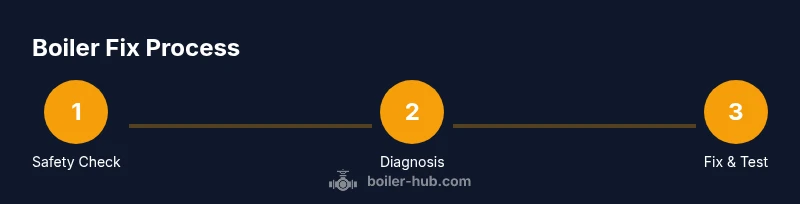
If your boiler is malfunctioning, follow a simple decision path: (1) Is there a gas smell or CO alarm? If yes, evacuate and call authorities. (2) Is the heating or hot water off? Check power, thermostat, timer, and reset. (3) Is the pressure gauge too low or high? If low, refill according to the manual; if high, avoid closing valves too quickly. (4) Are there errors on the display? Note code and consult the manual or a professional. This flow helps you act decisively and safely.
Tools & Materials
- Non-contact voltage tester(To verify electrical supply is off before panel work)
- Screwdrivers (Phillips and flathead)(Insulated handles; keep separate bits for screws)
- Adjustable wrench(For hose fittings and unions)
- Nut driver or hex key set(For service panels and hex screws)
- Multimeter(Test voltages and flame sensor circuits as needed)
- Gas leak detector solution or soapy water(Bubble test on gas connections)
- Rags, bucket, and replacement seals(Contain mess and replace worn gaskets)
- Replacement parts kit (seals, gaskets)(Only if you know what to replace)
Steps
Estimated time: 30-75 minutes
- 1
Power down and isolate the boiler
Turn off the boiler at the mains and switch off the gas supply if your model allows safe access. This prevents accidental ignition or electric shock while you inspect. Confirm the power has been cut using a tester before touching any wiring or control panels.
Tip: Always double-check that the boiler is fully isolated before touching any parts. - 2
Check thermostat, timer, and user settings
Verify that the thermostat is set to the desired temperature and that the timer is active if your system uses scheduled heating. Incorrect settings are a frequent cause of no heat or inconsistent temperatures.
Tip: Reset to a known good baseline: 20-22°C for living spaces. - 3
Inspect visible components for leaks or corrosion
Look for water pooling, rust, or damp spots around joints and the boiler cabinet. A small leak can lead to pressure loss and corrosion if ignored. Do not run the boiler if you detect active leakage.
Tip: Use a flashlight to inspect areas behind panels; any corrosion warrants professional assessment. - 4
Check boiler pressure and refill if needed
Consult your manual for the correct pressure range and refilling procedure. Low pressure is a common cause of no heat; over-pressurizing can also be dangerous. Refill slowly and recheck the gauge after a short period of operation.
Tip: Never open multiple valves at once; refilling gradually reduces air locks. - 5
Bleed radiators or internal air vents
If you have a hot-water system with radiators, bleed them to remove trapped air that can reduce efficiency. Use a radiator key or screwdriver as appropriate for your model and listen for a steady, quiet flow of water.
Tip: Collect drips with a rag to preserve floor cleanliness. - 6
Attempt a safe reset if the manual allows
Many boilers support a reset function for a temporary fault. Follow the manufacturer’s reset steps precisely and avoid repeated resets if fault codes reappear. If the fault persists, stop and call a professional.
Tip: Document the fault codes to help a technician diagnose the issue. - 7
Test, observe, and plan next steps
Restore power and gas as appropriate and monitor the boiler for proper cycling, flame stability, and heat delivery. If the problem recurs, compare symptoms to the manual’s fault codes and schedule service.
Tip: Keep cooling-off time in mind; heat exchangers can take time to stabilize after restart.
Questions & Answers
Can I fix a boiler myself?
You can perform basic safety checks and simple resets if your boiler manual approves them. Do not attempt gas or electrical work beyond simple, non-dangerous steps. When in doubt, call a licensed technician.
You can do basic safety checks, but avoid gas or electrical repairs. If uncertain, contact a licensed technician.
What are obvious signs my boiler needs professional service?
No heat or hot water, persistent error codes, loud noises, or visible leaks are red flags. A gas smell or CO alarm also indicates professional intervention is needed.
No heat, leaks, or strange noises should trigger a professional inspection, especially with a gas smell or CO alarm.
How often should a boiler be serviced?
Most boilers benefit from an annual service by a qualified technician, with more frequent checks for older systems or high-use settings.
Most boilers should be serviced yearly by a professional.
What should I do if the boiler pressure is low?
Follow the manual’s guidance to refill the system slowly and recheck pressure. If pressure remains low after refilling, or you see leaks, call a professional.
If pressure is low, refill slowly as the manual suggests and monitor. If it stays low, contact a pro.
Is it safe to reset a boiler?
Reset only if the manufacturer explicitly allows it and the fault is not ongoing. Repeated resets without resolving the underlying issue indicate a need for expert diagnosis.
Only reset when the manual allows and the fault seems resolvable; otherwise call a pro.
What are common causes of no heat in hot water?
Thermostat missettings, low system pressure, a faulty pump, gas supply issues, or air in the system are common culprits. Each requires a different troubleshooting path.
Check settings, pressure, pump, and gas supply; air in the system can also cause no heat.
Watch Video
Key Points
- Prioritize safety and power-down before any checks
- Identify symptoms to decide DIY vs. pro help
- Regular maintenance reduces future failures
- Use a structured diagnosis flow to save time