How to Clean Boiler: A Practical Step-by-Step Guide
A comprehensive, safety-first guide on cleaning your boiler at home. Learn proper preparation, tools, step-by-step actions, and post-clean maintenance to keep your boiler efficient and reliable in 2026.


By following this guide, you will learn how to clean boiler safely and effectively. According to Boiler Hub, proper preparation, protective gear, and careful cleaning can improve reliability and extend the unit’s life. This quick answer outlines the core outcomes: a cleaner exterior, reduced dust and mineral buildup, and safer, more dependable heating. Ready to start the step-by-step process?
What cleaning a boiler actually involves
Cleaning a boiler typically focuses on removing dust, soot, and mineral buildup from accessible exterior surfaces and within accessible burner compartments. It also includes checking condensate traps, drain lines, and seals for signs of wear. Note that interior combustion chamber cleaning or major descaling is usually best left to a licensed technician. According to Boiler Hub, learning how to clean boiler safely can improve efficiency, reduce outages, and extend the unit's life. Regular attention to exterior surfaces helps prevent corrosion and keeps the area around the boiler clean for safe maintenance. If your boiler is older, or you notice frequent clogs, contact a professional rather than attempting aggressive internal cleaning. Always consult the owner's manual for model-specific guidance and safety warnings.
Safety prerequisites before you start
Before you touch any boiler components, take a safety-first approach. Wear protective gear: heat-resistant gloves, safety goggles, and a dust mask. Ensure you can access a power source and, if your system is gas-fired, know where the gas shutoff valve is located and how to operate it safely. Do not work alone in cramped spaces; keep a friend or colleague nearby in case of an emergency. Finally, read the manufacturer’s instructions; some models require special procedures or recommended cleaners that won’t damage seals or heat exchangers.
Tools and materials you’ll need
Gather items that are gentle on boiler components and effective for removing dust and grime:
- Safety gloves (heat-resistant) — essential for handling hot surfaces
- Safety goggles — protects eyes from dust and cleaners
- Dust mask or respirator — prevents inhalation of fine particles
- Vacuum with brush attachment — removes loose debris from burner area
- Soft-bristled brush and microfiber cloths — for delicate surfaces
- Mild detergent or manufacturer-approved cleaner — avoid harsh solvents near seals
- Bucket of warm water and clean towels — for damp wiping
- Screwdriver set and owner’s manual — for panel access and model-specific guidance
- Optional: replacement gaskets/seals as recommended by the manufacturer
Having these on hand helps you perform a thorough exterior clean without risking damage to sensitive parts.
A high-level overview of the cleaning steps
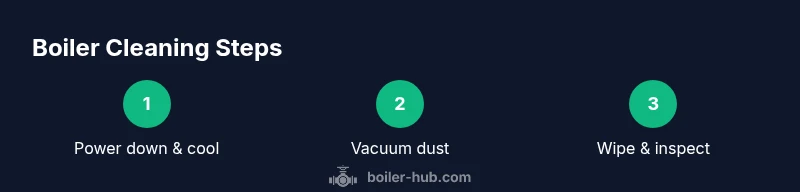
This section provides a practical overview of what you’ll do, without diving into professional-level internal maintenance. Begin by powering down the boiler and letting it cool. Access the exterior and reachable compartments, then use a vacuum to remove loose dust. Wipe down surfaces with a damp microfiber cloth and a mild cleaner, taking care around controls and electrical connections. Inspect visible connections for signs of wear or corrosion. Finally, reassemble, restore power, and observe the boiler’s start-up and normal operation, watching for unusual noises or leaks. Remember to consult your manual for any model-specific cautions and to follow local safety codes. Boiler Hub’s guidance emphasizes cautious, non-intrusive cleaning that protects the unit’s efficiency and longevity.
Maintenance after cleaning and long-term care
Regular maintenance is the foundation of reliable boiler performance. Schedule exterior cleanings at least once or twice a year, and increase frequency if you live in hard-water areas or have a high dust load. Keep the surrounding area clear of clutter and ensure ventilation is not obstructed. After cleaning, check the pressure gauge (if applicable) and review the thermostat settings to ensure they’re within the recommended ranges. Consider a professional annual inspection to verify internal components and burner efficiency. Boiler Hub analysis shows that routine maintenance correlates with improved system reliability and longer service life, especially when combined with accurate fuel management and system flushing as recommended by the manufacturer.
Troubleshooting common issues after cleaning
If you notice a drop in heating performance post-cleaning, start with simple checks: ensure the thermostat is set correctly, verify that radiators are billed and bled, and confirm there are no visible leaks around valves. If the boiler trips on safety controls or you smell gas, shut down and contact a qualified technician immediately. Mineral buildup or clogged vents can disrupt airflow and combustion efficiency; in such cases, a professional cleaning or descaling may be necessary. Use a CO detector near the boiler to monitor safe operation and replace detectors every few years as recommended by safety authorities.
When to call a professional and what to expect
There are scenarios where DIY cleaning isn’t appropriate. If the boiler is older, makes unusual noises, leaks water, has fluctuating pressure, or fails to ignite after exterior cleaning, it’s time to contact a licensed technician. A pro can perform a thorough internal inspection, clean critical components, test combustion efficiency, and verify gas safety. When you call, provide the boiler model, age, recent service history, and a description of any symptoms. This helps the technician prepare with the right tools and avoid unnecessary service visits. The Boiler Hub team recommends scheduling routine professional checkups as part of a proactive maintenance plan.
Tools & Materials
- Safety gloves (heat-resistant)(Covering hands against hot surfaces and sharp edges)
- Safety goggles(Protect eyes from dust and chemical splashes)
- Dust mask or respirator(Prevent inhalation of fine particles)
- Vacuum with brush attachment(Remove loose dust from burner area safely)
- Soft-bristled brush(Gently loosen debris without scratching surfaces)
- Microfiber cloths(Damp wipe for sensitive components)
- Mild detergent or manufacturer-approved cleaner(Avoid harsh solvents near seals; follow manual)
- Bucket of warm water(For rinsing and damp wiping)
- Screwdriver set(Access panels and release hardware per model)
- Owner's manual(Model-specific guidance and safety precautions)
- Replacement gaskets/seals(Only if the manufacturer recommends replacement)
Steps
Estimated time: 60-90 minutes
- 1
Power down and cool
Shut off the boiler at the breaker or control panel and allow the system to cool for at least 15-30 minutes. This reduces burn risk and prevents rapid pressure changes during cleaning.
Tip: If the area feels warm to the touch, wait longer to avoid heat injuries. - 2
Open the cabinet and inspect
Carefully remove the access panel to reveal the exterior and burner area. Use a flashlight to inspect for dust buildup, corrosion, or loose connections.
Tip: Do not force panels; use the screwdriver only where needed to avoid damaging fasteners. - 3
Disconnect power and gas safety checks
If you’re comfortable and the area is clearly safe, switch off electrical power at the service switch and, where applicable, verify the gas supply is shut off. Do not attempt to alter gas lines if you’re unsure.
Tip: If you smell gas or see a hissing leak, evacuate and call emergency services immediately. - 4
Remove dust with vacuum and brush
Use the vacuum to remove loose dust from around the burner, heat exchanger, and cabinet walls. Gently brush stubborn debris with a soft-bristled brush.
Tip: Keep the nozzle a short distance from components to avoid dislodging delicate parts. - 5
Wipe surfaces with damp cloth
Dampen microfiber cloth with mild detergent and wipe exterior surfaces and accessible internal surfaces carefully. Rinse the cloth often and avoid over-wetting any electrical components.
Tip: Do not spray cleaner directly onto controls, valves, or ignition areas. - 6
Inspect seals, drains, and traps
Look for cracked seals, clogged condensate drains, or signs of corrosion. Clear minor blockages with a damp cloth; replace damaged parts per manufacturer instructions.
Tip: Document any wear and plan for replacement during the next service.
Questions & Answers
Do I need to turn off the boiler before cleaning?
Yes, always shut down the boiler and disconnect electrical power before cleaning. If you smell gas, do not proceed and contact emergency services.
Yes, turn off the boiler and electricity before cleaning. If you smell gas, don’t proceed and call for help.
Can I clean the inside of the boiler myself?
Interior combustion chamber cleaning or major descaling should be done by a licensed professional. DIY cleaning can void warranties and pose safety risks.
Internal cleaning is usually for professionals; DIY can be risky and may void warranties.
What cleaner is safe for boiler exterior?
Use a damp microfiber cloth with mild detergent or a manufacturer-approved cleaner. Avoid harsh solvents and bleach near seals or electrical components.
A damp cloth with mild detergent works well; avoid harsh chemicals near seals.
How often should I clean my boiler exterior?
Clean exterior surfaces at least once or twice a year, or more often in dusty or hard-water environments. Follow the manufacturer’s guidelines.
Clean the exterior at least annually, more often if you’re in a dusty area.
When should I call a professional?
Call a professional if you notice leaks, recurring noises, pressure changes, ignition problems, or any gas smell. A pro can perform internal cleaning and safety checks.
Call a professional if you smell gas, hear unusual noises, or have leaks.
Is cleaning safe for all boiler types?
Exterior cleaning is generally safe for most boilers, but internal cleaning and descaling are model-specific and should follow manufacturer instructions or a technician’s guidance.
Exterior cleaning is usually fine; internal cleaning should be handled by a pro.
Watch Video
Key Points
- Power down the boiler before cleaning.
- Use mild cleaners and soft tools to protect seals.
- Protect yourself with PPE and follow manufacturer guidance.
- Inspect seals, drains, and visible connections for wear.
- Test operation after reassembly and monitor performance.