When to Change a Gas Boiler: Signs, Costs, and Replacement Guide
Learn how to tell when your gas boiler needs replacing, weigh repair costs vs replacement, and plan a safe, energy-efficient upgrade with practical steps from Boiler Hub.


Definition: You should change a gas boiler when it shows persistent inefficiency, frequent breakdowns, or rising repair costs, and when safety concerns arise (gas smells, carbon monoxide alarms). Consider replacement if your home needs better heating performance or compatibility with modern controls. If repair costs approach replacement costs or the boiler is nearing the end of its life, replacement is usually the wiser choice.
Why replacing a gas boiler matters
A failing boiler is more than an uncomfortable cold spell on a winter morning. Over time, inefficiency drains your wallet, while inconsistent heat undermines comfort. In some homes, an aging boiler also raises safety concerns, because older components can leak gas or develop dangerous carbon monoxide risks if not properly vented. The decision to replace should weigh reliability, comfort, and long-term operating costs, not just the upfront price of a new unit. According to Boiler Hub, the most cost-effective heating upgrades are often those that pair a modern, high-efficiency boiler with a properly sized heat distribution system and smart controls. This means that replacement isn’t merely about swapping parts; it’s an opportunity to improve home heating, reduce unnecessary energy waste, and simplify maintenance. Before you commit to a purchase, do a careful audit of your current boiler’s performance, your home’s heating needs, and your willingness to invest in preventive safety measures such as CO alarms and regular servicing. A well-timed replacement can deliver steady warmth for many winters and lower total cost of ownership over time.
Signs your gas boiler may be failing
Several warning signs point toward replacement rather than costly repairs. Listen for unusual noises like banging or screeching, which can indicate worn components or trapped gas. Pay attention to heat delivery: cold spots, uneven temperatures across rooms, or longer cycles that don’t restore comfort after a full heating cycle. Look for physical symptoms such as frequent leaks, reduced pressure, unusual rust or white powder around joints, soot around the vent, or a persistent failure to ignite. If you notice a gas smell or your CO detector alarms, shut off the boiler (if safe) and call a licensed technician immediately. Frequent breakdowns, rising energy bills, and repairs that pile up are practical signals that a replacement may be more economical in the long run.
Boiler Hub emphasizes that safety and reliability must drive the decision; even a seemingly small problem can mask a larger issue in older equipment. Document the issue, track when problems occur, and gather quotes before deciding. A thoughtful replacement plan can restore comfort and reduce ongoing maintenance, while keeping your home safe and warm.
Age is a factor, not a fate
Age alone isn’t a hard rule for replacement, but it often correlates with performance decline. As boilers age, seals dry, heat exchangers corrode, and ignition systems wear out, all of which raise the risk of failure. A newer boiler brings better efficiency, more consistent heat, and safer combustion, which translates into lower energy costs and a smaller risk of dangerous emissions. If you’re unsure whether age alone justifies replacement, ask a qualified technician to assess efficiency metrics, venting condition, and the likelihood of future breakdowns. Remember: even a younger boiler may need replacement if it can’t meet your home’s demands or if it lacks modern safety features.
Boiler Hub’s guidance is to treat age as a signal rather than a verdict—use it to trigger a thorough inspection and a cost comparison between continued repair vs. a planned upgrade.
Efficiency and energy savings
A modern high-efficiency boiler can dramatically improve energy use and comfort. Newer models typically use condensing technology to recover heat from exhaust gases, which boosts overall efficiency and reduces fuel consumption. If your current boiler struggles to heat efficiently, you may notice longer cycles, more frequent cycling on and off, and stubbornly high energy bills. When evaluating replacement, compare the AFUE ratings of prospective models and consider how your home’s insulation, radiators, and piping contribute to overall performance. Smart thermostats and zoning systems can further amplify savings by modulating heat based on actual occupancy and usage. A well-chosen replacement should not only warm your home more effectively but also lower ongoing energy expenses over time.
Boiler Hub’s data suggests that aligning a new boiler with an optimized distribution system can deliver meaningful, long-term savings, especially in older homes with heat loss.
Safety considerations and compliance
Gas boiler safety is non-negotiable. Warning signs such as gas odors, hissing sounds, yellow flame (instead of blue), or frequent CO detector alerts require immediate attention from a licensed professional. Routine servicing, annual safety checks, and proper ventilation are essential to prevent dangerous conditions. If your boiler is older or you’ve observed cracks or corrosion, a replacement not only improves reliability but also enhances safety and compliance with current standards. Always work with an accredited installer who follows local regulations, performs vent integrity tests, and verifies CO alarms are placed correctly near sleeping areas. Even with careful maintenance, boilers eventually wear out; proactive planning helps avoid emergency replacements.
Planning the replacement: timing and process
Timing replacement involves balancing urgent need with project logistics. Start by obtaining multiple quotes from qualified gas-safe engineers or installers. Check their credentials, warranty options, and service commitments. Confirm that the chosen model fits your home’s heating needs, fits existing venting or requires only modest ducting, and complies with space constraints and local regulations. Consider factors such as future energy costs, potential rebates, and the availability of parts. You’ll also want to arrange for a temporary heat solution if you live in a cold climate during installation. A well-planned replacement minimizes disruption and ensures you’re ready for the next heating season.
How to choose the right new boiler for your home
Selecting a boiler involves more than picking a brand. Size matters for heating demand, but efficiency, venting, and compatibility with existing radiators and piping are equally important. Decide between a combi boiler (hot water on demand) and a system boiler (stores hot water in a tank) based on household needs, hot water usage, and space. Check the boiler’s AFUE (or ERP eco-labels in some regions) to estimate annual fuel savings. Confirm that the installer can integrate smart controls and zoning if you want precise temperature management. Finally, ensure the unit fits your space and permits, venting system, and clearance requirements. An appropriate-sized, high-efficiency model reduces heat loss and improves comfort across rooms, not just at the point of use.
Step-by-step evaluation checklist (short version)
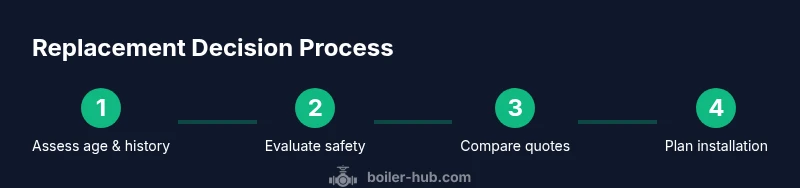
- Review boiler age, service history, and current performance
- Test safety devices and CO detector readings
- Request at least two quotes from licensed professionals
- Compare efficiency ratings and compatibility with current systems
- Plan installation timing and temporary heating if needed
- Review warranties and post-installation support
- Schedule a follow-up safety check after installation
This checklist helps you make an informed decision and avoid rushed, costly mistakes.
Boiler Hub’s practical approach (final takeaway)
The Boiler Hub team recommends a deliberate, safety-first approach to deciding when to replace a gas boiler. Start with a clear assessment of performance and safety, then compare repair costs with a replacement quote that targets long-term energy savings and reliability. Prioritize high-efficiency, properly sized units, professional installation, and a plan for ongoing maintenance. The boiler replacement decision should balance immediate comfort with future energy costs and safety—your home deserves a reliable, efficient heating system for years to come.
Tools & Materials
- Gas leak detector(Use around connections and flue; ensure no active leaks before inspection)
- CO alarm(Install near boiler and bedrooms; test monthly)
- Boiler service history and user manual(Helpful for assessing age, maintenance, and compatibility)
- Notepad and pen(Record findings, questions for quotes)
- Flashlight(Improve visibility in the boiler area)
Steps
Estimated time: 2-3 hours
- 1
Capture the current boiler’s history
Check the manufacture date, service records, and any recurring issues. Document dates, symptoms, and repairs to create a baseline understanding of reliability. This will help you judge whether ongoing repairs are likely to be costlier than replacement.
Tip: Bring all records to quotes for accurate comparisons. - 2
Test safety indicators and performance
Verify CO detectors are functioning and check for gas odors near the boiler. Observe heat delivery, cycling patterns, and any unusual noises. Document any safety concerns that would require immediate attention by a licensed technician.
Tip: If you detect gas odors, evacuate and call emergency services. - 3
Consult with qualified professionals
Request multiple quotes from licensed gas-safe installers. Have them assess the boiler and provide a second opinion on the feasibility of repair versus replacement, including a recommended efficiency level and venting requirements.
Tip: Ask specifically about warranty terms and post-install safety checks. - 4
Evaluate efficiency and long-term costs
Compare current fuel use against proposed models’ efficiency. Consider anticipated energy savings, maintenance cycles, and potential rebates or tax incentives that may apply to high-efficiency units.
Tip: Look for condensed models with good condensate management for best efficiency. - 5
Assess installation logistics
Ensure the new boiler fits the available space, venting is feasible, and wiring and plumbing are compatible with the selected unit. Confirm requirements for permits and any space or clearance limitations.
Tip: Confirm the installer will complete vent tests and safety checks after installation. - 6
Schedule installation and plan contingencies
Choose a preferred installation window, arrange temporary heating if needed, and set expectations for downtime during the swap. Have a clear plan for post-install checks and routine maintenance.
Tip: Book a post-install safety inspection within 1-2 weeks of installation.
Questions & Answers
What are the most common signs that a gas boiler needs replacement?
Frequent breakdowns, rising energy bills, poor heat delivery, unusual noises, and safety concerns like gas odors or CO alarms indicate it may be time to replace. A technician can confirm whether repair or replacement is more cost-effective.
Common signs include frequent breakdowns, higher energy bills, and unsafe conditions like gas odors or CO alarms. A qualified technician can help you decide between repair and replacement.
Should I repair or replace my old boiler?
If repair costs accumulate over time or if reliability is consistently poor, replacement is often more economical in the long run. Get multiple quotes and compare warranties, efficiency, and installation timelines.
If repairs keep stacking up and reliability is poor, replacing is usually smarter. Compare quotes and warranties for the best value.
What efficiency improvements should I expect with a new boiler?
A new high-efficiency boiler typically delivers better heat distribution, lower fuel use, and compatibility with modern controls like smart thermostats. The exact savings depend on home insulation and radiator efficiency.
New boilers often save energy and improve comfort, especially when paired with smart controls and good insulation.
How long does replacement typically take?
Replacement can range from a few hours to a day, depending on system complexity, venting changes, and scheduling. A licensed installer will provide a specific window before work begins.
Most replacements take a few hours, though some can take a day depending on the setup.
Can I install a boiler myself to save money?
Gas boilers require licensed, certified installation due to safety, venting, and CO risk. DIY installation is not recommended and often illegal in many regions.
Gas boiler work should be done by a licensed professional for safety and legal reasons.
What should I ask a installer before signing a contract?
Ask about licenses and insurance, warranty length, post-install safety checks, included parts, and whether the quote covers venting, heat distribution upgrades, and future maintenance.
Ask for licenses, warranties, and a clear post-install safety plan before you sign.
Watch Video
Key Points
- Identify safety signs early and call a professional.
- Weigh repair costs against replacement for long-term value.
- Choose high-efficiency, properly sized boilers for best savings.
- Work with licensed installers and verify post-install safety checks.
- Plan installation to minimize disruption and maximize comfort.