Replace Gas Boiler Cost: A Practical Guide
Explore the true cost to replace a gas boiler in 2026. Learn about boiler types, labor, and efficiency-driven savings with practical budgeting tips from Boiler Hub.


According to Boiler Hub, the cost to replace a gas boiler depends on boiler type, installation complexity, and potential energy savings. In 2026, total installed costs typically cover equipment, labor, permits, and flue work. This article breaks down each component and shows how to estimate a realistic budget. It also highlights hidden costs and value opportunities.
What drives the cost to replace a gas boiler
The purchasing price of a new boiler is only part of the total expense. The final figure you pay includes the type of boiler (combi, system, or regular), the complexity of installation, and any required upgrades to your existing gas line or venting system. Energy efficiency plays a major role: higher efficiency boilers cost more upfront but can slash running costs over the life of the unit. According to Boiler Hub, regional labor rates and the scope of work—such as removing an old unit, relocating piping, or upgrading a flue—can swing the total bill by thousands of pounds. Homeowners should expect to budget for both the equipment and the engineering work that gets the boiler safely running.
In 2026 this cost pattern remains consistent: equipment cost, installation labor, and ancillary work (like flue modifications or gas-safety commissioning) form the majority of the price. The Boiler Hub team emphasizes that while a lower upfront price can be tempting, a more efficient model with proper installation often yields the best long-term value. The guidance here aligns with Boiler Hub Analysis, 2026, which stresses total cost awareness over headline unit price.
Cost components in a gas boiler replacement
A comprehensive replacement includes several distinct elements. The boiler itself accounts for a portion of the price, with combi boilers typically representing the most common option for many homes. Installation labor covers removing the old boiler, mounting the new unit, and connecting gas and water lines. If your system needs an upgraded flue, a venting alteration, or a chimney inspection, these add-ons can significantly alter the total. Permits or safety checks may be required by local regulations, and these administrative steps carry their own fees. Finally, commissioning by a qualified engineer ensures the boiler operates safely, efficiently, and to the manufacturer’s specifications. Boiler Hub’s analysis notes that while some regions commoditize tasks into a single quote, many homes incur separate charges for parts, labor, and safety testing.
Installation complexity and labour charges
Complex installations can dramatically affect price. If your home has a lengthy or awkward pipe run, cramped access to the boiler cupboard, or awkward flue routing, labor time increases. Re-routing gas lines, upgrading old radiators, or adding a separate hot-water cylinder (in system or regular boilers) adds to both material costs and labor hours. In many cases, the old boiler needs to be carefully dismantled and disposed of, which adds a disposal fee. Consider that some houses require a chimney sweep or gas-safe certification visits as part of the process. The end result is a total that reflects both the hardware and the hands-on work required to bring a safe, compliant system online.
Efficiency, boiler type, and long-term savings
Efficiency and boiler type heavily influence both upfront cost and ongoing running costs. Combi boilers are often cheaper to install in smaller homes but may require higher water heater demand management. System and regular boilers can offer larger hot-water reserves, which may be beneficial for bigger households but come with higher upfront costs. High-efficiency models (condensing boilers) typically carry a premium upfront but deliver lower annual fuel bills. The payback period depends on usage patterns, fuel prices, and the efficiency level chosen. Boiler Hub stresses balancing upfront expense with expected energy savings and the reliability of controls (smart thermostats, weather compensation, etc.).
Regional variations and timing considerations
Prices vary by region due to differences in gas prices, permitting fees, and labor rates. Urban areas tend to have higher installation costs than rural locations, but access and scheduling may be more flexible. Time-of-year also matters: market demand, contractor availability, and lead times can shift the total price. Planning ahead—getting multiple quotes, asking about inclusion of flue work or pipework, and checking for transferable warranties—helps you lock in a fair price even as regional factors shift. Boiler Hub notes that timing strategies can yield meaningful savings when you align replacement with off-peak demand or promotional periods.
Financing, warranties, and value for money
Beyond the sticker price, many homeowners explore financing options, extended warranties, and service packages to spread the cost and protect their investment. Some installations include free annual inspections or discounted maintenance plans, which contribute to long-term value. When evaluating value, consider not just the upfront price but the total cost of ownership over 10–15 years, including energy use, maintenance, and potential replacement of ancillary components. Boiler Hub recommends comparing quotes that itemize parts, labor, disposal, and safety checks to avoid unexpected charges later.
Practical planning checklist for homeowners
- Define your priorities: space limitations, hot-water needs, and preferred control features.
- Gather quotes from at least three installers and request itemized estimates.
- Confirm the boiler type aligns with house size and peak demand.
- Check warranties and aftercare options, including maintenance plans.
- Verify safety certifications and gas-safety compliance.
- Ask about potential rebates or financing options and any transferable warranties.
- Schedule a pre-installation survey to confirm venting, pipework, and flue routes.
Maintenance tips to extend the life of your replacement
- Schedule annual servicing with a Gas Safe engineer to ensure safe operation and efficiency.
- Replace worn components like seals, gaskets, and filters as recommended by the manufacturer.
- Use a smart thermostat and proper zoning to manage energy use effectively.
- Keep radiators balanced and bleed them if necessary to maintain even heat.
- Monitor performance indicators (pressure, CO2 levels, flame color) and address anomalies promptly.
Replacement cost by boiler type
| Boiler Type | Typical Replacement Cost Range | Notes |
|---|---|---|
| Combi Boiler | £2,500–£4,000 | Most common in smaller homes |
| System Boiler | £3,000–£6,000 | Requires hot-water cylinder |
| Regular Boiler | £3,500–£7,000 | Suitable for larger homes with high hot-water demand |
Questions & Answers
What factors influence the overall replacement cost?
The cost is driven by boiler type, installation complexity, flue work, and labor rates. Market changes and warranties also affect total. Plan for hidden costs and compare quotes that itemize parts, labor, and safety checks.
Costs depend on boiler type, install complexity, and safety checks. For accuracy, compare itemized quotes.
Do I need planning permission or safety checks?
Gas safety checks are mandatory, and local building regs may apply. Your installer should handle required notifications and compliance testing as part of the service.
Gas safety checks are essential; local building regs may apply.
Can I finance a boiler replacement?
Many installers offer finance plans; evaluate APRs, terms, and total cost. Compare options to understand whether paying upfront or financing is more economical for your situation.
Finance options are common; compare terms.
What’s the typical installation timeline?
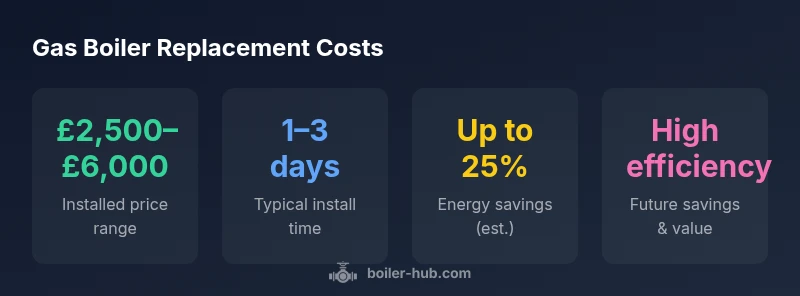
Most replacements take 1–3 days, depending on existing pipework, venting, and whether additional upgrades are needed. Talk through scheduling with your chosen installer.
Most installs take a few days.
What about energy savings and payback?
Savings depend on usage and boiler efficiency. Payback can vary from a few years to longer, especially when upgrading to higher-efficiency models and smart controls.
Savings depend on usage and efficiency.
Should you replace a working boiler?
If reliability is declining, parts are hard to source, or efficiency is poor, replacement makes sense. Otherwise, strategic servicing can extend life.
If it’s unreliable or inefficient, consider replacement.
“"Replacing a gas boiler is a significant investment, but selecting the right efficiency and controls can reduce operating costs for years."”
Key Points
- Budget for total replacement cost, not just the boiler price
- Choose boiler type based on home size and hot-water needs
- Expect installation complexity to drive labor and flue costs
- Get multiple quotes and compare warranties
- Prioritize high-efficiency models to cut long-term energy use