Replace a Boiler Cost: A Practical Guide for 2026
Understand the replace a boiler cost, including installed price ranges, key factors, and strategies to save. Learn how boiler type, efficiency, and installation choices affect total expense and long-term value.


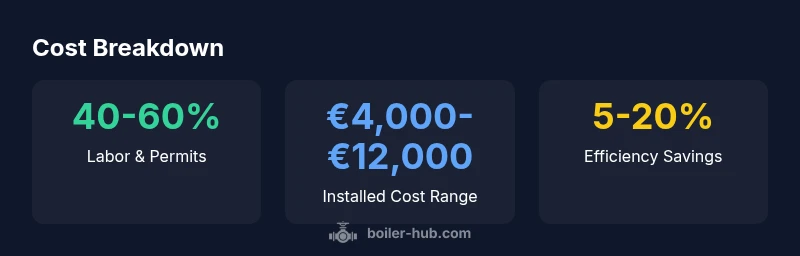
According to Boiler Hub Analysis, 2026, the installed cost to replace a boiler typically ranges from $4,000 to $12,000, depending on boiler type, efficiency, and installation complexity. If you're budgeting to replace a boiler cost, labor, materials, and permits can account for about 40% to 65% of the total. Regional differences and incentives can shift the final price.
What drives the replace a boiler cost
Any estimate to replace a boiler cost must consider several interacting factors. The boiler type you choose (gas-fired standard, high-efficiency condensing, or combination units with domestic hot water) sets the baseline price. Unit price typically hikes with efficiency ratings, from mid-range to premium, because higher efficiency boilers require better heat exchangers, enhanced controls, and sometimes more complex venting. Another major determinant is installation complexity: existing piping, venting constraints, chimney condition, and whether fuel lines or condensate drainage require upgrades. In older homes, a typical scenario might include upgrading radiators, installing a condensate trap, or rerouting vents—each adds to labor time and materials. Permits and inspection fees are not optional in many jurisdictions, and disposal or recycling of the old boiler can carry a small charge. Finally, regional labor markets and supply chain conditions affect the total. When home occupants ask how to price the work, it’s crucial to assemble a bid that itemizes boiler cost, labor, permits, disposal, and contingency.
Choosing the right boiler: cost vs long-term savings
The initial price tag is only part of the story when you consider the replace a boiler cost. A higher-efficiency model often carries a steeper upfront price, but the ongoing energy savings can shrink payback periods. In the 2026 landscape, condensing boilers and modulating burners frequently deliver better annual energy performance, sometimes exceeding 10% to 20% improvement depending on usage. Yet the most economical choice depends on your home's size, insulation, and local fuel prices. For many homeowners, selecting a mid-range efficiency boiler with solid reliability yields a favorable balance between upfront cost and long-term operating costs. Boiling the decision down to 5-year and 10-year budgets helps quantify when the extra upfront pays for itself.
Installation considerations that influence price
Installation complexity is a major driver of the replace a boiler cost. If your current system uses awkward venting routes, requires chimney work, or involves upgrading gas lines, expect higher labor bills and materials. Replacement may also involve upgrading the radiant heating loop, adjusting piping, or updating controls and thermostats. Sometimes a simple swap is possible, but in older homes with irregular ductwork or limited access, installation costs can climb quickly. Local permits, inspection fees, and potential disposal charges for the old unit add to the total. Planning with a qualified installer who inventories all work, checks venting, and confirms clearances will help you avoid surprise charges at the end of the project.
Hidden costs that surprise homeowners
Many buyers underestimate the budget impact of hidden costs. The cost to replace a boiler cost can include disposal fees for the old boiler, boiler removal from a restricted space, and potential asbestos or lead paint considerations in older buildings that require specialist handling. Upgrading ventilation, condensate drainage, and adding back-up controls or a weatherization assessment can also push totals higher. Finally, if permits require structural adjustments or extra inspections, those line items become non-negligible. A thorough quote with a line-item breakdown helps reveal these hidden costs before signing any contract.
Financing, incentives, and planning a budget
Financing plays a meaningful role in shaping the total outlay for a boiler replacement. Some manufacturers and local programs offer rebates for high-efficiency models, while energy-saving incentives can reduce net cost. If cash flow is tight, consider financing options with fixed terms and predictable monthly payments. When evaluating proposals, ask about incentive eligibility, required inspections, and whether warranties require installation by a licensed pro. A careful plan takes you from the initial estimate to a predictable payment schedule, making the replace a boiler cost more manageable over time.
How to estimate your total cost: a practical 5-step framework
- Gather bids from at least two licensed installers; 2) Confirm boiler type, efficiency, and capacity match for your home; 3) Itemize costs: equipment, labor, permits, disposal, and contingency; 4) Include potential add-ons (new tank, expansion tank, or zoning updates); 5) Consider financing or rebates and set a realistic contingency of 5-10%. This framework helps you articulate the true replace a boiler cost and compare apples to apples across bids.
Replacement options: standard efficiency vs high-efficiency, condensing, or combi
For many homes, a standard-efficiency gas boiler meets daily needs at a lower upfront price, but higher efficiency models offer meaningful long-term savings, especially in poorly insulated spaces. Condensing boilers cost more upfront but reduce annual fuel usage, potentially shortening the payback period. Combination boilers (combi) provide domestic hot water on demand without a separate storage tank, which can alter install costs but may lower energy waste in some scenarios. Discuss your priorities with your installer—comfort, hot water reliability, and fuel costs—to choose the best fit for your home and budget.
Maintenance after installation: protecting your investment
After you replace a boiler cost, ongoing maintenance is essential to preserve efficiency and prevent expensive failures. Schedule annual servicing to inspect the burner, heat exchanger, valves, and controls. Clean and replace filters as needed, check for leaks, and verify venting and combustion safety. A well-maintained system typically experiences fewer breakdowns and longer service life, improving the overall value of your purchase. Keep a maintenance log and set reminders for inspections to maximize reliability and minimize unexpected costs.
How Boiler Hub helps you compare bids and plan for the replace a boiler cost
Boiler Hub emphasizes apples-to-apples bid comparisons. When you request quotes, ask for a detailed breakdown that includes boiler model, input ratings, efficiency, labor hours, permits, disposal, and contingency. Use a structured checklist to evaluate each proposal and avoid the temptation to pick the lowest bid without considering long-term costs. Our team recommends prioritizing reliability, warranty terms, and local support networks, since these often determine total cost of ownership beyond the initial installation.
Cost and efficiency overview by boiler type (Boiler Hub Analysis, 2026)
| Boiler Type | Installed Cost Range | Typical Efficiency | Notes |
|---|---|---|---|
| Gas-fired standard | €4,000-€7,500 | 85%-89% | Most common; good balance of cost and performance |
| Gas-fired high-efficiency (condensing) | €6,000-€12,000 | 90%-97% | Greater upfront cost; lower operating costs |
| Oil-fired boiler | €5,000-€11,000 | 80%-88% | Region-dependent fuel availability; less common in urban areas |
Questions & Answers
What factors most influence the replace a boiler cost?
Primary drivers are boiler type and efficiency, installation complexity (venting, piping, chimney work), and regional labor rates. Permits and disposal fees also contribute. A detailed bid helps you understand the cost breakdown.
The main factors are boiler type, efficiency, installation complexity, and regional labor rates. Don’t forget permits and disposal fees.
Is it cheaper to repair or replace a boiler?
If repairs exceed 50-60% of a new unit’s cost or the boiler is aging, replacement often provides better long-term value due to efficiency gains and fewer future breakdowns. Consult a qualified technician for a personalized assessment.
If repairs would cost more than half of a new unit, replacement is usually the wiser choice.
Do I need permits to replace a boiler?
Most jurisdictions require permits and inspections for boiler replacement to ensure venting, combustion safety, and energy compliance. Check with your local building department and include permit costs in your bid.
Yes. Permits are commonly required for boiler replacements to ensure safety and code compliance.
How long does boiler replacement take?
Typically, a straightforward replacement can take 1–2 days, including setup and cleanup. More complex jobs with venting or zoning upgrades may take 3–4 days.
Most installs take 1–2 days, longer if extra ductwork or venting is needed.
Are there financing options for boiler replacement?
Many lenders offer home improvement loans or energy-efficiency financing. Some manufacturers and utility programs provide rebates or favorable terms for efficient installations. Always compare financing terms with the overall cost.
There are financing options and rebates available to offset upfront costs.
What maintenance is required after installation?
Schedule annual servicing to inspect the burner, heat exchanger, venting, and controls. Regular maintenance helps sustain efficiency and extends the boiler’s life.
Get yearly service to keep everything running efficiently.
“Cost is driven by boiler type, installation complexity, and local codes; careful planning and bidding can significantly reduce the financial impact of replacing a boiler.”
Key Points
- Know the cost drivers: boiler type, efficiency, and installation complexity.
- Budget 40-65% for non-equipment costs like labor and permits.
- Compare bids with a detailed line-item checklist.
- Consider financing or incentives to reduce out-of-pocket cost.
- Prioritize reliability and warranty for long-term value.