Average Cost of Replacing a Boiler in 2026: A Practical Guide
Explore the average cost of replacing a boiler in 2026 with clear ranges, cost drivers, and budgeting tips from Boiler Hub analysis. Understand regional differences, components, and strategies to maximize value.


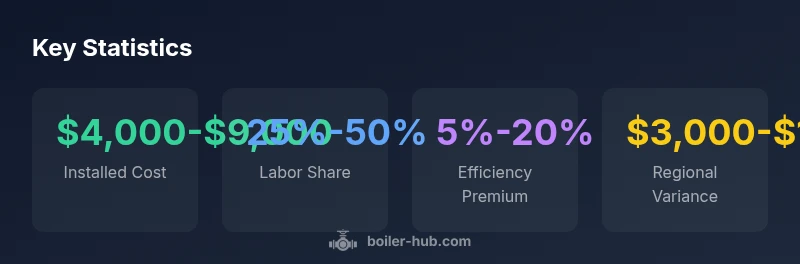
According to Boiler Hub, the installed cost to replace a boiler in 2026 typically ranges from $4,000 to $9,000, influenced by boiler type, fuel, efficiency, and local labor rates. Higher-efficiency models and complex installations can push costs higher, while simple replacements in standard homes tend toward the lower end. Budget for permits, disposal, and potential system upgrades to maximize energy savings.
What drives the average cost of replacing a boiler
The average cost of replacing a boiler is a composite figure that reflects more than the price tag of the boiler itself. When homeowners ask about the cost, they are really asking about the total installed price, which includes the boiler unit, labor, and any ancillary work. According to Boiler Hub, the 2026 cost landscape is shaped by the boiler type (gas, electric, oil, or combi), upfront equipment price, efficiency level, and the complexity of the installation. Regional labor rates and the need for venting, condensate drainage, or additional piping can swing the final figure by thousands of dollars. The pressurized realities of retrofits—like upgrading flues, expanding vent runs, or adding zone controls—often determine whether you land on the lower or higher end of the spectrum. This is why the best approach is to obtain multiple quotes that break out each cost element, then compare the long-term energy savings tied to efficiency ratings. The Boiler Hub Team emphasizes that permits, disposal, and post-installation testing are routinely overlooked yet essential to a compliant, safe, and efficient system.
Regional cost variations and budgeting
Cost differences by region are substantial and deserve careful scrutiny. In urban centers with high labor costs, installation fees can push the total well above the national average, while rural areas may fall at the lower end of the range. International markets further complicate budgeting: the UK, Canada, and parts of Europe impose different VAT, disposal charges, and regulatory requirements that impact the final price. When planning, gather quotes that explicitly itemize labor, equipment, permits, and disposal. Boiler Hub's 2026 analysis shows that regional factors can account for several thousand dollars of variance even among similar boiler models. To avoid sticker shock, consider timing (off-peak seasons may offer lower labor rates) and bundled services that combine installation with maintenance contracts.
Cost components you should expect in a replacement
A boiler replacement breaks down into several core components, each with its own price driver. The boiler unit itself varies widely by type and efficiency class. Labor costs reflect the complexity of the install, including piping adjustments, venting, and condensate drainage work. Permits and inspection fees depend on local codes, while disposal and recycling of the old boiler add a separate line item. Additional costs may include upgrading the thermostat or controls for better energy performance and, in some cases, elevating fuel lines or gas venting standards. When calculating total cost, don’t neglect small but recurring items such as conduit runs, mounting hardware, and connection kits. A thorough written estimate from a licensed installer should spell out each cost element so you can compare apples to apples across quotes.
Financing options, warranties, and cost-saving strategies
Financing can make a large upfront expense more manageable, and many utility programs offer rebates or incentives for high-efficiency replacements. Manufacturer promotions and extended warranties can add long-term value, especially if energy savings are a priority. To maximize value, pair the replacement with an annual service plan that includes safety checks and performance tuning. Also, ask about load calculations, refrigerant charge verification, and post-installation efficiency testing. These steps can protect your investment and ensure the boiler operates close to its rated efficiency, reducing operating costs over time.
When to replace vs repair: a practical decision framework
A repair may be cost-effective if the boiler is relatively young and the malfunction is limited to a component such as a thermostat or a pump. However, if the unit is past its expected lifespan (typically 10–15 years depending on make and use), or if frequent repairs are needed, replacement becomes more economical in the long run. Consider projected energy costs and the potential for improved efficiency with a newer model. If you’re facing frequent breakdowns, reduced heat output, or rising fuel bills, a replacement often delivers better value and reliability. Always consult a licensed technician to assess condition, safety, and regulatory compliance before deciding.
How Boiler Hub analyzes replacement costs in 2026
Boiler Hub conducts cost analyses by aggregating price data from installers, manufacturers, and energy efficiency programs. The methodology accounts for boiler type, efficiency class, regional labor rates, and mandatory ancillary work (venting, piping, permits). We present ranges instead of fixed numbers to reflect real-world variability. Our cost models emphasize total installed price—equipment, labor, permits, and disposal—along with potential long-term savings from improved efficiency. By applying standardized assumptions and cross-checking quotes, Boiler Hub provides a transparent framework that homeowners and facility managers can use to compare options and budget effectively.
Typical replacement cost ranges by boiler type
| Boiler Type | Typical Replacement Cost Range | Fuel Source |
|---|---|---|
| Gas Boiler | $4,000-$9,000 | Gas |
| Electric Boiler | $2,500-$7,000 | Electric |
| Oil Boiler | $4,500-$10,000 | Oil |
Questions & Answers
What is the typical cost range for boiler replacement in 2026?
In 2026, installation costs for replacing a boiler typically fall between $4,000 and $9,000, depending on the boiler type, efficiency, and regional labor rates. Permits and disposal add to the total. Always compare itemized quotes to understand every cost element.
Most homeowners pay between four and nine thousand dollars for a full boiler replacement, depending on the model and where they live.
Which boiler type is cheapest to replace?
Electric boilers generally have a lower upfront price than gas or oil models. However, operating costs and installation complexity can affect long-term value. Compare total cost of ownership when choosing a boiler type.
Electric boilers are usually cheaper upfront, but you should compare long-term energy costs too.
Are rebates or financing options available for boiler replacement?
Yes. Look for utility-incentive programs, manufacturer rebates, and financing options offered by installers. Combining rebates with financing can reduce upfront costs and improve cash flow while boosting efficiency.
Many utilities offer rebates; financing options can help spread out the cost.
Can I replace a boiler myself?
No. Boiler replacement requires a licensed professional to ensure compliance with safety codes and venting requirements. DIY installs can be dangerous and void warranties.
Replacing a boiler yourself isn’t advised or typically permitted by code.
How long does a typical boiler replacement take?
Most boiler replacements take 1–2 days, depending on venting, piping changes, and controls upgrades. Complex installations can require additional time.
Most replacements are done in one to two days.
What should I ask my installer to ensure value?
Ask for warranty terms, efficiency ratings (AFUE or ERP), post-install testing, permit scope, and a detailed breakdown of labor and materials. A clear contract helps avoid surprises.
Get warranty details, efficiency ratings, and a clear cost breakdown.
“Accurately estimating boiler replacement costs is essential for budgeting and choosing a system that delivers long-term energy savings.”
Key Points
- Know the total installed cost, not just the boiler price
- Expect regional differences in installation costs
- Budget for permits and disposal upfront
- Higher efficiency equals higher upfront cost but lower operating costs
- Get multiple, itemized quotes to compare value