Cost of Home Boiler Replacement: What to Expect in 2026
Explore the true cost of home boiler replacement, from installed price ranges to hidden fees and financing options. Learn practical budgeting tips with Boiler Hub.


Estimated installed costs for replacing a home boiler vary widely, but a practical range is typically several thousand dollars. Using Boiler Hub Analysis, 2026, most homes spend between roughly $4,000 and $12,000 for a full installation, depending on boiler type, fuel, and project complexity. This quick figure helps homeowners budget while they compare models and contractors.
Why the cost of home boiler replacement varies
The price tag for replacing a boiler isn’t a single number. It reflects multiple interacting factors, including the boiler type you choose, fuel source (gas, oil, or electric), and the complexity of the job. Labor availability in your area, the need for venting or chimney work, and whether upgrades to radiators, piping, or a storage tank are required all influence the final figure. In practice, homeowners should expect a broad range rather than a fixed price. According to Boiler Hub, the total installed cost can swing based on the project’s scope, permit requirements, and the condition of existing plumbing and wiring. Planning for the unknowns early helps prevent sticker shock later and supports better decisions when evaluating quotes.
Key takeaway: budget for both the boiler unit and the install labor, then add a contingency for site-specific upgrades.
Typical cost ranges by boiler type
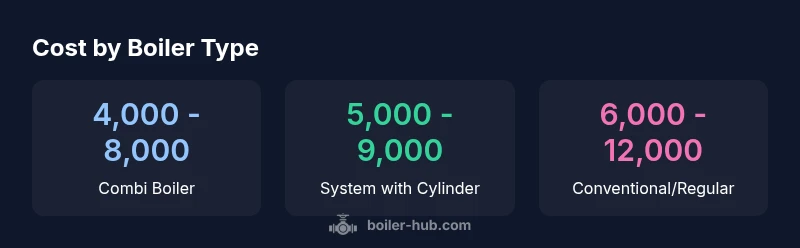
Different boiler configurations come with different price profiles. A compact combi boiler, which provides heat and hot water in one unit, often falls toward the lower end of the installed range but may require more labor if venting or duct routing is involved. A system boiler with a separate hot water cylinder typically sits mid-range, depending on cylinder size and integration with existing piping. A traditional or regular boiler with storage tanks can be at the higher end due to additional components and potential retrofit needs. While figures vary by region, these are the common brackets you’ll encounter in a standard installation:
- Comb i boiler replacement: commonly observed in the lower-to-mid range, with variations based on venting and proximity to existing flue systems.
- System boiler with cylinder: usually mid-range, influenced by cylinder capacity and integration with existing radiator loops.
- Regular boiler with storage and expansion: tends to be higher, especially if upgrading to larger storage or adding new radiant zones.
Note: The above ranges are general guidance and reflect typical installation scenarios used in Boiler Hub Analysis, 2026. Your local pricing will depend on labor markets and market prices for components.
Hidden costs and optional upgrades that affect total price
Beyond the boiler unit itself, several hidden costs can shift the final bill. Permits, asbestos or lead abatement if applicable, upgraded flues or venting, and adjustments to existing piping or radiator circuits can add to the cost. If your home requires new expansion tanks, automatic bypasses, or a larger water heater, budget for these items as part of a broader system upgrade. Old radiators may need balancing or replacement to match a new boiler’s output. Don’t overlook disposal fees for the old unit. These factors collectively push the installed price higher than the boiler price alone. Boiler Hub’s experience shows that most price surprises come from site prep and compatibility work rather than the new boiler itself.
Takeaway: ask for a line-item breakdown with contingencies so you can see where costs are concentrated and plan accordingly.
How to estimate your install cost and get quotes
To approximate a project budget and compare quotes realistically, follow a structured approach. Start by confirming the boiler type that best suits your home’s heating load and hot water needs, then solicit at least three written quotes that include equipment, labor, venting, permits, and disposal. Ask contractors to perform a sizing calculation (whether it’s a modern SEER-like efficiency model or standard AFUE rating), check for compatibility with existing radiators, and request a breakdown of any required upgrades (piping, venting, or tank replacement). When reviewing quotes, watch for add-ons that aren’t truly needed and seek warranty details. This process helps ensure you aren’t paying for unnecessary extras and that the chosen solution delivers the expected comfort and efficiency.
Practical tip: request a test plan and commissioning checklist so you know how the system will be tuned after installation.
Financing options, incentives, and cost-saving strategies
Because boiler replacement is a sizable upfront purchase, many homeowners explore financing options to spread the cost. Options may include low-interest personal loans, home improvement loans, or credit offers from contractors. Some regions offer energy-efficiency incentives or rebates that can reduce the net price, especially for high-efficiency or condensing boiler models. To maximize your return on investment, compare offers, read the terms carefully, and consider installation timing to align with utility or manufacturer promotions. Boiler Hub recommends weighing financing costs against expected energy savings to determine the true cost of ownership over time.
Smart move: pair a replacement with a programmable thermostat or zoning upgrades to capture enhanced energy savings sooner.
Efficiency, lifecycle costs, and value trade-offs
Upfront price is only one piece of the puzzle. High-efficiency boilers may carry a higher initial price but deliver lower operating costs through better AFUE ratings and reduced energy waste. Over the lifecycle of the system, energy savings can offset higher purchase costs, particularly in homes with heavy heating demands or frequent hot-water use. When evaluating options, look beyond the first-year bill and consider long-term maintenance, parts availability, and the unit’s expected lifespan. Boiler Hub analysis suggests that this broader view often tips the decision toward models with greater efficiency and robust warranties, especially in climates with long heating seasons.
Bottom line: focusing on total cost of ownership often yields greater long-term value than chasing the lowest upfront price.
Choosing the right contractor: due diligence and best practices
Selecting the right contractor is as important as choosing the boiler. Verify licenses, insurance, and references. Ask about installation timelines, post-installation support, and how they handle potential issues such as leaks or faults during the first weeks. Ensure the contract specifies equipment brands, model numbers, and any promised performance metrics. A properly sized, accurately installed boiler relies on skilled workmanship; don’t compromise on the installer’s qualifications or the completeness of the warranty. Boiler Hub emphasizes obtaining multiple quotes, reading the fine print, and confirming the contractor’s service commitments before signing.
What to ask for: a written sizing calculation, a comprehensive warranty, and a post-installation performance test plan.
What to expect during the installation week
A boiler replacement generally unfolds in stages: removing the old unit, preparing the site, installing the new boiler and any compatible components, configuring venting, connecting piping and electrical hookups, and conducting safety checks. The technician should test the system, verify hot-water delivery, and demonstrate safety features like CO detectors. Expect some temporary impact on hot water or heating during the day, and plan for any necessary shutoffs. Clear communication with your installer about access, scheduling, and any required permits helps minimize disruption and ensures a smoother week. Boiler Hub notes that a well-coordinated crew minimizes delays and ensures a reliable start-up.
Boiler Hub practical checklist and next steps
Before finalizing any replacement, use this quick checklist: confirm the boiler type matches your needs, obtain a full cost breakdown, review warranties, confirm permit requirements, and verify the installation plan includes safety tests and commissioning. After installation, monitor energy use and comfort, and schedule regular maintenance to sustain efficiency. The Boiler Hub team recommends documenting all components, model numbers, and warranty details for future reference. Returning to the checklist or revisiting quotes can help you confirm you’re getting value for money and comfort for the years ahead.
Cost comparison by boiler type and setup
| Boiler Type | Typical Installed Cost (USD) | Fuel/Power Source | Notes |
|---|---|---|---|
| Combi Boiler Replacement | 4,000 - 8,000 | Natural gas or propane | Compact unit; heats water on demand |
| System Boiler with Cylinder | 5,000 - 9,000 | Natural gas or propane | Separate cylinder; higher storage capacity |
| Conventional/Regular Boiler | 6,000 - 12,000 | Natural gas or propane | Often paired with larger radiator systems |
| Oil boiler replacement | 7,000 - 13,000 | Oil | Typical in areas without gas service; higher fuel costs |
Questions & Answers
What affects the cost of replacing a home boiler?
Many factors drive the cost, including boiler type, fuel source, labor rates, and whether you need venting, piping upgrades, or radiators. Permits and disposal fees can add to the total. A line-item quote helps you see where money goes and avoids price surprises.
Costs vary with boiler type and labor. Get itemized quotes to see where money goes.
What is included in installation cost?
Installation costs typically cover the boiler unit, labor, vent changes, piping, wiring, hookups for hot water, and startup testing. Some quotes exclude permits, disposal, or extensive upgrades; confirm inclusions in writing.
Make sure permits, disposal, and any upgrades are included in writing.
Gas vs electric boilers: which is cheaper upfront?
Gas boilers usually have lower running costs in traditional climates but higher upfront costs than electric boilers. Electric boilers have simpler installation and can be cheaper where gas supply is limited, though electricity costs may rise. Your local energy prices and incentives will influence the choice.
Gas often cheaper to operate; electric can be cheaper to install in some areas.
How long does installation take?
Most boiler installations take 1-3 days, depending on room setup, venting needs, and any required upgrades to existing plumbing or radiators. Complex retrofits can extend this window.
Most installs take about a day or two, with some complex jobs longer.
Are there financing options for boiler replacement?
Yes, many contractors offer financing, and lenders sometimes provide promotional rates for home improvements. Check for energy-efficiency rebates in your area and compare loan terms to find the best fit for your budget.
Financing is commonly available; compare lender terms for the best rate.
When should I repair instead of replace?
If the boiler is old and repeatedly failing or costs to fix exceed a reasonable portion of a new unit’s price, replacement is often more economical. Regular maintenance can extend life, but major repairs may not be cost-effective in the long run.
If repairs pile up or efficiency is very low, replacement is usually better.
“When planning a boiler replacement, think about total cost of ownership, not just the upfront price. A properly sized, efficiently installed boiler pays for itself over time through lower energy bills and fewer repairs.”
Key Points
- Understand price drivers before contacting contractors
- Compare cost ranges by boiler type and home size
- Factor in permits, venting, and upgrades as part of total cost
- Explore financing and incentives to improve affordability
- Prioritize lifecycle cost and efficiency over upfront price