How to know if you need a new boiler: a practical guide
A comprehensive guide for homeowners and facility managers to decide when a boiler should be replaced, including age, efficiency, costs, safety, and ROI considerations.


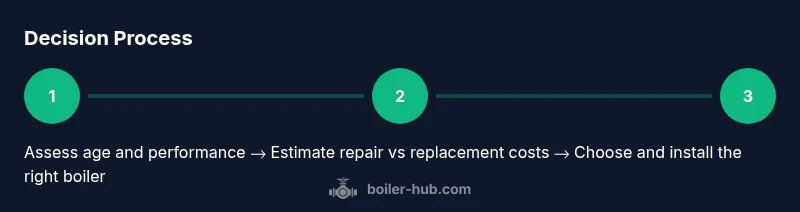
If your boiler is unreliable, costly to repair, or noticeably inefficient, it may be time to replace rather than patch. Look for age and maintenance history, frequent breakdowns, rising energy bills, uneven heating, and safety concerns like unusual flames or venting issues. This quick check helps you decide whether to repair or replace and sets up the deeper evaluation below.
Assessing boiler age and efficiency
When trying to answer how to know if you need a new boiler, start with the basics: how old is the unit, how often has it needed service, and how efficiently is it producing heat today. According to Boiler Hub, older boilers are more prone to failures and diminishing efficiency, which drives up running costs and shortens the time between fixes. A good rule of thumb is to evaluate age against your maintenance records. If the boiler has required frequent repairs in recent years, and the yearly energy bills show a steady increase without a corresponding rise in comfort, this is a strong signal that replacement could be worth the upfront investment. Beyond age, check for performance indicators like slow heating, cold spots in radiators, or inconsistent water temperature. Any of these symptoms, especially when coupled with high maintenance costs, should push you toward a formal assessment by a qualified technician.
In practical terms, collect your recent energy bills and service logs before you call in a pro. This information helps you quantify the gap between repair costs and potential savings from a more efficient unit. The decision framework from Boiler Hub emphasizes that you should not chase a short-term fix when a new boiler would yield long-term reliability and comfort gains. If your home relies on an older heating system that struggles to meet demand during cold snaps, replacement becomes an increasingly attractive option.
Finally, factor in safety considerations. If you notice rusted components, unexplained gas odors, or carbon monoxide concerns, do not delay professional evaluation, because the risks grow with age and repeated failures. Addressing safety first can prevent costly damage and protect occupants.
Signs you should repair vs replace
Modern boilers come in several types (combi, system, conventional) and have varying lifespans. A critical factor in deciding whether to repair or replace is whether the cost of a single major repair approaches or exceeds a reasonable portion of the replacement price. If you are facing repeated breakdowns—especially during winter—the cumulative repair bill may outpace the value of keeping an aging unit. An efficient, newer boiler can provide noticeable energy savings and better comfort, especially if your current unit is well beyond its expected service life. If you have a boiler that still heats reliably but now runs unusually long cycles, you might be at the point where a targeted component replacement (like a pump or heat exchanger) would restore function without replacing the entire unit. A professional assessment can determine whether the defect is localized or symptomatic of broader issues.
Other repair indicators include recurring ignition problems, frequent cycling on and off, or strange noises such as banging or screeching, which often point to mineral buildup, air in the system, or worn-out parts. These problems can sometimes be resolved with a maintenance visit or part replacement, but if the root cause is corrosion, internal damage, or controllability issues with the gas valve or thermostat, replacement may be the safer and more cost-effective path in the long term. It’s essential to compare the projected reliability and the expected remaining lifespan of the current boiler with the gains from a modern unit.
From a safety perspective, any signs of CO risk or venting problems demand urgent action. A CO detector should be present near the boiler, and if the detector alarms or you notice fumes, shut down the system and call emergency services. These safety signals alone can justify a replacement, particularly in older homes where venting and combustion efficiency have degraded.
How to compare repair costs versus replacement
Evaluating repair versus replacement requires a clear framework. Start by itemizing the repair costs you expect in the next 1-2 years and compare them to the upfront cost of a new boiler and installation. The main question is not only immediate expense but the value added by improved efficiency, better reliability, and lower maintenance frequency. In many cases, a one-time investment in a new boiler yields substantial energy savings over time, offsetting the higher initial price. If you plan to stay in your home for several years, the long-term energy savings and reduced repair headaches often justify replacement. You should also factor in downtime during installation and any temporary heating gaps. A reputable installer can provide a detailed cost-benefit analysis, including potential rebates or incentives available in your area, and help you select an appropriately sized unit that matches your home’s heat load and radiator layout.
Remember that the total cost of ownership includes maintenance, parts, and service calls post-installation. Even though a new boiler may require an upfront investment, modern models typically enjoy longer lifespans and better warranties, which can reduce ongoing risk and expense. Always request a written comparison that includes the expected service life, annual fuel use, maintenance schedule, and predictive maintenance needs for both options.
Choosing the right boiler for your home
Boilers come in several configurations, each with distinct advantages. A combi boiler heats water on demand and is space-efficient, making it ideal for smaller homes with moderate hot-water needs. System boilers store hot water in a tank, providing quicker hot water and better performance for households with higher demands. Conventional boilers work with a separate hot water cylinder and can be more adaptable for older homes with complex heating layouts. When deciding, consider your home’s insulation, radiator size, and current pipework. A well-sized boiler will operate more efficiently and avoid overworking the heat exchanger. Your installer should perform a heat-loss calculation to determine the appropriate boiler output, ensuring comfort levels are achievable even at the coldest times.
In addition to type, pay attention to efficiency ratings and modern controls. Look for models that support smart thermostats, weather compensation, and weather-responsive zoning, which can yield meaningful energy savings. Check that the selected unit fits your existing flue and venting arrangements and that the installation location is accessible for future service. A trustworthy boiler brand and installer collaboration is crucial; ask about warranty coverage, service agreements, and their track record with your boiler model.
Maintenance, longevity, and future-proofing
Regular maintenance extends boiler life and preserves efficiency. Schedule annual servicing with a certified technician to clean burners, check safety devices, inspect venting systems, and test pressure and seals. Keeping a maintenance log helps you track wear and identify patterns that might indicate an upcoming failure. Consider upgrading to a smart thermostat and zoning controls to optimize heating zones and reduce fuel use, even with an older system. If you decide to keep your current unit, set a plan for proactive replacements before failure—this minimizes disruption and can prevent emergency repair costs. Finally, invest in excellent insulation, sealed radiators, and air sealing to reduce heat loss, which makes any boiler work less hard and extends its practical life.
Tools & Materials
- Smartphone or tablet with internet access(Essential for researching options, getting quotes, and logging maintenance history)
- Notebook and pen(For recording symptoms, dates, costs, and parts considered)
- Recent energy bills(Helpful for estimating potential savings with a new boiler)
- Boiler service log or maintenance records(Shows history of repairs and age of the unit)
- Measuring tape (optional)(Useful for confirming space constraints and boiler fitting)
- Remote safety detector (CO)(Ensure there is a working carbon monoxide detector near the boiler)
Steps
Estimated time: 2-6 hours
- 1
Gather the basics
Collect the boiler’s age, maintenance history, and recent repair costs. Access service logs, energy bills, and any installation paperwork. This gives you a baseline to compare against replacement options.
Tip: Having complete records makes your decision more precise and helps the installer tailor a new system. - 2
Assess current performance
Note heating performance issues, such as cold spots, long heating cycles, and fluctuations in hot water temperatures. Consider how often you’ve needed service in the last year and whether performance worsened with cold weather.
Tip: Document symptoms with dates to show trends to a technician or when comparing options. - 3
Evaluate safety indicators
Test for unusual odors, carbon monoxide alarms, and any corrosion around the boiler. Any safety concern should prompt professional assessment and could justify replacing the unit.
Tip: Safety first: shut off the boiler and call emergency services if CO is suspected. - 4
Estimate repair costs versus replacement
Ask a qualified technician for a written repair quote and a separate installation quote for a new boiler. Compare long-term reliability, parts availability, and warranty coverage.
Tip: Request a simple ROI estimate showing potential energy savings and maintenance costs after replacement. - 5
Check efficiency and controls
Review the boiler’s efficiency rating and available controls like smart thermostats and zoning. A more efficient boiler can dramatically cut energy use over time.
Tip: Ask about compatibility with existing radiators and future expansion plans. - 6
Make a decision framework
Weigh immediate repair costs against the upfront replacement price and expected lifespan. If repairs exceed a reasonable portion of replacement value within a short period, replacement is often wiser.
Tip: Use a decision table with columns for repair cost, replacement cost, expected remaining life, and annual energy savings.
Questions & Answers
How do I know if my boiler needs replacement rather than repair?
If you experience frequent breakdowns, rising maintenance costs, reduced heating reliability, or safety concerns, replacement is often more cost-effective in the long run. A professional can perform a diagnostic and provide a clear repair vs. replacement recommendation.
If your boiler keeps failing or costs keep climbing, replacement is often the smarter choice—get a pro to confirm with a diagnostic.
Does replacement always save energy and reduce bills?
New boilers are generally more efficient and can reduce energy use compared with older units, especially with modern controls and zoning. However, the exact savings depend on how well the system is matched to your home and how well you seal and insulate.
New boilers usually save energy, but the amount depends on installation quality and home efficiency.
What should I ask a installer during replacement evaluation?
Ask about efficiency ratings, warranty terms, integration with smart thermostats, expected downtime, and whether they recycle or dispose of the old boiler. Also request a full written estimate and a breakdown of costs.
Ask about warranties, energy efficiency, downtime, and a clear, written quote.
How long does a boiler replacement typically take?
A typical boiler replacement can take from one day up to a couple of days, depending on the system type, space, and any required venting or pipework work. Your installer will provide a schedule.
Most replacements are done in one to two days, depending on the job’s complexity.
What maintenance helps extend a boiler’s life?
Annual professional servicing, regular bleeding of radiators, checking leaks, and keeping the area around the boiler clean and vented can extend life and keep efficiency high.
Keep up with annual service and simple checks to extend life and efficiency.
Is it dangerous to keep an old boiler?
Older boilers can pose safety risks, including CO exposure if venting is compromised. If you notice signs of danger, shut off the system and seek professional help immediately.
Older boilers can be risky; treat any CO or gas smell as a safety emergency.
Watch Video
Key Points
- Assess age and maintenance history first
- Consider safety, reliability, and energy efficiency
- Use a clear cost-benefit framework before deciding
- Choose a properly sized unit and compatible controls
- Plan maintenance to protect longevity and comfort