How Often to Replace a Boiler: Practical Timing Guide
Discover when to replace a boiler, signs to watch for, and how age, efficiency, and repair history influence timing. Practical guidance for homeowners and facility managers.


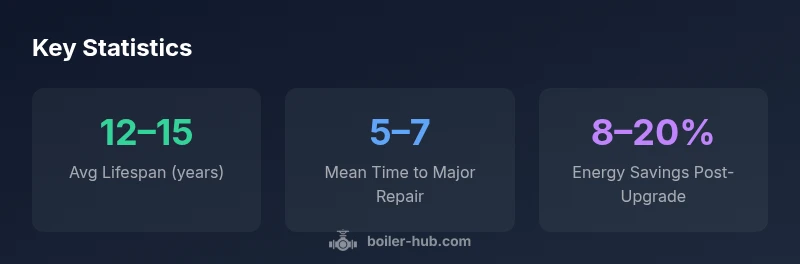
Typically, a modern boiler lasts about 12–15 years, with longer life possible with meticulous maintenance. Most homeowners should plan a replacement as the clock nears 12–15 years, especially if reliability declines or efficiency drops. Age, repair history, and the total cost of ownership determine the best timing.
Why replacement frequency matters
According to Boiler Hub, planning when to replace a boiler isn’t just about age. It’s a balance of reliability, efficiency, and the total cost of ownership. A well-timed replacement minimizes downtime, reduces monthly energy bills, and preserves comfort. Homeowners and facility managers who track repair frequency, system performance, and fuel usage are better positioned to avoid abrupt outages and prevent expensive last-minute emergencies. The guidance below helps translate those signals into a practical timeline that you can adapt to your building’s needs.
A proactive replacement strategy also aligns with broader energy goals. Modern boilers, especially condensing models, convert more fuel into usable heat, lowering emissions and lowering long-term operating costs. This is a core aspect of modern boiler-system planning and is echoed in Boiler Hub’s 2026 guidance for sustainable maintenance programs.
How long boilers typically last
Most modern gas boilers, when properly installed and maintained, deliver reliable service for roughly 12–15 years. Some systems may stretch beyond 15 years, but efficiency tends to decline as parts wear and heat exchangers accumulate deposits. Residential units that are well-cared-for—annual service, clean heat exchangers, and correct thermostat usage—often push toward the upper end of this range. In contrast, boilers installed during periods of high usage, or those that frequently fail or require expensive repairs, may need replacement sooner. The key takeaway from Boiler Hub Analysis, 2026 is that life expectancy is a function of age, usage, service quality, and heat-load demands. Expect shorter lifespans in homes with hard water, frequent cycling, or inconsistent maintenance.
The actual decision window varies by system type. Condensing boilers, designed for higher efficiency, tend to reach the end of their practical life later than older non-condensing units because their core components are built to tighter tolerances. However, a failed or inefficient condensing boiler can still justify replacement earlier if repairs push beyond the cost of a new unit over a typical 5–7 year forecast.
Indicators it’s time to replace
Several clear signals suggest you should plan a boiler replacement rather than pursuing further repairs:
- Recurrent breakdowns: If the unit fails repeatedly in a single heating season, a replacement is often more economical than continual repairs.
- Surging energy bills: A steady rise in fuel use without commensurate warmth indicates diminishing efficiency.
- Frequent repairs exceeding a significant portion of replacement cost: When annual damage and service bills approach or exceed the price of a new boiler, replacement is prudent.
- Age and compatibility issues: Odds of component obsolescence grow with age, and newer controls or venting standards may require upgrades that a repair won’t cover.
- Uneven heating or poor hot-water performance: Long-term comfort problems typically point to aging heat exchangers or uneven heat transfer.
- Safety concerns: Visible corrosion, unusual smells, or noises warrant a professional assessment, as aging boilers can pose safety risks.
Replacement vs. repair: a decision framework
A practical framework helps owners decide between repair and replacement. Start with a three-step assessment:
- Calculate maintenance and repair costs for the past 12–24 months and project them for 3–5 years.
- Compare those projections to the estimated cost of a new boiler, including installation and any needed venting or piping work.
- Consider efficiency improvements. Upgrading to a high-efficiency condensing boiler can deliver meaningful energy savings over several years, often justifying the upfront investment. If the projected long-term operating costs of repair exceed the replacement’s payback period, replacement becomes the rational choice. Boiler Hub’s approach emphasizes both short-term affordability and long-term energy performance.
Planning a replacement: timing and steps
A well-timed boiler replacement requires a structured plan. Begin with a professional assessment to verify current heating load and system condition. The next steps typically include selecting the right boiler type (gas, oil, or hybrid options), determining correct sizing to match the home’s heat demand, and evaluating venting and fuel considerations. Permits and inspections may be required by local codes, and many manufacturers offer replacement incentives or rebates that can reduce the upfront cost. When you’re close to a decision, ask for detailed quotes that include removal of the old unit, disposal, and any required upgrades to fuel lines, venting, and condensate drainage. A thorough plan mitigates the risk of under-sizing or over-sizing which can otherwise compromise comfort and efficiency.
Energy efficiency and long-term costs
Efficiency is a core driver of replacement timing. Modern condensing boilers achieve higher annual fuel utilization than older models, translating into lower operating costs even if the upfront price is higher. The efficiency gains, expressed as AFUE or similar metrics, often justify replacement when the old boiler’s efficiency falls below the break-even point. In practice, the decision hinges on your fuel costs, your climate, and how long you expect to stay in the home or facility. A more efficient boiler not only lowers bills but also reduces emissions and can improve indoor comfort by delivering more even heat distribution. Boiler Hub emphasizes using a whole-system approach—balancing boiler efficiency with proper insulation, radiator sizing, and thermostat strategy for real-world payback.
Common mistakes and how to avoid them
Avoid common missteps that undermine replacement outcomes. Don’t pick a boiler based on price alone; ensure proper sizing and compatibility with existing radiation or consider modernization of distribution when needed. Skipping a professional load calculation can result in an oversized or undersized unit that fails to meet comfort goals. Also, disregard of venting, condensate drainage, and combustion air requirements can lead to performance problems or safety risks. Finally, neglecting post-installation commissioning, balance, and controls calibration reduces potential energy savings. A systematic approach reduces the risk of future calls and ensures the system performs as intended.
Guidance framework for timing a boiler replacement
| Aspect | Typical Guidance | Notes |
|---|---|---|
| Lifespan (years) | 12–15 | Based on Boiler Hub Analysis, 2026 |
| Replacement threshold (AFUE) | 90%+ recommended | High-efficiency condensing models |
| Repair cost trigger | When repairs approach replacement cost | Evaluate annual repair trend |
| Downtime for replacement | 1–2 days | Site readiness and disposal timing |
| Payback period | 3–7 years | Depends on fuel and usage |
Questions & Answers
When should I replace versus repair a boiler?
If annual repair costs exceed a sizable portion of a new unit’s price and reliability is compromised, replacement is usually more economical. Use a target horizon of 3–5 years to weigh payback and comfort improvements.
If repairs add up over several years or you’re losing reliability, replacing the boiler often makes more sense than frequent fixes.
Do replacement boilers really save energy?
Yes. Modern high-efficiency boilers convert more fuel into heat, reducing operating costs over time. Savings depend on climate, fuel type, and home efficiency measures.
New boilers save energy, but the exact savings depend on your situation and usage.
What factors influence replacement timing?
Age, repair history, efficiency, and future fuel costs are the main drivers. The decision also considers how long you expect to stay in the property and potential rebates.
Age, repairs, and efficiency drive when to replace, plus expected stay duration and rebates.
Are rebates or incentives available for new boilers?
Many regions offer rebates or incentives for high-efficiency boilers. Check local programs and consult your installer for options available in your area.
There are often rebates for efficient boilers—ask your installer what applies locally.
How does replacement affect home value?
A new boiler can improve resale value by reducing the risk of heating failures and lowering operating costs. The impact varies by market and overall system condition.
A new boiler can boost resale value, especially if paired with good overall energy upgrades.
“Regular maintenance extends boiler life, but even a well-kept unit will eventually demand replacement as efficiency and reliability decline.”
Key Points
- Assess age and repair history before deciding.
- Plan replacement around 12–15 years for efficiency gains.
- Prioritize high-efficiency condensing models to lower costs.
- Engage a professional for sizing and installation.
- Use Boiler Hub guidance to time major upgrades strategically.