How Often Should a Boiler Be Replaced: A 2026 Guide
Discover how often a boiler should be replaced, factors that affect lifespan, when to repair vs replace, and planning tips from Boiler Hub to protect your home in 2026.


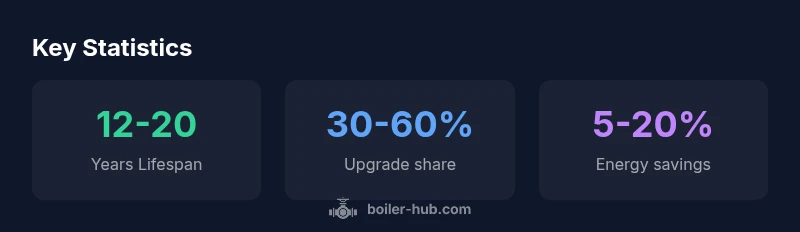
If you're wondering how often boiler replaced, the short answer is: it depends on age, usage, and maintenance. Most homes plan a replacement in the 12- to 20-year window, with high-efficiency models sometimes lasting longer. This guide from Boiler Hub explains lifespans, signs of decline, and planning tips for a smooth transition.
How Often Boiler Replaced: A Practical Baseline
In practical terms, homeowners often ask, "how often boiler replaced?" The answer hinges on age, maintenance history, and how the system has been used. A well-maintained boiler placed in a moderate climate can approach the upper end of its expected life, while harsher conditions or neglect can shorten it. The typical replacement window for many homes is roughly 12 to 20 years, but this can vary with boiler type and installation quality. If you’re trying to plan a budget, think in 12- to 20-year cycles, with additional room for high-efficiency models that may extend service life when properly maintained. Boiler Hub’s analysis emphasizes that proactive maintenance and timely upgrades often prevent unexpected breakdowns and improve safety and comfort for occupants. If you can identify aging components early, you’ll reduce the risk of an inconvenient outage.
Key takeaway: They don’t all die at the same age. Your boiler’s replacement timing should factor in age, maintenance, and performance rather than a strict calendar date.
Factors That Influence Replacement Frequency
Several interdependent factors determine how often a boiler should be replaced. Age is the most obvious predictor: after a certain point, components wear, seals degrade, and efficiency drops. Maintenance quality dramatically reshapes this timeline: annual professional servicing, timely part replacements, and system flushes can push a replacement further into the future. Climate matters too: colder regions demand more demanding use in winter, accelerating wear. Water quality affects corrosion and sediment buildup, while fuel type and efficiency rating influence ongoing reliability and operating costs. Finally, the installation quality and system design (including proper venting and expansion tank sizing) can significantly impact the observed lifespan. Boiler Hub’s framework shows a nuanced picture: proper upkeep can shift a replacement window toward the higher end, while neglect tends to bring it forward.
Tip: Pair a professional annual inspection with a home diary noting unusual noises, cycling frequency, and pressure readings to gauge when replacement becomes prudent.
Signs Your Boiler May Be Ready for Replacement
Watch for a cluster of signals that replacement may be prudent rather than dumping another repair into the budget. Frequent breakdowns, rising energy bills despite stable usage, and deteriorating heat output are red flags. Louder-than-normal operation, banging or hammering sounds, and venting or flue issues can indicate failing seals or corrosion. If you notice excessive rust on the boiler cabinet, water leaks around connections, or carbon monoxide alarms triggered during winter, these are urgent reasons to consult a professional and consider replacement. A boiler that requires regular repair parts (especially major components) or one that no longer meets your home’s heat demands should be evaluated against the cost and reliability benefits of upgrading to a higher-efficiency unit. Boiler Hub emphasizes the importance of early assessment to avoid emergency replacements during peak season.
Checklist: inspect for leaks, test CO detectors, review last service date, and compare current performance with your heating needs.
Repair or Replace? A Practical Decision Framework
When deciding between repair and replacement, weigh reliability, cost, and comfort. If repairs are frequent and expensive relative to a new installation, replacement often becomes the economical choice—especially as newer models deliver higher efficiency and better safety features. Consider the boiler’s age, the likelihood of further breakdowns, and the difference in annual energy costs between your current unit and a modern condensing boiler. A major factor is safety: aging boilers may produce higher emission risks or CO leakage if not properly maintained. If the system’s reliability has degraded to the point where multiple visits are required in a single heating season, replacement should be on the table. In many cases, scheduling a replacement before an anticipated cold spell minimizes downtime and discomfort. Boiler Hub recommends obtaining a few quotes that include system sizing, venting checks, and an energy-efficiency assessment to make an informed choice.
Rule of thumb: a replacement is worth considering when repair costs accrue to a substantial portion of a new installation or when reliability concerns become frequent.
Planning and Budgeting for Replacement
A well-timed boiler replacement requires planning. Start with an energy audit to identify savings opportunities and a sizing calculation to match the new unit to your home’s heat load. Budget for the installation, permits, and potential upgrades to ventilation, gas lines, or electrical capacity as needed. While exact prices vary, you can expect a project to span a range that reflects unit type, installation complexity, and regional labor costs. Financing options, seasonal promotions, and potential incentives may reduce the upfront burden. Boiler Hub’s 2026 guidance stresses that proactive budgeting and early procurement help you avoid price spikes and installation delays. A phased approach—preparing a replacement window in the shoulder seasons—can also minimize downtime and disruption.
Planned steps: obtain three bids, verify warranty coverage, and confirm that the installer conducts a full heat-loss calculation and combustion test.
Choosing a New Boiler: Size, Type, and Efficiency
Selecting a new boiler involves balancing size, fuel source, and efficiency. Condensing boilers offer superior efficiency by reclaiming heat from exhaust gases, often delivering lower operating costs over their lifespan. When sizing, rely on a professional heat-loss calculation for your home, rather than simple rules of thumb; under-sizing reduces comfort, while over-sizing inflates upfront costs and can shorten equipment life due to more frequent cycling. Fuel type should align with your building’s infrastructure and energy goals. In many regions, low-carbon solutions complement traditional boilers, such as hybrid configurations with heat pumps. Boiler Hub recommends prioritizing models with good warranty coverage and proven performance in your climate. Don’t overlook controls (thermostats, zoning) that optimize performance and comfort. A well-chosen boiler will not only meet current demands but adapt to future weather patterns.
Bottom line: efficient, properly sized boilers deliver the best long-term value and reliability.
Installation, Downtime, and Safety Considerations
Installation is a critical phase that influences performance and longevity. Schedule the work to avoid extreme winter demand, ensure permits are in order, and verify that the installer trains occupants on safe operation and CO monitoring. Carbon monoxide safety remains paramount; ensure a dedicated CO detector is installed near the boiler and throughout living spaces. Post-installation checks should include sealing joints, venting integrity, and combustion efficiency testing. Plan for minimal downtime by coordinating with your contractor on access and utility shutdowns. If you’re upgrading to a higher-efficiency model, expect adjustments to the home’s ventilation and thermostat programming. Regular follow-up servicing in the first year helps confirm that the new unit operates as intended and meets the manufacturer’s performance specs. Boiler Hub’s approach emphasizes safety, efficiency, and long-term reliability as core outcomes of a well-executed installation.
Maintenance To Extend Life and Delay Replacement
Maintenance is your best defense against premature replacement. Schedule annual professional servicing, replace worn seals, clean heat exchangers, and check for proper venting. Regular flushes or water-treatment adjustments can reduce scale and mineral buildup that degrade efficiency. Keep your system's controls calibrated and consider upgrading to modern thermostats and zoning to optimize heat delivery. Simple steps, like bleeding radiators and ensuring air vents function correctly, contribute to consistent performance. By prioritizing maintenance, you can extend the life of your boiler and maximize energy savings. Boiler Hub’s guidance consistently shows that proactive care often shifts the replacement timeline later, preserving comfort and value for homeowners and facilities managers alike.
Lifecycle comparison of common boiler types
| Boiler Type | Typical Lifespan (years) | Maintenance Notes |
|---|---|---|
| Gas condensing boiler | 12-20 | Annual service advised; high efficiency reduces emissions |
| Oil boiler | 15-25 | Requires professional service; fuel supply impacts lifecycle |
| Electric boiler | 15-25 | Low maintenance; check electrical supply reliability |
Questions & Answers
How long does a typical boiler last?
Most boilers last 12-20 years, depending on maintenance, usage, and climate. Proper servicing can push the effective life closer to the upper end of that range.
Most boilers last about a decade or two, depending on upkeep and conditions.
Should I repair or replace a failing boiler?
If repair costs accumulate or frequent failures occur, replacement with a high-efficiency model is often more cost-effective and reliable in the long run.
If it’s breaking down a lot, it’s usually time to replace.
When is the best time to replace a boiler?
Plan replacement in the shoulder seasons to avoid peak demand and align with installation schedules to minimize downtime.
Aim for a time when you’re not relying on heating heavily.
Are there incentives for replacing an old boiler?
Check local and federal programs for rebates or tax credits. Availability varies by region and fuel type.
There may be rebates—check local programs.
How do I choose the right boiler size and type?
Have a licensed pro perform a heat-loss calculation, consider condensing models, and match fuel type to your home’s infrastructure and goals.
A professional will size the boiler correctly and advise on efficiency.
“Regular maintenance is the difference between an unexpected breakdown and a well-timed replacement. When a boiler ages beyond its efficient life, upgrading to a high-efficiency model can reduce energy use and improve safety.”
Key Points
- Plan replacement within a 12-20 year window
- Maintain regularly to push replacement later
- Choose a properly sized, high-efficiency boiler
- Weigh repair costs against replacement for reliability
- Schedule installation before peak demand and verify safety features