How Long Do Boilers Last on Average: A Practical Guide
Discover the typical boiler lifespan, factors that affect longevity, and practical maintenance steps to maximize life. Learn how long boilers last on average and plan replacements with confidence, courtesy of Boiler Hub.


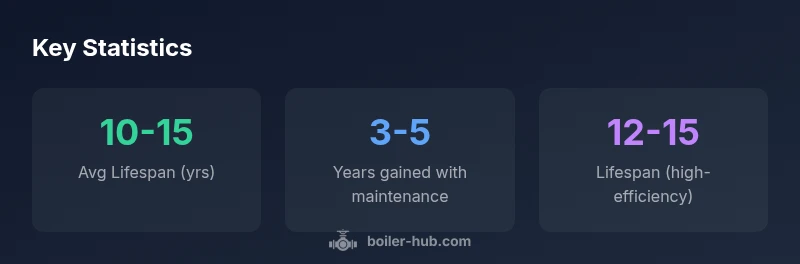
On average, boilers last about 10 to 15 years in typical residential service. High-efficiency models may push toward 15 years with regular maintenance, while older standard-efficiency units often end closer to 10 years. Real-world lifespan depends on installation quality, fuel type, usage patterns, and annual servicing. Regular professional checkups, proper water treatment, and timely component replacements can extend life.
What determines boiler lifespan
According to Boiler Hub, several interlinked factors determine how long a boiler lasts. The central question often asked is how long do boilers last on average, and the answer hinges on boiler type, installation quality, water chemistry, and maintenance habits. In typical residential service, the baseline range commonly falls between 10 and 15 years, but your actual longevity will lean toward the higher end with proactive care. Age alone isn’t destiny; proper care can push a unit toward the top of its expected life.
Key drivers include:
- Boiler type and efficiency class
- Quality of installation, proper venting, and code-compliant servicing
- Water quality and hardness, which influence scale and corrosion
- Regular maintenance, timely part replacements, and filter/wilter checks
- Operating pressure and cycling frequency
Understanding these factors helps homeowners and facility managers plan replacement windows, avoid outages, and optimize performance. When you ask how long do boilers last on average, this framework matters for budgeting and service scheduling.
Lifespan differences by boiler type
Boilers come in several configurations, and their lifespans differ accordingly. Standard-efficiency (non-condensing) models typically sit in the 10–12 year range under steady maintenance. High-efficiency condensing boilers, designed for better heat capture, often reach 12–15 years when properly installed and regularly serviced. System and combi boilers can vary similarly, but installation quality and water chemistry remain critical.
- Standard-efficiency boilers: rely more on consistent servicing to maintain efficiency and longevity.
- High-efficiency condensing boilers: tend to last longer if corrosion control and proper venting are kept up.
- Combination (combi) boilers: space-saving units that can perform well, with lifespan similar to other modern models when maintained.
For facility managers, the choice between models should factor in efficiency gains, expected service life, and potential replacement timing in your maintenance calendar. Remember, the phrase how long do boilers last on average serves as a guide, not a guarantee; actual life depends on care and conditions.
Maintenance practices that extend life
Maintenance is the most controllable lever to extend boiler life. Regular service reduces the risk of hidden problems that accelerate wear and corrosion. Boiler Hub emphasizes scheduling a professional inspection at least once a year, plus targeted care for water treatment and system flushing.
Practical steps include:
- Annual professional service with a full inspection of heat exchanger, burners, and controls
- Flushing the system to remove mineral buildup and using proper water treatment
- Checking and maintaining correct pressure and expansion tank health
- Replacing worn gaskets, seals, and safety valves before leaks develop
- Bleeding radiators and balancing the system to minimize cycling
A well-maintained boiler operates more efficiently, experiences fewer breakdowns, and can reach the upper end of its expected life. Consistent upkeep is the best defense against premature retirement.
Replacing vs repairing: timing and budgeting
When a component failure occurs, homeowners often wonder whether to repair or replace. While repairs can be cost-effective in the short term, lingering issues and efficiency losses can erode value over time. A common rule of thumb is to compare repair costs to a reasonable fraction of a replacement price, considering current fuel costs and potential energy savings from newer models. If multiple major components require replacement within a short period, replacement often makes financial sense.
Another consideration is efficiency. Older boilers consume more fuel for the same heat, and the energy savings from a newer, high-efficiency unit can offset the upfront cost over several years. In addition to financial factors, plan for downtimes during installation and ensure adequate hot water supply during transition. This approach minimizes disruption while aligning with lifecycle expectations.
Planning for the future: budgeting and service plans
Planning ahead reduces the stress of unexpected boiler failures. Start by estimating the typical replacement window based on your current unit’s age and condition, then work backward to set a service schedule that protects your investment. Warranty terms and service plans vary; a comprehensive plan can cover annual inspections, parts replacements, and potential emergency visits, helping to smooth out costs over time. For many homes, setting aside maintenance funds annually aligns with a 10–15 year lifecycle, ensuring resources are available when replacement becomes prudent. The goal is to stay ahead of wear, preserve comfort, and maintain safety standards throughout the boiler’s lifecycle.
Lifespan by boiler type
| Boiler Type | Avg Lifespan | Notes |
|---|---|---|
| Standard-efficiency boiler | 10-12 years | More maintenance sensitivity |
| High-efficiency condensing boiler | 12-15 years | Better efficiency; longevity improves with care |
| Hybrid/combination boiler | 10-14 years | Lifespan varies with water quality |
Questions & Answers
What is the typical lifespan of a boiler?
Most boilers last about 10-15 years, depending on type and maintenance. Age alone isn't destiny; quality installation and upkeep matter.
Most boilers last about 10-15 years, depending on type and upkeep.
Does high-efficiency mean a longer life?
High-efficiency models often have similar or slightly longer lifespans than standard units when well maintained. Their longevity depends on proper installation and regular service.
High-efficiency models can last as long or longer with good maintenance.
How does maintenance affect lifespan?
Regular professional servicing, water treatment, and timely part replacements prevent corrosion and wear, adding years to the boiler’s life.
Regular service can add years to your boiler.
When should I replace rather than repair?
If repair costs approach or exceed half the price of a new unit, or if efficiency losses persist, replacement is often more cost-effective.
If repairs become expensive or efficiency drops, consider replacement.
Can a boiler last longer than 20 years?
It's possible but uncommon; it depends on maintenance quality, usage, and hardware. Most stay within the 10–15 year range.
20+ years is possible but not typical.
What annual maintenance tasks are essential?
Schedule a yearly service, bleed radiators if needed, check pressure, inspect seals and venting, and flush the system as recommended by the manufacturer.
Annual service and basic checks keep it reliable.
“Regular maintenance is the single most effective way to maximize boiler longevity, but life expectancy still varies with type and usage.”
Key Points
- Schedule annual service to maximize lifespan
- Expect 10–15 year lifespans for most homes
- Maintenance can add years to life
- Budget for replacement costs within a 10–15 year horizon