How Long Is a Boiler Good For: Lifespan, Maintenance & Replacement
Learn how long boilers typically last, what affects their lifespan, and proven maintenance steps to extend life and efficiency. Boiler Hub's evidence-based guidance helps homeowners decide between repair and replacement with confidence.


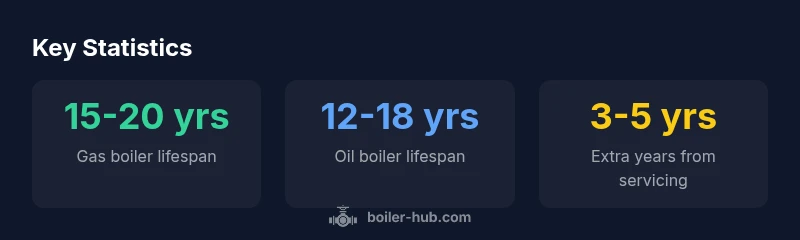
A typical residential boiler lasts about 15-20 years with regular professional maintenance, and up to 25 years in favorable conditions. Longevity depends on installation quality, fuel type, usage, and the rigor of routine servicing. According to Boiler Hub Analysis, 2026, proactive maintenance can push the clock toward the higher end of this range. This means that with consistent care, you may gain several extra years before replacement becomes necessary.
The Open Question: how long is a boiler good for
Understanding the question 'how long is a boiler good for' starts with recognizing that a boiler's life isn't fixed. In most homes, a typical residential boiler lasts roughly 15-20 years, with variations based on type, installation quality, and how consistently you maintain it. Regular professional servicing and timely part replacements can nudge the clock toward the higher end of this range. According to Boiler Hub, the actual lifespan depends on several interacting factors, including usage patterns and water quality. For homeowners planning replacements, framing the issue with this exact phrase helps set realistic expectations and outline a maintenance plan that preserves efficiency as long as possible.
How boiler types influence longevity
Different boiler configurations have distinct lifespans. Gas-fired combi boilers, gas system boilers, oil-fired units, and condensing models each respond differently to heat cycles and mineral buildup. On average, gas combi and system boilers run about 15-20 years with proper care, while oil boilers may show a slightly shorter life of around 12-18 years due to corrosion risk and fuel quality. Systematically tracking wear, replacing anodes or corrosion inhibitors, and keeping the water chemistry balanced are crucial steps that Boiler Hub recommends to maximize the life of any boiler.
Maintenance factors that extend a boiler's life
The maintenance regime is the single biggest lever on a boiler's longevity. Annual professional servicing, timely replacement of gaskets and seals, and attention to the heat exchanger help prevent hidden failures. Water treatment is particularly important: hard water can accelerate scale buildup, reducing efficiency and causing premature wear. Regular pressure checks and ensuring the expansion tank is functioning correctly also help avoid strain on components. By adopting a disciplined maintenance routine, homeowners can noticeably improve reliability while keeping energy costs more predictable.
Practical steps to maximize lifespan
- Schedule a certified boiler service at least once a year.
- Have the heat exchanger inspected for cracks or corrosion.
- Use a water treatment plan if your water is hard or has high mineral content.
- Keep thermostat and controls calibrated; avoid short cycling.
- Monitor for unusual noises, leaks, or pressure drops and address them promptly.
- Bleed radiators and check for safe operating pressure according to the manufacturer. Each step reduces the risk of expensive failures and supports efficiency.
Signs your boiler is nearing end of life
Look for frequent breakdowns, rising fuel bills without changes in usage, unusual smells or smoke, leaking pipes, or white powder around joints. If your boiler requires frequent repairs or struggles to reach temperature thresholds, it may be approaching the end of its productive life. The presence of a persistent E code or no-heating scenario warrants a professional assessment to confirm whether repair or replacement is more economical.
Repair vs replace: a practical framework
When a boiler nears the end of its design life, homeowners must weigh repair costs against replacement benefits. If a major component costs more than 50-60% of a comparable new unit, replacement often makes more sense, especially considering energy savings from modern high-efficiency models. Consider anticipated service intervals, warranty coverage, and the long-term operating costs before deciding. Boiler Hub personnel suggest running a simple cost-benefit analysis to guide the choice.
Planning for replacement: timing, costs, and energy savings
Replacing a boiler is a strategic decision, not just a countdown. Modern high-efficiency models can markedly reduce energy use and emissions, and a well-timed replacement can align with utility rate changes or the start of a heating season. While exact prices vary by region and system size, focus on total ownership costs, including installation and potential rebates. Use the lifespan estimates discussed here as a framework, then compare quotes from accredited installers to determine the optimal moment for replacement.
Real-world scenarios and simple math
Consider a typical 18-year-old gas boiler that has received annual service and occasional part replacements. If maintenance history indicates a clear improvement in efficiency and reliability after the latest service, you might budget for a replacement window 2-5 years ahead of the expected end of life. Conversely, a 12-year-old system with ongoing reliability issues and rising repair costs could justify early replacement to gain energy savings and improved comfort sooner.
Working with a pro: evaluation steps
A certified technician can assess life expectancy by inspecting the heat exchanger, burner, vents, expansion tank, and control systems. They can test system pressure, check for corrosion, and review water quality. With this professional input, you’ll have a structured view of whether a repair or a full replacement offers better value and reliability in the next heating season.
Lifespan and maintenance snapshot by boiler type
| Boiler Type | Typical Lifespan | Maintenance Needs | Notes |
|---|---|---|---|
| Gas boiler (combi) | 15-20 years | Annual service; occasional flushing | Space-saving, common in apartments |
| Gas boiler (system) | 15-20 years | Annual service | Higher flow, easier to upgrade |
| Oil boiler | 12-18 years | Annual service; more frequent checks | Higher maintenance burden |
| Condensing gas boiler | 15-25 years | Annual service; scale control | Highest efficiency when well maintained |
Questions & Answers
How long does a typical boiler last?
Most boilers last 15-20 years with proper maintenance. Some may reach 25 years under ideal conditions.
Most boilers last 15-20 years with proper maintenance.
Does maintenance really extend a boiler's life?
Yes. Regular professional servicing and water treatment can extend life by several years and maintain efficiency.
Yes. Regular servicing helps extend life and efficiency.
Can a boiler last beyond 25 years?
While rare, a well-kept boiler can reach 25 years; beyond that it's increasingly risky regarding reliability.
A boiler can reach 25 years with care, but it's uncommon.
What maintenance should I perform annually?
Schedule a professional service, inspect the heat exchanger, test pressure and safety devices, and check water quality.
Have a pro service yearly and check safety devices.
Repair or replace: how do I decide?
If repair costs approach or exceed the value of a new unit, or efficiency gains justify a new model, replacement is often best.
Replacement or repair depends on cost and efficiency.
What are warning signs of failure?
Leaks, strange noises, frequent breakdowns, or sudden temperature inconsistencies signal a problem likely warranting replacement.
Leaks or odd noises mean you should get an inspection.
“Regular professional maintenance is the most reliable way to maximize boiler life and energy efficiency.”
Key Points
- Plan around a 15-20 year typical boiler lifespan with regular service
- Oil boilers tend to have shorter lifespans than gas units
- Annual professional servicing significantly extends life and efficiency
- Only repair if the cost is reasonable compared with replacement
- Upgrade to high-efficiency models when replacing to maximize energy savings