Replacement Boiler: Planning, Sizing, and Installation
Learn how to plan, size, choose, and install a replacement boiler with safety checks, professional sizing, and long-term maintenance guidance from Boiler Hub.


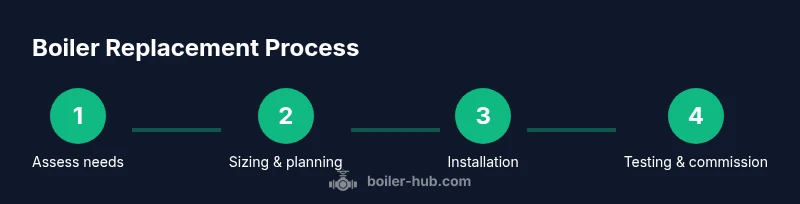
Replacing a boiler means removing an old unit and installing a correctly sized, energy-efficient model that meets your home’s heating load. The process requires a licensed professional for sizing, gas/water connections, venting, and permits. Key decisions involve boiler type (combi, system, or heat-only), efficiency, and compatibility with your home’s piping and radiators.
What is a replacement boiler and when to consider one
A replacement boiler is a complete unit used to replace an aging or failing system. It is installed to restore reliable heat and hot water, improve efficiency, and meet current safety standards. According to Boiler Hub, homeowners should treat boiler replacement as an opportunity to improve energy efficiency, comfort, and safety. If your boiler is over 12-15 years old, shows signs of persistent issues, or has become unreliable during cold snaps, replacement is worth evaluating. A modern, condensing boiler can deliver better fuel efficiency and lower emissions, especially when paired with an updated heat-emitter system and properly sealed venting.
Before you replace, perform a thorough assessment of your home’s heating load, the condition of existing piping, venting, and the available space for the new unit. Confirm that your thermostat, zone controls, and hot-water needs align with the new configuration. This planning step reduces the risk of oversizing, under-sizing, or installation bottlenecks. The Boiler Hub team found that many homes oversize boilers, which wastes energy and shortens equipment life, while undersized units struggle to maintain comfortable temperatures during winter extremes. The goal is a correctly sized, reliable, and safe system that delivers consistent warmth and hot water without unnecessary fuel use.
How to evaluate your current system and home for replacement
Begin with a careful inventory of your current boiler’s age, condition, and performance. If it’s more than 12-15 years old, unreliably lighting or leaking, or frequently tripping breakers, replacement is advisable. Gather utility bills, thermostat usage, and radiator heat distribution data to understand demand. Inspect the venting system for corrosion, cracks, or improper slope; ensure the flue is clear. Check the space around the boiler: clearance, accessibility for service, and proper combustion air. A professional should perform a formal load calculation (Manual J) and a system review that accounts for radiator size, piping runs, and zone controls. The test results will determine if a high-efficiency condensing boiler is worth the investment. Remember to verify that your home has adequate gas supply pressure and that the chimney venting meets current codes. This planning stage sets the stage for sensible, code-compliant replacement.
Boiler types and efficiency: which replacement boiler fits best
Replacement boilers come in several configurations, each with its own sweet spot for different homes. A combi boiler provides both heat and hot water from a single unit, ideal for smaller homes with modest hot-water demand. A system boiler stores hot water in a separate cylinder, offering strong shower performance and efficient zoned heating for larger houses. A heat-only (regular) boiler feeds both the radiators and domestic hot water from a separate cylinder. Efficiency is primarily measured by the annual fuel utilization efficiency (AFUE) for older units and by condensing technology in newer models. Condensing boilers recover heat from exhaust gases, delivering significant energy savings when paired with modern radiators or underfloor heating. Boiler Hub analysis shows that investing in a high-efficiency condensing model often reduces operating costs over the system’s life, especially when the home is well-insulated and equipped with smart controls.
Think about installation complexity and compatibility with existing piping, radiators, and thermostat zoning. If you have an extensive hot-water demand or multiple heating zones, a system or heat-only boiler with a properly sized hot-water cylinder may outperform a compact combi in terms of reliability and energy use. In all cases, verify that the chosen boiler aligns with your home’s fuel source (gas, oil, or propane) and venting options. The goal is a balance of comfort, energy savings, and long-term reliability rather than chasing the lowest upfront price.
Sizing and load calculation: how to avoid oversizing or undersizing
Sizing correctly is the critical step that determines comfort and efficiency for years. Oversized boilers cycle on and off frequently, waste energy, and shorten equipment life. Undersized units struggle to keep rooms warm during peak cold spells. A professional load calculation (often called Manual J) paired with radiator and piping assessments ensures the unit matches the building’s heat load. This calculation takes into account insulation levels, window losses, included heat zones, and occupancy patterns. When a replacement is planned, confirm the baseline inputs with your contractor and request a written sizing methodology. If you already know your home’s heat load, compare the proposed boiler’s AFUE and expected annual energy consumption to your current usage to estimate potential savings. A properly sized boiler will provide consistent warmth, efficient operation, and longer equipment life. The Boiler Hub team emphasizes that accurate sizing is the foundation of a successful replacement.
Installation considerations and permits: what to expect from a licensed pro
A replacement boiler installation is a high-skill, code-driven process that requires licensed professionals. Before work begins, ensure permits are obtained from your local authority and that the installer performs a code compliance review, venting assessment, and gas/oil line verification. The installer should drain and isolate the old unit safely, prepare the installation space, and verify clearances to combustibles. Expect a sequence of tests, including combustion safety checks, gas pressure verification, and leak testing on all joints. Ask for documentation of the work, including venting diagrams, wiring schematics, and a commissioning report that records system pressures and temperature setpoints. A quality installation reduces the risk of leaks, carbon monoxide exposure, and system inefficiencies.
Financing, incentives, and long-term savings: planning for the budget
Costs for replacement boilers vary with boiler type, efficiency, and installation complexity. While price specifics are outside the scope of this guide, plan for a solution that balances upfront investment with long-term energy savings and reliability. Look for utility rebates, manufacturer promotions, or financing options that may spread the cost over time without high interest. Ask your installer about eligible incentives and whether upgrading insulation or adding smart thermostats can amplify savings. A thorough, staged purchase and installation plan with professional quotes helps prevent surprises and ensures you choose a system that fits your budget and comfort goals. Boiler Hub’s guidance is to treat replacement as an investment in home comfort and energy efficiency rather than a one-off purchase.
Maintenance and long-term care after replacement: staying on top of the system
Post-installation maintenance is essential to protect your investment. Schedule an annual professional service to inspect heat exchangers, igniters, burners, and venting, and to verify system pressure and zone controls. Regularly bleed radiators (every few years or as needed) to remove air pockets and maintain efficient heat distribution. Replace worn seals, inspect flue piping for corrosion, and ensure the thermostat and zoning setup respond correctly to temperature changes. Keep a maintenance log and register the boiler for warranties to ensure you receive coverage if a component fails. With proper care, a replacement boiler will provide reliable warmth and hot water for many winters to come.
Authority sources and verification
- DOE/Energy Saver – Boilers: https://www.energy.gov/energysaver/boilers
- ENERGY STAR – Boilers: https://www.energystar.gov/products/boilers
- ASHRAE: https://www.ashrae.org
Tools & Materials
- Safety gear (gloves, eye protection)(Always wear PPE; include non-slip boots)
- Digital multimeter(To verify electrical supply and controls)
- Adjustable wrench set(For hoses and fittings; include stubby wrenches)
- Phillips and flat-head screwdrivers(For service panels and screws)
- Gas leak detector and soap solution(Use to test for leaks after connections)
- Measuring tape and level(Ensure proper clearances and level mounting)
- Manufacturer spec sheet and old boiler data(Reference for sizing and venting)
- Shut-off tools and containment materials(To isolate gas and water safely)
Steps
Estimated time: 8-12 hours
- 1
Schedule a professional load calculation
Contact a licensed heating contractor to perform a Manual J load calculation and assess existing piping, radiators, and space. This determines the correct boiler size and helps avoid oversizing or undersizing.
Tip: Provide your home layout, insulation details, and any existing zoning plans to speed up the assessment. - 2
Decide boiler type and efficiency target
Choose between a combi, system, or heat-only boiler based on hot-water needs, radiator layout, and space. Review AFUE or condensation features to balance upfront cost with long-term savings.
Tip: Ask the installer for a side-by-side comparison of expected fuel use for each option. - 3
Check venting and combustion air requirements
Ensure the existing venting is compatible with the new boiler and that combustion air supply meets current codes. This step prevents future safety issues and ensures efficient operation.
Tip: If you have a direct-vent system, confirm exterior termination location and clearances. - 4
Obtain permits and schedule installation
Your installer or a licensed contractor should file the necessary permits and coordinate city inspections. Expect a commissioning checklist at the end of the project.
Tip: Ask for a written scope of work and a warranty document before work begins. - 5
Prepare the site and secure utilities
Clear the boiler room, protect floors, and ensure safe access for the installer. Utilities should be shut off or isolated as required during removal.
Tip: Move combustibles away and cover the space to minimize dust during installation. - 6
Coordinate removal of old boiler and disposal
The installer will remove the old unit and arrange disposal or recycling according to local regulations.
Tip: Ask about salvage options for recycling parts or reclaimable materials. - 7
Install new boiler and connect lines
The licensed professional will install the new unit, connect gas, water, venting, and controls, and perform leak and safety checks.
Tip: Do not bypass safety devices; verify proper venting and trap/air separation if present. - 8
Test, commission, and set up controls
Run a full test, calibrate thermostats and zoning, and provide maintenance guidance and warranty registration.
Tip: Keep a copy of the commissioning report and note any recommended future service dates.
Questions & Answers
Do I really need to replace my boiler or can it be repaired?
Repairing a boiler can be viable for minor issues, but frequent breakdowns, rising energy bills, or an advanced age often make replacement more economical and reliable in the long run. A professional assessment is essential.
Repairing can work for small issues, but if breakdowns are frequent or it’s old, replacement may be wiser. Have a pro assess your situation.
How do I determine the correct boiler size for my home?
A qualified technician should perform a Manual J load calculation, review radiator capacity, piping, and zoning, and verify venting. The goal is a boiler that meets peak sensible heat demand without excessive cycling.
A pro does a manual load calculation and checks your radiators and pipes to size the boiler correctly.
Can I install a replacement boiler myself?
No. Installing a boiler involves gas or oil fuel systems, high-pressure water circuits, and venting which are safety-sensitive and require licensed professionals to comply with codes and warranty terms.
Installing a boiler yourself isn’t recommended. It’s a job for a licensed pro to ensure safety and compliance.
What drives the cost of replacement boiler projects?
Costs vary with boiler type, efficiency, installer rates, and required venting or piping work. Getting multiple quotes helps you compare scope, timing, and warranties without surprises.
Costs depend on the boiler type, efficiency, and any extra piping or venting work; get several quotes.
What warranties or guarantees should I expect with a replacement boiler?
Look for a manufacturer parts warranty and an installed system warranty. Ensure registration and prerequisites are met, and ask about service agreements for ongoing protection.
Check both parts and installation warranties, and ask about service plans for ongoing protection.
What maintenance is recommended after a replacement?
Schedule annual servicing, check system pressure, bleed radiators if needed, and update thermostat programming for efficiency. Keep a service log and note any anomalies for the technician.
Arrange yearly service, monitor pressure, and keep a maintenance log.
Are there incentives or rebates for upgrading a boiler?
Incentives vary by location and program. Check with your utility provider and state or local energy programs for available rebates or financing options tied to high-efficiency upgrades.
Check local utility programs and state incentives for rebates or financing on high-efficiency boilers.
Watch Video
Key Points
- Define replacement goals: comfort, safety, and energy savings
- Size correctly to avoid wasted energy and short equipment life
- Choose the right boiler type for your home and hot-water needs
- Work with licensed pros for sizing, venting, and connections
- Plan maintenance early to protect your investment