Which Boiler Replacement: How to Choose the Right System
A practical guide to selecting the right boiler replacement, covering sizing, fuel type, efficiency, and working with a licensed pro for a safe, reliable upgrade.


You will learn how to choose the right boiler replacement for your home or building, focusing on heat load, fuel type, efficiency, and space constraints. We outline a clear decision framework, compare common boiler configurations, and show how to plan for venting, warranties, and professional installation. Start with your current system data, space, and budget, then follow the steps to select the best match.
Why boiler replacement matters for your home
In many homes, the decision to pursue a boiler replacement isn’t just about comfort—it's about safety, reliability, and long-term energy costs. As boilers age, their efficiency drops, and parts become prone to failure. A new boiler can deliver more consistent heat, quieter operation, and better control that aligns with modern thermostats and zoning. The Boiler Hub team often sees homeowners underestimate the difference a properly matched replacement can make in overall energy use and comfort. When you start with a professional assessment and a clear plan, you set up your system for years of dependable performance. Your goal is not only to heat water or space but to do so with minimum waste and predictable bills.
Understanding boiler replacement options
There are several routes to consider when replacing a boiler: combi (combination) boilers that supply hot water and heat from a single unit; system boilers that require a separate hot water cylinder; and conventional or heat-only boilers paired with separate storage for hot water. Condensing models dominate modern efficiency standards, but your choice should align with domestic hot water demand, existing radiators, and space constraints. Fuel type matters as well—gas is common in many regions, while oil, electric, or hybrid options exist. A well-chosen model reduces standby losses and improves overall comfort. The key is matching the boiler to your home’s heat load and domestic hot water needs while respecting venting and clearance requirements.
Sizing and load calculations
Accurately sizing a boiler means calculating your home’s heat load and assessing the current distribution of warmth across zones. An undersized boiler will struggle in cold snaps, while an oversized unit cycles on and off, wasting fuel and increasing wear. Start with a historical review of winter energy bills, then map the square footage, insulation quality, window types, and occupancy patterns. A professional will perform a detailed calculation, but you can begin by noting the worst-case heat demand and comparing it to boiler output ratings (often expressed as BTU/hr or kW). Remember that higher AFUE and seasonal efficiency do not compensate for inaccurate sizing.
Fuel types and efficiency considerations
Fuel choice influences operating costs, emissions, and availability. Gas boilers are common where gas supply is stable; oil and electric options exist in areas without natural gas. High-efficiency condensing boilers typically achieve stronger efficiency figures (often 90% AFUE or higher) and better monthly savings, especially in well-sealed homes. If you have solar or heat-pump backup options, integration considerations can further reduce energy costs. When evaluating efficiency, look beyond boiler label numbers; verify heat-loss calculations, distribution efficiency, and controls like smart thermostats that maximize performance.
Installation planning and venting
Replacement projects require careful planning of venting, clearances, and piping compatibility. Venting must meet local codes and manufacturer requirements, and space constraints can dictate whether a compact or modular unit is needed. A professional installation ensures safe gas connections, proper combustion, and correct drainage and condensate handling for condensing boilers. Permitting is often required, and a licensed installer can manage inspections and test firings. Preparation includes scheduling access for service panels, ensuring adequate clearance, and coordinating with any existing radiator or piping upgrades.
Cost implications and payback (without固定 prices)
Costs for boiler replacement vary widely based on unit type, installation complexity, and regional labor rates. A straightforward replacement in a typical home may differ greatly from a retrofit with upgrades to piping, venting, or a new hot-water cylinder. While price is important, consider total cost of ownership: annual fuel savings, maintenance, warranties, and potential tax incentives or utility rebates. A higher upfront investment in a high-efficiency model can pay back over time through reduced energy bills and improved reliability, particularly in colder climates or older homes with heat loss.
Safety, codes, and permits
Safety is non negotiable when replacing a boiler. Work should comply with gas and electrical codes, venting standards, and building regulations. Always hire a licensed professional for installation and commissioning. In many jurisdictions, inspections and permits are mandatory, and improper installation can void warranties or insurance coverage. Prepare by compiling existing boiler data, venting diagrams, and any prior maintenance records so your installer can design a compliant, safe system from the start.
Quick-start checklist for homeowners
- Gather current boiler data (make, model, AFUE) and existing piping layout.
- Record space constraints and venting options in the mechanical room.
- Determine future hot water needs and domestic water usage patterns.
- Define budget and preferred fuel type.
- Get at least three quotes from licensed installers and compare warranties.
- Review available incentives or utility rebates for high-efficiency models.
- Plan a short-term schedule for removal and replacement with minimal downtime.
- Confirm post-install commissioning and safety checks before sign-off.
How Boiler Hub supports homeowners
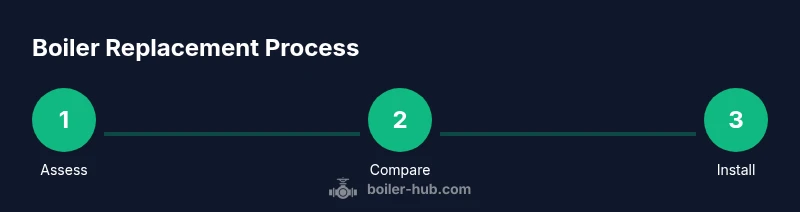
Boiler Hub emphasizes a disciplined approach: start with a thorough load assessment, align the replacement with energy goals, and work with qualified professionals to ensure safety and compliance. This framework helps homeowners avoid oversizing, which wastes fuel, or undersizing, which reduces comfort. Throughout the process, keep the focus on total value—quiet operation, reliability, and long-term savings—rather than only the sticker price. By following these steps and leveraging trusted guidance, you’ll achieve a successful boiler replacement that serves your home for years to come.
Tools & Materials
- Current boiler data (model, serial number, AFUE if available)(Label on the boiler; capture photos for reference)
- House layout and insulation details(Square footage, ceiling heights, window types, insulation value)
- Measuring tools (tape measure, ruler)(For space constraints and venting clearance)
- Notepad or digital device for notes(Record model options, quotes, and decisions)
- Gas leak detector or detector kit(Baseline safety check during evaluation)
- Flashlight/headlamp(Inspect dark crawlspaces or boiler nooks)
- Camera or smartphone for diagrams(Capture vent layouts and pipe connections)
- Penetration testing tools (optional)(If retrofitting venting, may require specialized tools)
Steps
Estimated time: 2-4 weeks
- 1
Assess current system and constraints
Document the existing boiler type, age, and performance issues. Note space limitations, venting routes, and whether you have a direct hot water demand or multiple zones. This baseline will guide your selection.
Tip: Take clear photos of the boiler label, vent, and piping to share with installers. - 2
Estimate heating load and hot water needs
Compile winter energy usage and map each living zone’s heating needs. Consider future changes (family size, renovations). A professional will perform a formal load calculation, but a solid rough estimate helps you compare options.
Tip: Include peak cold-weather periods in your notes to highlight sizing requirements. - 3
Evaluate fuel type and efficiency targets
Decide on gas, oil, electric, or hybrid solutions based on availability, cost, and comfort goals. Set a target AFUE or efficiency band to guide early comparisons.
Tip: If you have solar or backup systems, plan compatibility early. - 4
Compare boiler configurations
Weigh combi, system, and conventional options against your hot water needs, space, and zoning. Condensing models deliver high efficiency but may require additional venting or condensate drainage considerations.
Tip: Map out which radiators or zones will be served by the new unit. - 5
Check venting, clearance, and piping compatibility
Ensure the chosen boiler can fit in the existing space and connect to current piping with minimal modification. Venting requirements must comply with codes and manufacturer limits to avoid backdrafts or leaks.
Tip: Ask installers to provide venting layout sketches before quoting. - 6
Review warranties and service support
Compare unit warranties, installation warranties, and what’s covered by service plans. A longer warranty and solid local support translate to lower long-term risk.
Tip: Verify what maintenance is required to keep the warranty valid. - 7
Request quotes and verify credentials
Obtain at least three quotes from licensed professionals. Check licenses, insurance, references, and lead times. Resolve any code-compliance concerns before signing.
Tip: Use a standardized quote template to compare features side-by-side. - 8
Decide, schedule installation, and plan commissioning
Choose the boiler that meets your needs and schedule a mutually convenient installation window. Plan for post-install commissioning, system purge, and outdoor reset or thermostat integration.
Tip: Ensure the installer tests safety valves, ventilation, and combustion with a professional toolset.
Questions & Answers
What is boiler replacement?
Boiler replacement involves removing an aging or malfunctioning boiler and installing a newer unit that meets current efficiency standards and household needs. It includes verifying venting, piping, and system compatibility, then commissioning the new boiler for safe operation.
Boiler replacement means swapping out an old boiler for a newer, more efficient one, with checks on venting and safety to ensure proper operation.
When should I replace my boiler?
Replace when the unit is unreliable, costly to repair, or significantly less efficient than modern models. Also consider aging of components, rising fuel costs, and the impact on comfort during peak winter.
If your boiler is routinely breaking down or wasting energy, it’s time to replace it.
What is the difference between combi and system boilers?
A combi boiler heats water directly for taps and radiators without a storage tank, saving space. A system boiler uses a separate hot water cylinder for storage, which can supply multiple sinks quickly. Choice depends on household hot water demand and space.
Combi boilers heat water on demand, while system boilers store hot water in a cylinder for simultaneous use in multiple taps.
Do I need permits for replacement?
Many jurisdictions require permits for boiler replacement, especially when venting or gas piping changes are involved. A licensed installer can handle permits and inspections and ensure compliance.
Yes, permits are often required; a pro will handle them as part of installation.
How long does installation take?
Typical installation ranges from a few hours for a straightforward swap to several days for complex retrofits involving venting or piping updates. Your installer will provide a precise schedule during quotes.
Most installations take from a few hours to a couple of days, depending on complexity.
Can I reduce costs with maintenance or sizing?
Yes. Regular maintenance and properly sized boilers reduce energy waste and extend unit life. Oversized units waste fuel due to short cycling, while undersized units run constantly to meet demand.
Proper sizing and regular maintenance help keep your costs down and comfort up.
Watch Video
Key Points
- Identify your heating load before choosing a boiler.
- Choose a compatible fuel type and high-efficiency model.
- Involve licensed professionals early for sizing, venting, and permits.
- Compare warranties and service options to protect long-term value.
- Plan for post-install commissioning to ensure safety and efficiency.