What Boiler to Buy in 2026: A Practical Guide for Homeowners and Managers
A practical guide to choosing the right boiler: fuel types, sizing, efficiency, installation considerations, and budgeting tips for homeowners and facility managers.


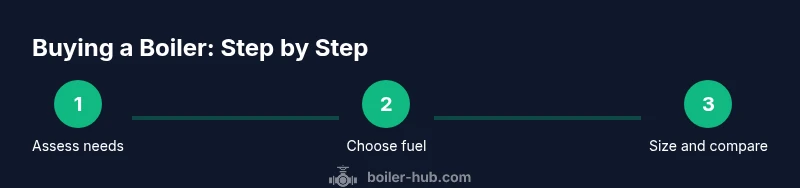
To pick the right boiler, start with your space, fuel access, and heating needs, then match boiler type to efficiency goals. See our full step-by-step guide for a thorough buying plan.
Why choosing the right boiler matters
Choosing the right boiler is about balancing comfort, energy use, and long-term costs. If you’re wondering what boiler to buy, the answer hinges on your home’s size, insulation, and existing heating system. An undersized unit will run constantly and waste fuel, while an oversized one will cycle on and off, reducing efficiency and comfort. According to Boiler Hub, getting the sizing and fuel choice right can dramatically influence annual operating costs and service intervals. In practice, you’ll want a system that keeps rooms consistently warm without overworking the boiler. Budget, space, and local regulations also shape the decision, so plan for a setup that you can maintain with predictable service needs. This upfront clarity saves time and money during installation and in the years ahead.
Types of boilers and where they fit
Boilers come in several flavors, each with its own pros and cons. The most common are combi boilers, system boilers, and conventional (regular) boilers. Combi boilers heat water on demand and provide space heat without needing a separate hot water cylinder, making them ideal for smaller homes with moderate hot water needs. System boilers require a cylinder to store hot water, which helps when multiple taps run simultaneously or when you want more consistent hot water supply. Conventional boilers typically pair with a separate cylinder and are common in older homes with existing radiator networks. When evaluating what boiler to buy, consider the number of bathrooms, the typical hot water use pattern, and whether you prefer compact equipment or systems designed for high performance and future expansion.
Fuel options and efficiency
Gas remains the most common fuel for new boilers in many regions due to cost and availability, but oil and electric boilers can be suitable in areas without gas access or in eco-conscious installations. Biomass is another option in some markets but requires space and maintenance. Efficiency matters more than ever; modern boilers increasingly use condensing technology to recover heat from exhaust gases, which can lower running costs over time. Look for boilers with high efficiency ratings and modulating burners that adapt output to demand. Choosing the right fuel and efficiency profile helps minimize energy bills and aligns with environmental goals, a consideration Boiler Hub emphasizes in 2026.
Sizing your boiler: heat load and output
Sizing a boiler means matching its heat output to the home’s heat loss. A small, well-insulated apartment will need far less output than a large, poorly insulated house. Typical guidelines suggest smaller homes might use 12–24 kW, while larger homes with concrete walls and many radiators may require 25–40 kW or more. To estimate accurately, assess the building envelope (walls, windows, roof), fabric heat loss, and typical indoor temperature targets. A professional heat-load calculation is recommended, but you can start with a rough assessment by room count, floor area, and radiator count. Remember: undersizing hurts comfort; oversizing wastes fuel and shortens boiler life.
Matching boiler type to home: small apartments, family homes, and larger houses
For compact spaces with limited hot water demand, a combi boiler often offers the best mix of space savings and convenience. In homes with higher hot water demand or older radiator networks, a system or conventional boiler may be more suitable, as cylinders and storage can deliver hotter water more reliably. If you plan renovations or expect changes in occupancy, choose a scalable solution with good warranty terms and service support. In all cases, verify compatibility with existing radiators, pumping systems, and controls to ensure smooth integration and efficient operation.
Space, venting, and installation constraints
The physical footprint and venting requirements are not afterthoughts when buying a boiler. Verify the boiler’s footprint fits in the intended cupboard or boiler room, ensure adequate clearance for maintenance, and confirm the flue or venting path meets local regulations. Gas installations must comply with safety standards and usually require a licensed installer. If you’re updating an older system, wet heating networks and original pipework may need adaptation, which can influence both size and configuration. Discuss ducting, condensate drainage, and atmospheric versus high-efficiency venting with your installer to avoid surprises on the installation day.
How to compare models and warranty considerations
When comparing models, focus on efficiency class, seasonal performance, standby losses, and the ability to modulate output to real-time demand. Condensing boilers that meet or exceed current building regulations tend to deliver significant longer-term savings. Check for robust warranties on parts and the heat exchanger, and confirm service coverage with local technicians. A longer warranty can reduce long-term risk, but be sure to read the fine print on what damages or faults are covered. Also consider the availability of spare parts and the provider’s reputation for support.
Budget, rebates, and service plans
Cost is a major factor, but total cost includes installation, potential flue work, and ongoing service. Rather than hunting for the lowest upfront price, evaluate total cost of ownership over 10–15 years, including fuel, maintenance, and potential repairs. Some regions offer rebates or incentives for high-efficiency boilers, which can shorten the payback period. Boiler Hub Analysis, 2026 notes that working with accredited installers and choosing efficient models can improve lifetime value and reduce downtime. Finally, explore service plans that include annual checks and priority scheduling, which help sustain performance and extend boiler life.
Next steps: from decision to installation
With a clear idea of your needs, the next steps are to obtain at least three quotes, verify the installer’s license and certifications, and confirm the resulting flue and electrical requirements. Schedule a pre-installation assessment to finalize sizing, locate the best installation position, and prepare for any required permits. After installation, a routine annual service will help maintain efficiency and prolong the boiler’s life. Maintaining documentation, warranties, and recommended filter and pump replacements will streamline future upkeep.
Tools & Materials
- Tape measure(Measure boiler room dimensions and clearance around unit (minimum 1 foot/0.3 m for maintenance).)
- Notepad and pen(Record room-by-room heat loss estimates and radiator counts.)
- Calculator or smartphone calculator(Compute rough heat load and compare outputs.)
- Device to access manufacturer specs(Phone or tablet to check model data, efficiency, and warranty.)
- Safety gloves and eye protection(Optional for handling and during installation by a pro.)
Steps
Estimated time: Estimated total time: 2-4 weeks
- 1
Assess space and heating needs
Survey the home’s size, insulation, window quality, and typical comfort levels. Identify hot water demand and peak usage patterns. This informs whether you need a combi, system, or conventional boiler and sets a baseline for size and fuel choice.
Tip: Document room counts, radiator types, and current energy bills to support your sizing discussion. - 2
Identify available fuels and system compatibility
Check gas availability, oil supply, or electricity capacity in your area. Confirm that your existing radiator network and piping can accommodate the chosen boiler type, and note any required venting or condenser connections.
Tip: Consult your energy supplier about gas line capacity and any future conversion options. - 3
Size the boiler based on heat load
Estimate the home’s heat loss and select a boiler output that matches the calculated load. Use a rough kW range (e.g., 12–24 kW for small homes, 25–40 kW for larger homes) as a starting point, then refine with an installer’s assessment.
Tip: Avoid undersizing to preserve comfort; avoid oversizing to reduce wear and energy waste. - 4
Set efficiency targets and features
Prioritize condensing technology, modulating burners, and smart controls. Consider capacity for future expansion and compatibility with thermostats and zone controls.
Tip: Choose models with clear energy labels and a strong service network. - 5
Compare models and obtain quotations
Request at least three quotes, compare efficiency ratings, warranties, and included installation work. Verify that each quote accounts for venting, condensate drainage, and optional service plans.
Tip: Ask for a breakdown of parts, labor, and any required scaffolding or gas works. - 6
Plan installation and permits
Schedule licensed installation, ensure compliance with local codes, and secure any necessary permits. Confirm post-installation testing, commissioning, and a door-to-door handover.
Tip: Do not attempt DIY gas boiler installation; compliance and safety require a certified professional.
Questions & Answers
What is the difference between a combi boiler and a system boiler?
A combi boiler heats water on demand and provides space heating from a single unit, eliminating the need for a separate hot water cylinder. A system boiler uses a cylinder to store hot water, which allows more hot water when multiple taps run simultaneously. Both types require radiators, but suitability depends on demand and space.
A combi heats water as you use it, saving space; a system boiler stores hot water in a cylinder for multiple taps. Your choice depends on water usage and space.
How do I know what size boiler I need?
Size is driven by heat load, home insulation, and radiator count. A professional heat-load calculation provides precise output in kilowatts (kW). In rough terms, smaller homes may use 12–24 kW, larger homes 25–40 kW or more.
It depends on heat loss and radiator demand. A professional calculation gives exact output; rough guides help as a starting point.
Should I consider a condensing boiler?
Yes. Condensing boilers recover heat from exhaust and are the standard for new installations. They are more energy-efficient and typically required by current building regulations.
Condensing boilers are usually the best choice for efficiency and compliance with modern regs.
Can I install a boiler in a confined space?
Boilers must have required clearances for maintenance and proper venting. A professional should verify space, vent routes, and clearance before purchase and installation.
Only if there’s enough room for servicing and venting; a pro should assess the space before buying.
What maintenance is required after installation?
Schedule an annual service, bleed radiators, check pressure, and replace worn components as advised by the manufacturer. Regular checks help sustain efficiency and prolong life.
Annual service and periodic checks keep your boiler running efficiently.
Are rebates or incentives available for high-efficiency boilers?
In some regions there are incentives for high-efficiency boilers. Availability varies by location and program status; check local government or utility programs for current offers.
Some regions offer incentives; check local programs for current offers.
How long does boiler installation take?
Typical installation can take a day or two for a straightforward swap, longer if venting, radiators, or gas lines require modification. Your installer will give a precise timeline after assessment.
Most installs take one to a few days, depending on the scope.
What should I look for in a service plan?
A good plan includes annual servicing, priority scheduling, and coverage for essential components. Clarify what is excluded and whether parts are covered for the heat exchanger and controls.
Choose a plan with annual servicing and reliable coverage for parts and labor.
Watch Video
Key Points
- Assess space and water needs before choosing a boiler.
- Match boiler type to home size and hot water demand.
- Prioritize efficiency and reliable installation service.
- Get multiple quotes and verify permits early.
- Plan for post-install maintenance to protect your investment.