Oil Boiler Replacement: Step-by-Step Guide for 2026
Learn how to plan and execute an oil boiler replacement safely with a practical, step-by-step guide. Cover sizing, permits, venting, and post-install maintenance to keep your heating reliable.


This guide helps homeowners and facility managers plan and execute an oil boiler replacement safely and efficiently. You’ll learn how to assess your current system, select an appropriate replacement, obtain permits, coordinate installation, and verify venting, combustion, and efficiency. Note that installation and safety checks typically require a licensed professional to ensure compliance with codes and warranties.
Overview and Safety Considerations
Replacing an oil boiler is a major project that affects your home’s comfort, safety, and energy bills. The work involves combustion equipment, venting, fuel storage, and electrical connections, all of which carry inherent risks if mishandled. Before you begin, evaluate the current boiler’s condition, the size of your living or workspace, and your long-term heating needs. According to Boiler Hub, proper planning and adherence to safety standards are crucial for a successful oil boiler replacement. This stage also helps you identify whether you should pursue a standard replacement or upgrade to a high-efficiency model that can reduce emissions and improve performance over time. While some homeowners may perform upgrades themselves, most oil boiler replacements require licensed professionals to handle fuel lines, venting, and code compliance.
Planning Your Oil Boiler Replacement
A well-planned replacement starts with an accurate assessment of loads, heat distribution, and existing piping. You’ll want to determine whether your existing fuel storage and delivery system is compatible with a replacement unit and whether the venting will support the new boiler’s exhaust characteristics. Create a list of goals (e.g., improved efficiency, quieter operation, or better zoning) and map out a realistic timetable. Budget considerations should include the cost of the boiler, installation labor, vent modifications, and any needed updates to controls or thermostats. Engage a qualified contractor early to review site conditions, obtain preliminary quotes, and confirm local permitting requirements. Boiler Hub’s analysis emphasizes that upfront planning reduces surprises during installation and helps ensure a smoother transition.
Sizing, Efficiency, and System Fit
Sizing the replacement correctly ensures dependable heating without excessive cycling or wasted fuel. An oversized unit can create short cycling and higher wear, while an undersized boiler may struggle to maintain comfortable temperatures during cold snaps. When choosing a model, compare its efficiency rating and how it handles seasonal variations in demand. Condensing oil boilers offer improved efficiency by recovering heat from exhaust gases, but they require compatible venting and condensate handling. Consider the compatibility of existing radiators, piping, and controls with a new unit. Your goal is an efficient, balanced system that delivers reliable heat with manageable operating costs over time. Boiler Hub’s guidance stresses matching boiler capacity to your actual load rather than chasing the highest efficiency rating alone.
Permits, Codes, and Safety Compliance
Before any work begins, verify whether a permit is required to replace an oil boiler in your jurisdiction. Permitting often covers venting, fuel line work, and combustion safety testing. You or your contractor must ensure the installation adheres to current codes and standards, such as clearances from combustibles, venting integrity, and fuel storage safety. A formal inspection after installation helps validate that the system is safe to operate. Skipping permits or code compliance can void warranties and create safety risks for occupants. Boiler Hub highlights that following local regulations and obtaining the necessary approvals reduces risk and improves long-term reliability.
Installation Readiness and Timeline
Preparation is the key to a smooth installation. This includes ensuring adequate space for the new unit, planning for temporary heat sources if needed, and coordinating fuel delivery and electrical supply upgrades. The installation sequence typically involves removing the old boiler, preparing the flue or vent, installing the new boiler, wiring controls, connecting fuel lines, and performing combustion testing. While timelines vary, expect a period of several hours to a full day, depending on site complexity and whether venting upgrades are required. A pre-install checklist from your contractor helps prevent delays and ensures all safety steps are completed. Boiler Hub recommends engaging a licensed installer for critical steps to preserve safety, warranty coverage, and optimal performance.
Post-Install Evaluation and Maintenance
After commissioning, you should schedule a post-install inspection and set up a maintenance plan. Regular service includes checking ignition and burner operation, inspecting venting for leaks, verifying thermostat performance, and testing safety devices like high-limit switches. Keeping an annual service appointment helps catch small issues before they become major failures and maintains efficiency. Additionally, update your documentation with the new unit’s model, serial number, and warranty terms. Boiler Hub stresses that ongoing maintenance is essential for safety, longevity, and predictable heating costs.
Tools & Materials
- Oil-fired boiler replacement unit(Select a unit that matches your load and space constraints)
- Venting kit and exhaust piping(Ensure compatibility with the new boiler and local codes)
- Fuel line fittings and hoses(Use oil-rated components and proper seals)
- Pipes and fittings (copper/steel as appropriate)(Match material to existing system)
- Pressure/temperature relief valve and condensate handling(Install per manufacturer specs)
- Thermostat and controls kit(Consider programmable or smart controls)
- Electrical tester, multimeter(For safe electrical connections)
- Wrench set, pipe wrenches, and screwdrivers(Essential hand tools)
- Sealants, thread tape, and anti-corrosion compounds(Oil-rated where applicable)
- Personal protective equipment (gloves, goggles, coveralls)(Always wear PPE)
- Fire extinguisher and spill kit(Maintain readiness near work area)
- Permit documents and inspection scheduling(Keep on hand for local authorities)
Steps
Estimated time: several hours to a full day depending on site complexity
- 1
Assess current system and goals
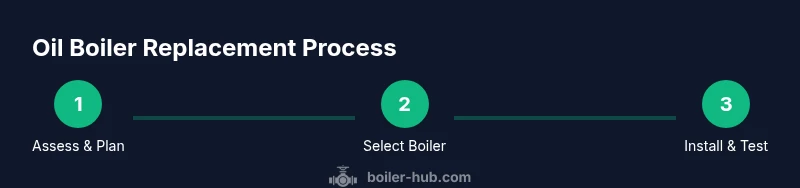
Evaluate the existing boiler’s condition, determine heating loads, and define goals for the replacement (efficiency, emissions, reliability). Make a list of constraints and desired outcomes to guide product selection.
Tip: Document current room size, radiator layout, and any existing venting issues to inform sizing. - 2
Select a replacement boiler
Compare models based on size, efficiency, and compatibility with your radiators and venting. Decide whether a condensing oil boiler is appropriate for your system and check warranty terms.
Tip: Choose a model with good part availability and a reputable local service network. - 3
Check permits and codes
Consult your local authority or the contractor to identify required permits and code requirements for fuel lines, venting, and combustion safety testing.
Tip: Initiate permit applications early to avoid installation delays. - 4
Engage a licensed installer
Hire a licensed professional to remove the old boiler, handle fuel lines, and perform venting changes and safety testing.
Tip: Verify credentials and request a written installation plan and timeline. - 5
Prepare site and fuel connections
Clear the installation area, ensure proper clearances, and prepare fuel and electrical feeds according to the new boiler’s requirements.
Tip: Keep a clean, organized workspace to prevent accidental damage or leaks. - 6
Install boiler and venting
Install the boiler, connect venting, and ensure all joints are sealed and supported. Install condensate handling if applicable.
Tip: Double-check that venting slope, supports, and clearances meet code. - 7
Connect controls and finalize commissioning
Wiring, programming thermostats, and performing combustion and safety testing to verify proper operation.
Tip: Record burner settings and safety test results for future maintenance. - 8
Post-install inspection and handover
Schedule a post-install inspection and provide the owner with maintenance guidance, warranty information, and safety cues.
Tip: Plan regular annual service to maintain efficiency and safety.
Questions & Answers
Do I need a permit for an oil boiler replacement?
Permits are often required for fuel line work and venting changes. Check local regulations and coordinate with your contractor to secure approvals before starting.
Most jurisdictions require permits for oil boiler work and venting changes. Check with your local authority and your contractor to ensure compliance.
Can I replace an old boiler with a condensing model?
Yes, condensing models can improve efficiency if your venting and condensate handling support them. Your installer will confirm compatibility with existing radiators and piping.
Yes, a condensing boiler can be a good option if your venting and condensate setup support it.
How long does an oil boiler replacement take?
Replacement timelines vary by site. Expect a several-hour to full-day process depending on hardware changes, venting needs, and permit approvals.
It typically takes several hours to a full day, depending on the complexity and permitting.
Is it necessary to hire a licensed professional for this work?
Yes. Fuel lines, venting, and safety testing require licensed professionals to ensure safety, compliance, and warranty validity.
Yes, a licensed professional is essential for safety and codes.
What maintenance should follow a replacement?
Schedule annual service to inspect burners, controls, and venting. Regular maintenance helps sustain efficiency and extend boiler life.
Arrange annual servicing to keep the system safe and efficient.
Watch Video
Key Points
- Plan early and document current system details
- Size and efficiency must align with your loads
- Permits and safety testing are essential
- Use a licensed installer for reliable, code-compliant results