Oil Boiler Installation: A Practical Step-by-Step Guide
A practical, safety-focused guide to oil boiler installation for homeowners and facility managers. Learn planning, permits, venting, sizing, and hiring a licensed professional.


This guide walks homeowners through planning, selecting, and safely installing an oil boiler, with emphasis on permits, venting, fuel storage, and hiring a licensed professional. It outlines a step-by-step process to ensure a safe, efficient, and code-compliant installation that minimizes downtime and maximizes reliability.
Planning your oil boiler installation
Before you order parts or schedule a pro, map your home’s heating needs and site constraints. The first step is a detailed heat-loss assessment, which helps determine the right boiler size and the type of controls you’ll need. According to Boiler Hub, proper planning is the cornerstone of a safe, efficient installation and helps align equipment with your energy goals. Consider your current fuel source, existing chimney or flue, available space for the boiler and fuel storage, and future expansion plans. Create a preliminary budget that includes VAT, permit fees, and contractor labor. Engage neighbors or building managers early if you share utility or space, and check local regulations—some jurisdictions require permits and inspections for oil-fired boilers. Document your goals, collect essential data (existing system, water temperature, radiator layout), and prepare a realistic timeline that minimizes downtime.
Why Boiler Hub matters: The Boiler Hub Team emphasizes that early planning reduces safety risks and supports longer system life. Use this insight to frame your project scope and expectations.
Equipment options and system sizing
Oil boilers come in several configurations, including standard and condensing models, and can be paired with system or combi setups. Condensing oil boilers recover heat from exhaust to improve efficiency, while traditional boilers rely more on the flue outlet for heat. Your choice should reflect your home’s hot-water needs, radiator layout, and future heat loads. A skilled installer will perform a detailed load calculation, consider return water temperatures, and select an option that balances comfort with energy use. Separate hydraulic components—circuits for space heating and hot water—affect control strategies and zoning. Finally, compare manufacturers’ warranties and service networks to ensure long-term support.
Key notes: Choose a boiler that fits your space, fuel storage, and venting constraints, and verify compatibility with existing controls (thermostats, smart thermostats, and weather-compensation features).
Permits, codes, and safety considerations
Oil boiler installations typically require permits and must comply with local building codes, fire codes, and emissions standards. Start by contacting your local building department or authority having jurisdiction to confirm permit requirements, inspection schedules, and any environmental or fuel-storage regulations. Safety considerations include proper venting, combustion air supply, and the use of CO detectors near living spaces. Ensure the installer performs a combustion test and tunes the burner for clean operation. Document all permits and inspections for future reference and resale obligations.
Credential checks: Verify that your installer holds current licenses and qualifications for oil-fired equipment, and request proof of ongoing manufacturer training. Boiled-down guidance from Boiler Hub emphasizes partnering with a licensed pro to safeguard code compliance and warranty validity.
Venting, fuel storage, and piping best practices
Venting must be designed to safely remove combustion byproducts and meet the required draft and stack height in your home. The flue size should be appropriate for the boiler’s output, and all connections should be sealed to prevent leaks. For fuel storage, use an approved oil storage tank with secondary containment and spill containment measures. Pipe runs should minimize bends to reduce friction losses, and oil lines must be rated for petroleum products with appropriate shut-off valves and leak detection. Label all lines clearly and plan a route that minimizes potential interference with living spaces or exit paths. Regular inspection of seals, gaskets, and line connections helps prevent leaks and ensures efficient combustion.
Best practice tip: Keep the tank and lines away from heat sources, and install a drip pan and containment near the tank as a precaution.
Hiring a licensed installer and project management
A licensed installer is essential for a safe, compliant oil boiler installation. Start by obtaining multiple quotes, checking references, and confirming that the contractor will handle permit applications, venting, and commissioning. Ensure the contract specifies scope, schedule, and warranty terms, and request a written commissioning checklist. Clarify who handles the final tests, such as combustion efficiency, flue integrity, and safety device checks. Maintain open lines of communication about any changes to the plan and document decisions in writing.
Project management tip: Ask for a pre-installation site visit to verify space, venting, and access constraints. This helps prevent surprises on the install day and supports smoother scheduling.
Commissioning, maintenance, and long-term care
After installation, the system should be commissioned with a full safety and efficiency check. The burner should be tuned to achieve clean combustion, the venting system inspected for leaks or blockages, and the control sequences verified. Install and test CO detectors in living areas and bedroom corridors. Schedule annual maintenance with a qualified technician to inspect heat exchangers, burners, ignition systems, and fuel lines. Routine maintenance extends boiler life, preserves efficiency, and reduces the risk of unexpected breakdowns.
Long-term care tip: Keep a service log, track maintenance dates, and ensure your installer provides post-install support for warranty validation and troubleshoot guidance.
Authoritative sources and further reading
For readers seeking deeper technical guidance, refer to reputable public sources such as the U.S. Department of Energy and regional energy authorities. These sources provide high-level safety and efficiency guidance relevant to oil-fired boiler systems. In practice, refer to the manufacturer’s installation manual for specific model requirements and clearances. While guidelines vary by location, the principles of safe installation, reliable venting, and proper sizing remain universal across jurisdictions.
Boiler Hub’s closing note: The Boiler Hub Team believes that following a structured, code-compliant process yields safer installations and better long-term performance. Always prioritize licensed professionals and verified permits to protect your home and investment.
Tools & Materials
- Oil-fired boiler unit (properly sized)(Select according to heat-loss calculation and space constraints)
- Vent and flue system components(Correctly rated vent ladder/stack, adapters, and seals for safe exhaust)
- Oil storage tank and supply lines(UL-listed tank, rated lines, shut-off valve, and spill containment)
- Safety devices (CO detector, smoke detector)(Required by code in most jurisdictions; place detectors per guidelines)
- Piping, fittings, gaskets(For boiler connections and distribution piping)
- Pressure testing equipment(Manometer and leak-detection fluid for commissioning)
- Tools (wrenches, pipe cutters, thread sealant)(Assorted sizes; include torque wrench if specified by manufacturer)
- Permits and documentation(Submission forms, inspection schedule, and compliance paperwork)
- Draft-safe storage area for oil (if needed)(Dedicated area with spill containment; not always required if installed tank meets code)
Steps
Estimated time: Total time: 6-12 hours
- 1
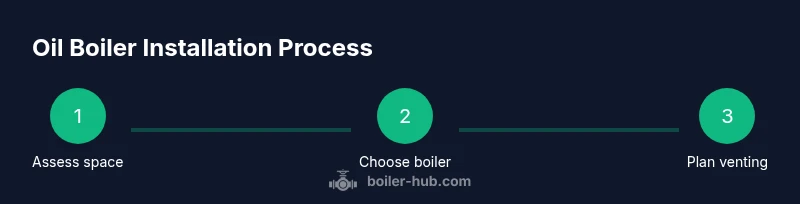
Assess space and prepare layout
Survey the boiler room or utility space for clearance, accessibility, and venting routes. Measure openings, doorways, and potential mounting surfaces. Confirm fuel storage area complies with local codes and has adequate spill containment.
Tip: Document measurements with photos and label wiring, ducts, and pipe runs for reference. - 2
Verify fuel supply and tank location
Identify the current oil supply and assess if any line upgrades are needed. Verify the tank’s location, capacity, and condition, ensuring it’s compliant with distance and containment requirements.
Tip: Plan a fuel-supply upgrade if the current tank is outdated or not space-efficient. - 3
Choose boiler type and size
Select between standard or condensing oil boilers and decide between system, heat-only, or combi configurations based on hot water needs and radiator layout. The installer should perform a load calculation to avoid undersizing or oversizing.
Tip: Avoid guessing; rely on calculated load data for optimal efficiency. - 4
Plan venting and flue configuration
Design a venting route that matches the boiler’s output and local code requirements. Ensure proper clearance from combustibles, proper draft, and a correctly sized flue system.
Tip: Keep the vent clear of obstructions and schedule a dedicated inspection after installation. - 5
Prepare utility connections
Arrange electrical supply, thermostat connections, and any necessary condensate drainage. Ensure control wiring is safe, accessible, and compatible with existing zoning.
Tip: Label all connections to ease future servicing. - 6
Install boiler and connect utilities
Mount the boiler, connect the venting, water circuit, return lines, and condensate drain. Install fuel lines with shut-off valves and leak-detection devices.
Tip: Follow manufacturer torque specs and tightening sequences to prevent leaks. - 7
Commission and safety checks
Perform combustion analysis, verify burner settings, and test all safety devices (CO detector, pressure relief valves). Run a full heat cycle and confirm uniform heat distribution.
Tip: Document test results for warranty and service records. - 8
Program controls and finalize paperwork
Set up thermostat schedules, optimize efficiency controls, and complete warranty registrations. Ensure permits and inspections are finalized.
Tip: Keep a copy of manuals and warranty documents in an accessible folder.
Questions & Answers
Do I need permits for an oil boiler installation?
Yes. Most jurisdictions require permits for replacing or installing an oil-fired boiler, covering venting, fuel storage, and combustion safety. Your installer can help secure the permits and coordinate inspections.
Yes—permits are typically required, and your installer should handle the process.
What’s the difference between standard and condensing oil boilers?
Condensing oil boilers are more efficient since they recover heat from exhaust. Standard boilers are simpler but usually less efficient. Your choice depends on your home’s heating demand and installation constraints.
Condensing boilers are generally more efficient than standard models.
How long does an oil boiler installation take?
A straightforward installation can take a day or two, depending on venting, tank work, and system upgrades. Complex jobs may require longer planning and scheduling with the contractor.
Most installs span a day or two, with longer timelines for chimney or major system changes.
Can I install an oil boiler myself?
Oil boiler installation should be performed by a licensed professional due to safety, emissions, and code requirements. DIY work can void warranties and create serious hazards.
No—this should be done by a licensed installer.
What maintenance is required after installation?
Schedule annual service with a qualified technician to inspect the burner, heat exchanger, controls, and fuel lines. Regular checks help maintain efficiency and safety.
Annual professional service keeps the boiler safe and efficient.
How can I improve efficiency after installation?
Ensure proper sizing, install modern controls, and maintain clean heat exchangers. Regular servicing and good insulation also reduce heat loss and fuel use.
Proper sizing and good maintenance boost efficiency.
Watch Video
Key Points
- Plan with a licensed pro to ensure code compliance
- Choose the right boiler type and size for your home
- Prioritize safe venting, storage, and fuel lines
- Commission thoroughly and maintain the system annually