Oil Boiler Repair: A Practical Home Guide
Learn how to safely diagnose, repair, and maintain an oil boiler with practical steps, safety tips, and troubleshooting guidance tailored for homeowners and facility managers.


This guide helps you safely inspect, diagnose, and perform basic repairs on an oil boiler, plus how to decide when to call a professional. You’ll need essential PPE, the correct tools, and model-specific parts. Topics cover common failures, routine maintenance, and practical troubleshooting for homeowners and facility managers.
Understanding oil boilers and common failure modes
Oil boilers operate with a burner, fuel line, nozzle, pump, heat exchanger, and controls. When something goes wrong, you might notice no heat, reduced heat, uneven temperature, yellow-tipped flames, smoke, or unusual odors. Common failure modes include fuel supply interruptions, air in the fuel line, worn nozzles, clogged burners, faulty ignition, and faulty safeties. Regular maintenance reduces the likelihood of these failures and helps you catch problems early. According to Boiler Hub analysis, proactive maintenance is a key factor in extending boiler life and minimizing disruptive outages. In practical terms, always start by confirming power and fuel are available, and then check for obvious blockages or leaks before digging deeper.
Be mindful that oil boilers are complex systems that combine mechanical, electrical, and combustion components. If you’re unsure about a diagnosis, treat any potential fuel leak or combustion issue as urgent and call a licensed technician.
Safety first: when DIY is appropriate and when to call a pro
Safety is non-negotiable with oil boilers. Before touching any component, shut off the power at the breaker and isolate the fuel supply. Wear appropriate PPE—safety glasses, gloves, and a respiratory mask if you’re near fumes. Do not operate the boiler if you detect a strong fuel odor, fuel smell, or visible leaks. If fuel odors persist or you’re uncomfortable with any step, contact a qualified technician immediately. Keep a fire extinguisher rated for flammable liquids nearby and ensure adequate ventilation in the work area. Routine maintenance tasks, such as replacing a nozzle or cleaning accessible parts, can be attempted by a competent weekend DIYer, but more complex electrical or combustion adjustments require a pro. Boiler Hub recommends a clear safety plan and documented shutdown procedures to prevent accidents.
Tools and materials you'll need for oil boiler repair
You’ll want a well-organized toolkit before starting. Essential items include an owner’s manual, adjustable wrench, flat-head and Phillips screwdrivers, a multimeter, a non-contact voltage tester, PPE (gloves, eye protection, respirator if needed), and rags. Optional but useful items include a replacement oil burner nozzle, gaskets, seals, and a combustion tester for efficiency checks. Keep a fire extinguisher nearby and a large bucket for any small spill cleanup. Having a written checklist helps you stay organized and reduces mistakes during the repair process.
Common fixes and what you can handle safely
Many oil boiler issues can be addressed without full system replacement. Start with basic cleaning of the burner and electrodes, verify the oil filter is clear, check the nozzle size and spray pattern, and inspect the fuel line for leaks. If the burner won’t ignite, inspect the ignition transformer and safety controls, and verify the thermostat signal. Replacing a worn nozzle or adjusting burner air can often restore proper operation. If you identify a leak, damaged seals, or if pressure readings are outside the normal range, pause and call a professional. Always de-energize the unit first and verify fuel is safely shut off before any inspection.
Note: Significant issues such as persistent leaks, low efficiency, or odd noises may indicate a deeper problem that requires licensed service.
Preventive maintenance to extend boiler life
Prevention beats cure. Schedule annual professional service, keep the ignition timing and fuel quality in check, and replace filters and nozzles per the manufacturer’s recommendations. Use clean, high-quality fuel; check the oil level and pressure regularly; and ensure venting pathways are clear to avoid dangerous CO buildup. Record all service events and any replacements to track wear and anticipate future needs. A proactive maintenance calendar helps you avoid costly emergency repairs and keeps your system running efficiently.
How to evaluate whether to repair or replace
If a repair costs more than a reasonable fraction of a new unit’s price, especially for an aging boiler, replacement may be the smarter option. Consider fuel efficiency improvements in newer models, potential energy savings, and the cost of frequent repairs. Age, reliability history, and availability of replacement parts should influence your decision. A mid-life boiler with frequent outages is often worth replacing, whereas a well-maintained unit with a minor fault may be worth repairing. Boiler Hub recommends a cost-benefit perspective and a professional assessment when in doubt.
Tools & Materials
- Oil boiler service manual(For model-specific guidance and safety warnings)
- Adjustable wrench(Sizes 6-12 mm)
- Flat-head and Phillips screwdrivers(Various sizes (Ph0–Ph3))
- Multimeter(For testing electrical components)
- Non-contact voltage tester(Quickly verify live circuits)
- PPE (gloves, goggles, respirator if needed)(Protect yourself from fuels and debris)
- Fire extinguisher rated for Class B(Keep within reach during work)
- Oil burner nozzle (correct size for unit)(Only if you know the spec)
- Replacement gaskets/seals(Have on hand for leaks)
- Rags and absorbent material(Clean spills and wipe surfaces)
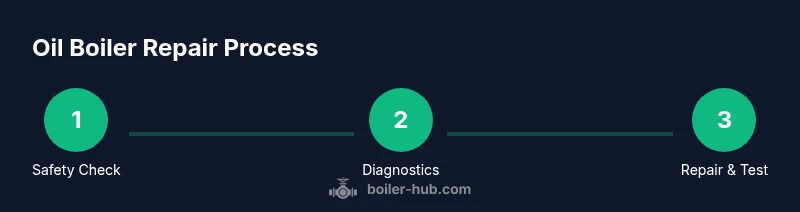
Steps
Estimated time: 60-120 minutes
- 1
Power down and secure the work area
Shut off power at the breaker and seal the work area from accidental ignition sources. This minimizes shock risk and prevents accidental startup while you inspect. Gather your tools and review the manual for safety notes before you begin.
Tip: Label breakers and fuel shutoff so you can restore power safely afterward. - 2
Shut off fuel supply and lockout
Isolate the fuel supply to stop oil flow. If you’re unsure where the valve is, refer to the manual and use a tool to gently close the valve. Lock out the fuel line if possible and verify there’s no fuel pressure in lines before proceeding.
Tip: Never bypass safety valves or shields; damage or fire risk increases dramatically. - 3
Check burner nozzle and oil supply
Inspect the nozzle for wear and an even spray pattern. Check the oil line for kinks or leaks and verify the filter is clear. Replace the nozzle only if you’ve confirmed the correct size and have a replacement on hand.
Tip: A degraded nozzle or dirty line is a common cause of poor combustion and smoke. - 4
Inspect electrical controls and sensors
Test switches, relays, and limit controls with a multimeter. Look for corroded connections or damaged insulation. If you find a faulty sensor or control, replace it only with the correct part for your boiler model.
Tip: Record any fault codes and consult the manual before ordering parts. - 5
Purging air and priming the pump
Bleed any air from the fuel line, then prime the pump according to the manual. A stubborn air block can cause intermittent ignition and poor flame quality. Recheck for leaks after priming.
Tip: Use a clean rag to catch drips and avoid skin contact with hot components. - 6
Test run and monitor performance
Restore power and fuel supply, then observe ignition, flame stability, and exhaust. Listen for unusual noises and check for smoke or odors. If issues persist, shut down and seek professional assessment.
Tip: Run for at least 10-15 minutes in warm-up to verify steady operation.
Questions & Answers
Can I repair an oil boiler myself?
Some basic maintenance can be done by a confident homeowner, but many repairs involve combustion, electrical systems, or fuel handling. If you’re unsure, consult the manual or call a licensed technician. Always prioritize safety over speed.
Some tasks are DIY friendly, but for combustion and fuel systems, contact a licensed pro to stay safe.
What are common signs that my oil boiler needs service?
Frequent outages, unusual flames, unusual odors, excessive soot, or high energy bills often indicate the need for servicing. If you notice color changes in the flame or weak heat output, schedule service promptly.
Watch for outages, strange flames or odors, and rising energy use. Schedule service if you see these signs.
How often should an oil boiler be serviced?
Most systems benefit from annual professional servicing. Homeowners should perform basic checks quarterly, like visual inspections for leaks, venting blockages, and ensuring the area is clean and safe.
Aim for an annual professional service, with quarterly basic checks by the homeowner.
Is it safe to perform oil boiler repairs without professional training?
Oil boilers involve fuel, combustion, and electricity. If you lack training, the safest option is to hire a licensed technician. DIY mistakes can create fire or carbon monoxide hazards.
If you’re not trained, don’t DIY—professional help protects you from serious hazards.
What should I do if I smell fuel during a repair?
Move away from the source, evacuate if necessary, and call the fire department or a professional. Do not ignite any flames or operate electrical switches in the area.
If you smell fuel, evacuate and call a pro immediately. Do not use switches or flames.
How can I prevent future breakdowns?
Follow a maintenance schedule, replace filters and nozzles as recommended, ensure venting is clear, and use quality fuel. Regular checks help catch wear before it becomes a failure.
Keep a maintenance routine and check venting to prevent future problems.
Watch Video
Key Points
- Inspect safely and shut down power before work
- Identify common failures and avoid DIY when unsure
- Keep tools and PPE ready for efficient work
- Regular maintenance reduces unexpected outages