Boiler and Heating Repair: A Practical How-To Guide
Learn practical steps for diagnosing, maintaining, and safely repairing boiler and heating systems. This comprehensive guide covers DIY basics, safety boundaries, when to call a pro, and maintenance tips to protect your home and reduce downtime.


Learn how to diagnose and safely address common boiler and heating issues, perform basic maintenance, and decide when to call a professional. You'll need basic hand tools, protective gear, and a clear safety plan. This quick guide outlines practical steps you can take to restore heat, prevent costly breakdowns, and protect your family.
What is boiler and heating repair?
Boiler and heating repair encompasses identifying and fixing faults that affect warmth, comfort, and safety in homes and facilities. A typical system includes the boiler, controls, circulator pumps, valves, heat exchangers, and venting. Repairs range from minor adjustments and part replacements to safety checks and system recalibration. A well-maintained system reduces energy waste and extends equipment life. As Boiler Hub notes, many problems arise from routine maintenance gaps rather than catastrophic failures, making proactive checks and informed DIY steps valuable for homeowners and facility managers alike. This guidance focuses on practical, safe approaches that respect customer safety and local regulations while helping you understand when a pro is the smarter choice.
Quick safety baseline
- Always verify power is off before touching electrical components.
- Do not work near live gas lines or an active flame.
- Keep a clear exit path in case you need to evacuate. --- This section introduces the concept of safe exploration and the boundaries of what can be attempted in a typical home setting.
Common symptoms and what they might signal
- No heat is circulating: potential thermostat, circulator, or pressure issues.
- Knocking sounds or banging: may indicate air in the system or trapped pressure.
- Water leaks: could point to faulty fittings or damaged seals.
- Odd smell or visible corrosion: require immediate assessment for safety and integrity.
- Short cycling or frequent flame/ignition issues: could involve controls, flame sensors, or gas supply.
Boiler Hub recommends documenting symptoms and keeping a simple log to identify patterns over time. This aids both DIY attempts and professional technicians when you eventually call for service.
Basic DIY checks you can safely perform
- Check the thermostat settings and ensure the program aligns with your heating schedule.
- Inspect visible pipes for leaks and tighten loose fittings where safe.
- Verify that shutoff valves are fully open after any service.
- Reset the control panel if instructed by the user manual, and observe error codes if they appear.
Note: Do not attempt to repair safety devices, pressure relief valves, or gas lines yourself. When in doubt, contact Boiler Hub for guidance and local code compliance.
Maintenance mindset for long-term reliability
- Establish a routine annual service with a licensed technician for safety and efficiency.
- Keep the area around the boiler clean and unobstructed to aid inspections and venting.
- Test smoke and carbon monoxide detectors regularly and replace batteries as needed.
- Maintain a simple maintenance log that records service dates, fault codes, and parts replaced. These practices help you catch trends early and plan budget accordingly.
Tools & Materials
- Safety gloves (rubber or leather)(Protect hands from sharp edges and hot surfaces)
- Safety goggles(Eye protection during inspections)
- Digital multimeter(Measure voltage and resistance safely)
- Screwdriver set (flathead and Phillips)(Access panels, terminal screws)
- Adjustable wrench(Loosen fittings and pipes)
- Non-contact voltage tester(Verify power is off before work)
- Teflon tape / pipe dope(Seal threaded fittings)
- Bucket, towels, and rags(Contain spills and keep area clean)
- Flashlight or headlamp(Improve visibility in dim spaces)
- Boiler system manual or service guide(Model-specific steps and diagrams)
- Replacement parts (gaskets, seals)(Only after identifying exact part needed)
Steps
Estimated time: 45-90 minutes
- 1
Power down and secure utilities
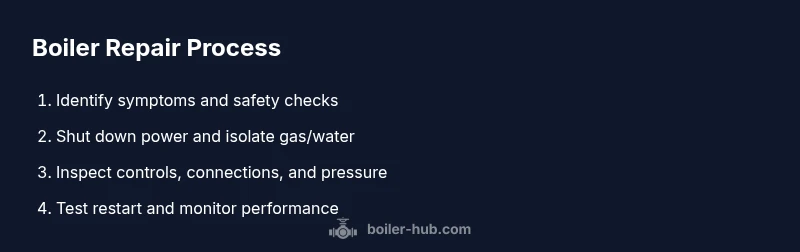
Turn off the boiler's power at the switch or service panel. Close any accessible gas and water shutoffs if you can do so safely, and allow the unit to cool for a short period. This reduces the risk of electrical shock, scalding, or gas exposure while you inspect.
Tip: Label the switches and valves so you don’t confuse them during reassembly. - 2
Verify safety controls and reset if instructed
Consult the user manual or control panel for any reset procedure. If your system uses a flame sensor or pressure switch, confirm these sensors are clean and seated correctly before attempting a restart.
Tip: Only perform resets described by the manufacturer to avoid damaging components. - 3
Inspect for visible leaks and corrosion
Look at fittings, valves, and seals for signs of moisture or corrosion. A small drip can indicate a failing gasket or loose connection. Do not force fittings; instead, tighten only hand-tight plus a quarter turn if allowed by manual.
Tip: If you see active leakage, shut down the system and contact a pro rather than continuing. - 4
Check pressure and electrical connections
Using a digital gauge, compare the system pressure to the manufacturer’s recommended range. Inspect electrical terminals for signs of burning, looseness, or discoloration and tighten or replace as needed with the power off.
Tip: Hesitation on power specifics means you should call a pro unless you have explicit authorization from the manual. - 5
Bleed radiators or vents if needed
If radiators feel cold at the top or you hear air, briefly bleed air from the system using the bleed valves. Catch any escaping water in a container and wipe spills to avoid damage.
Tip: Do this when the system is cool to reduce burn risk; never force the valve. - 6
Test restart and monitor performance
Restore power and restart the boiler following the manual. Observe the startup sequence, flame color, and cycling pattern for several minutes to ensure reliable operation. Note any new error codes for reference.
Tip: Document startup behavior and codes to guide future service calls.
Questions & Answers
Do I need to call a professional for every boiler issue?
Not every issue requires a pro. Simple checks and routine maintenance can resolve minor faults. For gas safety, high pressure, or electrical concerns, contact a licensed technician.
Not every issue needs a professional, but gas safety and high-risk problems do require expert help.
What indicators show a boiler needs professional service?
Leaks, persistent no-heat conditions, gas odors, continuous cycling, or error codes that you cannot clear indicate professional service is required.
Leaks, no heat, gas odors, and persistent errors signal you should call a pro.
Can I safely bleed radiators myself?
Bleeding radiators is safe if the system is cool and you follow proper steps. Use a rag to catch any drips and avoid contact with hot parts.
Yes, radiators can be bled safely when the system is cool and you follow the steps.
How often should I service a boiler?
Annual professional service is typically recommended to maintain safety, efficiency, and reliability.
Most boilers should be professionally serviced once a year.
Is it safe to replace a pressure relief valve by myself?
No. Replacing a pressure relief valve is a high-risk task that should be performed by a qualified technician to avoid scalding or gas-related hazards.
Do not replace that valve yourself; contact a qualified pro.
Watch Video
Key Points
- Inspect and service regularly to prevent major failures
- Know your DIY boundaries and safety limits
- Log maintenance to catch recurring issues
- Call a pro for gas, pressure, or high-risk tasks