Is a Boiler Easy to Replace? A Practical Guide for 2026
Explore whether boiler replacement is easy, what factors affect difficulty, and a clear, step-by-step plan to plan, license, and install safely with Boiler Hub guidance.


Replacing a boiler can be straightforward or complex based on fittings and venting. A like-for-like swap is easiest when the new unit matches the old flue, clearance, and gas supply, and you can safely shut off water, gas, and electricity. In most homes, hire a qualified professional (Gas Safe or equivalent) to handle permits, piping, and venting.
Is replacing a boiler easy? What homeowners should know
According to Boiler Hub, boiler replacement is a decision guided by safety, venting, and compatibility with the existing heating system. For many homes a straightforward swap is possible when the new unit fits the same footprint, uses a compatible venting path, and the gas, water, and electrical connections can be shut off safely. However, in older houses, with unusual venting or multiple zones, the job becomes considerably more technical and may require significant upgrades. The Boiler Hub team emphasizes that planning ahead—checking permits, space, and compliance—reduces risk and downtime. A well-managed replacement can yield better reliability and efficiency, but only if the system is properly sized and installed by a licensed professional. The goal is to minimize heat losses, ensure proper venting, and keep the home safe throughout the process.
Key factors that affect replacement difficulty
Several factors determine whether a boiler swap is easy or hard. First, space constraints: a cramped boiler closet or limited access to flue piping complicates removal and installation. Second, venting: if the existing chimney or direct vent system can accommodate a new unit without major alterations, the job is simpler; otherwise, reworking vent paths adds time and cost. Third, gas supply and electrical capacity: if your service panel or gas line requires upgrades to handle a higher-efficiency model, you’ll face additional work. Fourth, boiler type and fuel compatibility: converting from oil to gas, or switching to a different fuel type, significantly increases complexity. Finally, local regulations and permit requirements influence scheduling and inspections. Boiler Hub analysis shows that alignment of all these elements with the chosen boiler model is the biggest predictor of a smooth replacement.
Pre-replacement checklist: what to verify
Before committing to replacements, verify several essentials. Confirm the existing space has adequate clearance for the new boiler’s dimensions and maintenance access. Check that the current venting system is compatible with the chosen boiler type (condensing vs non-condensing) and that there is no obstruction blocking combustion air. Inspect gas supply lines for integrity and ensure electrical circuits feeding the boiler are up to date and safely wired. Gather boiler specs (capacity, efficiency rating, venting requirements) to compare against your home’s heating load. Finally, plan for permits and a professional installation window—these steps reduce the risk of code violations or post-install issues. This is where a professional’s input is invaluable, ensuring the system will perform as intended from day one.
Sizing, efficiency, and venting explained
Sizing a boiler means matching its output to your home’s heat load, taking into account insulation, windows, and hot-water demand. Oversized units cycle on and off, wasting fuel and wearing components; undersized models struggle to maintain comfort. Efficiency ratings influence long-term running costs and emissions; high-efficiency condensing boilers recover heat from exhaust, but require properly sized venting and condensate drainage. Venting options include direct vent, natural vent, and traditional chimney connections. Each path has different installation specifics and clearance needs. Selecting a boiler with the right efficiency tier and compatible venting path will pay dividends in comfort and energy use over time. The Boiler Hub team recommends working with a pro to confirm load calculations and venting compatibility before purchase.
The installation process: what happens during replacement
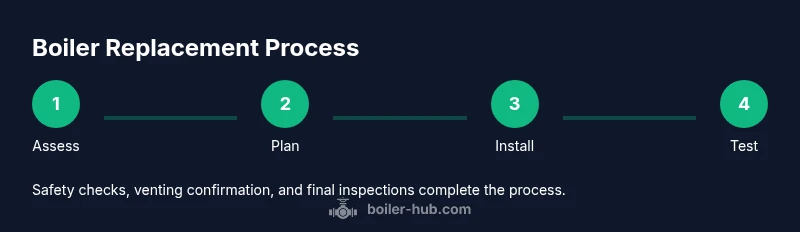
A professional installation follows a structured sequence: decommission the old boiler, disconnect utilities safely, and test for leaks in the gas line; remove the old unit and prepare the mounting space. Install the new boiler, connect gas, water, and electrical services, and fit the venting system or flue adapters. The technician will perform a commission test, adjust controls for comfort, and verify safety devices function correctly. Finally, a warranty registration and system documentation are completed for future service. Scheduling should account for potential permit approvals and any required upgrades to adjacent components like expansion tanks or backflow preventers. Expect a thorough, code-compliant process with a formal safety check before returning the home to service.
Safety, permits, and codes you should know
Gas work and major appliance installation are tightly regulated for safety. Permits from your local authority are common and may require an inspection after the install. A licensed technician will perform a gas pressure test, verify proper combustion, and ensure venting and condensate drainage meet code. Electrical work associated with modern boilers must comply with electrical codes, including proper grounding and control wiring. If your home has an older chimney or venting system, the inspector may require upgrades to meet current standards. Boiler Hub underscores that neglecting permits or safety checks can lead to voided warranties and unsafe operation.
Budgeting, permits, and scheduling
Costs for boiler replacement vary with unit type, complexity of venting work, and whether existing infrastructure needs upgrades. Expect to budget for the boiler itself, professional labor, permits, and potential ductwork or venting changes. Scheduling depends on contractor availability and permit timelines, which can add days to weeks. To avoid surprises, request a written estimate covering equipment, labor, and any anticipated extra work (like rerouting a vent or upgrading the gas line). Clear communication with your installer helps align expectations and reduces downtime during the transition. The goal is a predictable timeline that minimizes heat loss while maintaining safety and compliance.
Alternatives to full replacement
If a full boiler replacement seems excessive, consider alternatives such as a boiler upgrade kit, a mid-life service to restore efficiency, or an on-demand indirect heater to support hot water needs. For some homes, a dual-fuel or hybrid system may improve reliability and efficiency without a complete overhaul. In certain cases, there are rebates or incentives for upgrading to high-efficiency equipment; check local programs and incentives. The decision depends on your current system’s age, fuel type, and maintenance history. A professional can help you compare long-term costs, comfort, and reliability between replacement versus upgrade options.
Authority sources
To support this guidance, consult authoritative sources for boiler safety, ventilation, and building codes. These resources provide high-level, reputable information to supplement professional advice.
- https://www.energy.gov
- https://www.epa.gov
- https://www.osha.gov
Tools & Materials
- New boiler (properly sized and certified)(Select a model with suitable efficiency rating and venting compatibility for your home)
- Replacement venting kit and adapters(Needed if vent path or flue connectors differ from the old unit)
- Gas shut-off tool and regulator (if needed)(Essential for safe disconnection and reconnection during install)
- Piping and fittings (copper/CSST) as needed(For gas, water, and condensate connections)
- Permits and inspection coordination(Check local jurisdiction; may require permit submission and final inspection)
- Safety gear (gloves, eye protection, hearing protection)(Personal protective equipment for installer and helpers)
- Leak detection solution and soap bubbles(Used to check gas lines for leaks after connections)
- Teflon tape and thread sealant(Ensure airtight gas and water connections)
- Torque wrench and basic hand tools(Properly secure fittings and gas connections)
Steps
Estimated time: 1-3 days
- 1
Assess current setup
Document the existing boiler’s location, vent path, clearances, and fuel type. Verify the space can accommodate the new unit and any required venting changes. This foundational step reduces downstream surprises.
Tip: Take photos and notes of every connection before removing the old boiler to simplify the reassembly. - 2
Choose the right boiler
Select a model that matches your heating load and space constraints. Compare efficiency ratings, venting requirements, and warranty terms to ensure long-term reliability.
Tip: Ask for a load calculation from the installer to confirm the chosen boiler size is appropriate. - 3
Check venting and clearances
Confirm that the existing vent or chimney is compatible with the new unit. If not, plan adapters or a new vent run with professional guidance.
Tip: Ensure condensate drainage is planned for condensating boilers to avoid water damage. - 4
Obtain permits and schedule installation
Submit required permits and coordinate with your utility provider or local inspector. Schedule a window that minimizes disruption and ensures inspections occur promptly.
Tip: Ask the installer to provide a pre-inspection checklist to speed up approvals. - 5
Prepare installation space
Clear access, disconnect utilities, and protect the area from debris. Ensure proper ventilation around the work zone to maintain air quality during removal.
Tip: Move any flammable materials away from the work area and cover nearby surfaces. - 6
Install the new boiler
Mount the unit securely, connect gas, water, and electrical services, and fit the flue or vent adapters. Double-check all connections for tightness and correct orientation.
Tip: Use a torque wrench on gas fittings to avoid leaks and ensure compliance with manufacturer guidelines. - 7
Commission and test
Power up the boiler, perform combustion analysis, check for leaks, and verify safety devices. Set controls for comfort and performance, then run a full system test.
Tip: Document test results and warranty registration for future service. - 8
Final inspection and handoff
Coordinate the final inspection with the authority having jurisdiction. Review maintenance plans, warranty details, and system operation with the homeowner.
Tip: Provide the homeowner with a written maintenance schedule and contact information.
Questions & Answers
Do I need planning permission to replace a boiler?
Most jurisdictions require a permit for boiler replacement and any gas line work. A local inspector will verify venting, combustion safety, and installation methods before final approval.
Yes, you’ll likely need a permit and an inspection for a boiler replacement to meet safety standards.
Can I replace a boiler myself?
Gas boilers must be installed by a licensed professional to ensure safe fuel connections, venting, and code compliance. DIY installation can void warranties and create serious safety risks.
No—gas boiler replacement should be handled by a licensed professional.
How long does boiler installation take?
Typical installations span about 1-2 days, depending on system complexity, venting changes, and permit processing. Scheduling can extend this if inspections are delayed.
Most installations take about a day or two with proper planning.
What costs should I expect?
Costs vary by boiler type, installation complexity, permits, and any necessary venting upgrades. A written estimate should itemize equipment, labor, permits, and potential contingencies.
Expect the total to cover the boiler, labor, permits, and any venting work.
Are high-efficiency boilers worth it?
High-efficiency models can reduce ongoing energy use and emissions when properly sized and vented. Ensure the home’s load calculation matches the unit’s output for best results.
Yes, when correctly sized and vented, high-efficiency boilers save energy over time.
Watch Video
Key Points
- Assess compatibility before purchasing the new boiler
- Prioritize licensed installation for safety and compliance
- Plan venting changes and permits early
- Size and efficiency matter for long-term savings
- Expect a structured install with testing and documentation