How to Move a Boiler into the Basement: A Practical Guide
A comprehensive, safety-focused guide on relocating a boiler to the basement. Learn planning, permits, venting, structural checks, and when to hire professionals for a compliant, reliable installation.


Relocating a boiler to the basement is a major project that can free up usable space and simplify maintenance. It requires careful planning, a clear budget, and adherence to safety codes. This quick answer highlights the essential steps: assess space, secure permits, verify venting, and decide when professional installation is necessary.
Planning and safety considerations
Relocating a boiler to the basement demands thorough planning and a focus on safety from day one. Start by defining the project scope, timeline, and budget, then identify any local permitting requirements. According to Boiler Hub, the relocation process increases the importance of a formal risk assessment, especially around gas, venting, and structural load-bearing elements. Engage all stakeholders early—this includes building management (if applicable), code officials, and, crucially, licensed professionals for gas and venting work. A well-documented plan helps prevent costly delays and ensures you meet code expectations for clearances, access, and serviceability. Be prepared to adjust the plan if existing infrastructure limits your relocation options.
- Identify all service clearances required by code and boiler manufacturer guidelines.
- Schedule a pre-project inspection to assess load-bearing capacity and access routes.
- Budget for permit fees, potential structural upgrades, and professional labor.
Tip: Start early with a clear scope and written approvals to reduce surprises later in the project.
Assessing space, layout, and clearances
The basement relocation hinges on space and access. Measure doorway widths, stair dimensions, and ceiling height to confirm you can maneuver the boiler and any replacement unit through tight passages. Clearance around the boiler must meet both manufacturer recommendations and local codes for service access and combustion air. Evaluate whether the basement floor can support the boiler’s weight and if the path from the boiler room to the exterior venting point is feasible. Consider future maintenance and the ability to service valves, filters, and safety devices without displacing furnishings or obstructing egress. If there are low beams or tight corners, plan for temporary removal of obstacles or alternative routing.
- Verify hoisting or dolly capabilities for you or your contractor.
- Ensure doorways, stair landings, and hallway widths won’t block movement.
- Confirm access to a safe flat area for testing and commissioning after relocation.
Pro tip: Document all measurements with photos and annotated drawings to avoid misinterpretation later.
Compliance, permits, and codes
Moving a boiler into a basement triggers additional compliance checks. Most jurisdictions require a permit for relocation that involves gas piping, venting, and electrical work. You’ll need to verify that the new installation continues to meet venting requirements, combustion air provisions, CO detector placement, and clearance distances from walls and floors. Boilers are designed to vent to the outdoors; altering the vent path can impact draft and backflow risks. Maintain documentation for inspections and keep manufacturer installation manuals accessible. If you’re working with a retrofit in an older home, expect potential upgrades to meet current energy and safety standards. Boiler Hub Analysis, 2026 emphasizes documenting all permit and inspection milestones to avoid delays and ensure traceability.
- Check with the local building department about permit scope and fees.
- Acquire any required gas and electrical permits before starting.
- Keep a complete trail of approvals, inspections, and compliance steps for future maintenance.
Note: Some steps must be completed by licensed professionals to satisfy code and warranty requirements.
Venting, exhaust, and combustion air considerations
Proper venting is non-negotiable for basement boiler installations. Inadequate combustion air or improper vent routing can lead to carbon monoxide buildup and dangerous pressure changes. If the boiler is relocated to a basement, ensure there is a dedicated combustion air intake or an approved venting system that meets the manufacturer’s specs and local code. Sealing and damp-proofing around vent paths prevent moisture intrusion and heat loss. Maintenance access to vent connections should remain unobstructed. Install CO detectors in living spaces as a safety net and test them regularly. You may need to reroute exhaust to an exterior wall or through an approved chimney or vent stack.
- Use manufacturer-approved vent kits and ductwork.
- Avoid obstructing air intakes or creating dead spots for gas appliances.
- Schedule a professional vent and combustion air assessment prior to final commissioning.
User tip: Do not attempt to improvise venting with makeshift fittings. Poor venting is a leading risk in relocations.
Structural and accessibility concerns
Basement relocations place new demands on the structure and service routes. Confirm that the basement floor can support the boiler’s weight, and investigate whether the load path to load-bearing walls is adequate for seismic or wind considerations. If the relocation requires cutting through studs or rerouting piping, plan for temporary supports and proper floor protection. Ensure there is permanent utility access for future service, and leave clearance space around the boiler per manufacturer guidelines and code requirements. If your basement has wet or damp conditions, address moisture control before installation to prevent corrosion and equipment degradation.
- Check floor integrity and clearance around the boiler.
- Plan for future maintenance access and service routes.
- Treat any moisture issues to protect the unit and piping.
Pro tip: Schedule a structural assessment if you’re unsure about floor loading or if the basement has variable moisture levels.
Equipment options and load calculations
Choosing the right boiler and calculating load requirements are critical steps. A basement installation might bulk up the system or necessitate a compact, high-efficiency model. You’ll need to perform a heat load calculation that accounts for the building size, insulation, and climate. If you’re upgrading, verify that the new unit’s venting needs align with the existing stack or plan to replace the vent configuration. In many cases, a professional HVAC contractor will run the calculations, confirm piping sizes, and design a safe, efficient layout that minimizes heat loss. Keep in mind warranty implications—alterations to venting, gas supply, or electrical connections can void warranties if not performed by licensed installers.
- Compare equivalent models and their venting requirements.
- Have a professional perform a load calculation and pipe sizing.
- Consider future expansion or efficiency upgrades when selecting equipment.
Note: Avoid oversizing the boiler, which wastes energy and shortens equipment life.
Relocation workflow and coordination (high-level overview)
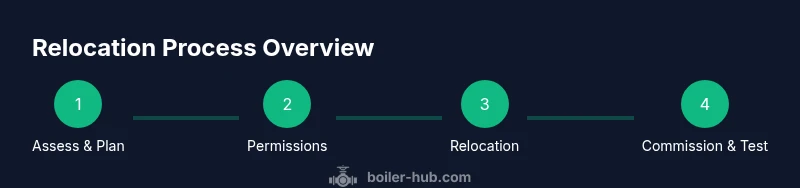
A relocation project follows a logical sequence: verify space, secure permits, disconnect utilities under professional supervision, safely move the boiler to the basement using appropriate lifting gear, reconnect utilities, and perform system tests. This block provides an overview; the detailed step-by-step guide in the next section covers individual actions and coordination between trades. Any relocation should emphasize safety, compliance, and clear communication among homeowners, engineers, gas technicians, and electricians. The entire workflow should be documented, with a project plan, drawings, and a testing protocol that covers leak checks and gas tightness after reassembly.
- Prepare a staged plan with milestones and responsibilities.
- Schedule safety checks before and after disassembly and reassembly.
- Keep records of inspections and test results for future maintenance.
Tip: Pre-arrange access with the building’s management or neighboring units to avoid delays during equipment movement.
Safety and testing after relocation
After moving the boiler, comprehensive safety checks are essential. Confirm gas pressure, leak testing for piping, and proper electrical grounding. Test the boiler’s ignition and cycling sequence, verify thermostat communication, and ensure the circulator and zone valves operate correctly. A carbon monoxide detector should be placed near sleeping areas and tested monthly. Whisper-quiet operation and consistent venting performance indicate a successful relocation. If any abnormal sounds, odors, or pressure readings appear, pause operation and call a licensed technician for diagnosis. Regular maintenance checks—annually or per manufacturer guidelines—help sustain performance and safety.
- Conduct a leak and pressure test according to code and manufacturer specs.
- Verify CO detectors and vent integrity post-install.
- Schedule routine maintenance and professional inspections.
Important: Do not operate a relocated boiler until a qualified contractor signs off on the installation.
Hiring professionals vs DIY
Relocating a boiler is typically beyond standard DIY scope due to gas piping, venting, electrical work, and structural considerations. The right approach is often to hire a licensed HVAC contractor and a licensed gas fitter. They can handle load calculations, venting design, gas line reconfiguration, electrical disconnects/reconnects, and code-compliant commissioning. If you insist on doing portions of the project, restrict yourself to non-technical tasks like planning, site protection, and basic cleanup, but never bypass licensed trades for critical steps. The warranty on the boiler may require professional installation to remain valid.
- Prioritize licensing, insurance, and certifications of the contractors.
- Obtain written quotes and check references.
- Verify that the contractor will permit and coordinate inspections.
Bottom line: For safety and compliance, partner with professionals for gas, venting, and electrical work, and use homeowners’ planning and coordination skills for non-critical tasks.
Maintenance, future-proofing, and backup plans
A basement relocation offers an opportunity to improve accessibility and serviceability, but it also requires ongoing maintenance. Set a schedule for annual boiler servicing, vent inspection, and CO detector checks. Consider future upgrades—adding smart thermostats, zoning, or alternative heating controls—to maximize efficiency. Plan for backup power or contingency options if you rely on the boiler for essential hot water or heating. Store spare parts and valve keys in a labeled, accessible location. Regularly review safety protocols with all household members or facility staff.
- Create a maintenance calendar aligned with manufacturer recommendations.
- Install and test CO detectors in key locations.
- Keep a spare parts inventory and a list of trusted technicians for emergencies.
Pro tip: Maintain a clear service log to simplify future maintenance, troubleshooting, and warranty claims.
Tools & Materials
- Permits and approvals(Local building and gas permits; keep copies for inspections)
- Structural and clearance assessment(Structural engineer or qualified contractor evaluation if load concerns arise)
- Lifting equipment and rigging(Heavy-duty hoists, straps, and protective padding; ensure weight limits are known)
- Gas line & venting components(Manufacturer-approved fittings, vent kits, seals; avoid improvised parts)
- CO detectors and safety devices(Placement near sleeping areas; test monthly)
- Electrical testing tools(Multimeter, compatible disconnect switches; follow electrical code)
- PPE and site protection(Goggles, gloves, drop cloths, floor protection)
- Documentation kit(Drawings, manuals, permits, inspection records)
Steps
Estimated time: 1-2 days (planning, permitting, and relocation)
- 1
Assess site and safety
Evaluate basement space, access routes, and structural support. Confirm there is adequate clearance for service and maintenance after relocation. Document measurements and potential bottlenecks to inform planning and permitting.
Tip: Photograph each corridor and door opening; add measurements to a drawn plan for accuracy. - 2
Check permits and codes
Consult local building authorities to determine required permits and code requirements for venting, gas, and electrical work. Consider scheduling a pre-inspection to anticipate issues before beginning work.
Tip: Obtain all approvals in writing and keep copies with project records. - 3
Engage licensed professionals
Hire a licensed HVAC/gas contractor and an electrician to perform critical tasks. They will verify load calculations, gas line integrity, electrical safety, and vent configuration.
Tip: Ask for references and confirm licenses, insurance, and warranty implications. - 4
Prepare the relocation path
Clear a safe path from the boiler room to the basement, remove obstacles, and protect floors. Ensure hoisting or moving equipment has a clear, level staging area.
Tip: Schedule the move during low-traffic periods to minimize risk. - 5
Disconnect utilities under supervision
Gas supply and electrical power must be shut off by licensed personnel per code. Confirm shutoff locations and test gas presence safety devices before the move.
Tip: Do not attempt disconnection if you are not licensed for gas or electrical work. - 6
Move the boiler to the basement
Using appropriate lifting gear, carefully transport the boiler to its new location. Maintain level orientation and protect fragile connections during the transfer.
Tip: Have a spotter and use protective padding to prevent wall or doorway damage. - 7
Reconnect utilities and venting
Reinstall gas supply, electrical connections, and venting per manufacturer instructions. Ensure all joints are sealed and tested for leaks before commissioning.
Tip: Leak testing should be performed by the licensed professional who handles the gas line work. - 8
Commission and test
Perform ignition, cycling, and system tests. Verify CO detector alarms, vent function, and thermostat communication. Document inspection results and keep manufacturer manuals handy.
Tip: If any fault codes appear, pause operation and call your pro for a diagnostic. - 9
Finalize clearance and safety checks
Confirm clearance around boiler, service access, and that all safety devices are functional. Ensure the installation meets warranty and code requirements.
Tip: Keep a service log and update it with future maintenance dates. - 10
Plan ongoing maintenance
Set a calendar for annual servicing, vent inspection, and CO detector tests. Consider upgrades for efficiency or zoning to optimize performance.
Tip: Create a maintenance checklist and store it with operation manuals.
Questions & Answers
Is moving a boiler to the basement feasible for all homes?
Feasibility depends on space, structure, and venting access. A licensed pro should assess load, clearance, and safety requirements before deciding.
It depends on space, structure, and venting access; a licensed professional should assess it first.
Do I need permits to relocate a boiler to the basement?
Yes. Most jurisdictions require permits for gas, venting, and electrical work associated with relocation. Inspections are typically part of the process.
Yes, permits are usually required for gas, venting, and electrical changes, with inspections.
How long does a basement boiler relocation take?
Duration varies by project scope, but planning, permits, and relocation commonly span several days to a couple of weeks.
It typically takes several days to a couple of weeks, depending on planning and permits.
Can I relocate the boiler myself without professionals?
Critical steps involve gas, venting, and electrical work, which require licensed professionals. DIY in these areas is not recommended and can be dangerous.
No—gas, venting, and electrical work require licensed professionals for safety and warranty reasons.
What safety checks are essential after relocation?
Leak testing, gas pressure verification, vent integrity, CO detector placement, and thermostat function are all essential prior to commissioning.
Leak, gas, vent checks, CO detectors, and thermostat tests are essential before commissioning.
Will relocation affect boiler warranty?
Relocation can affect warranty if not performed by approved professionals or if approved procedures are not followed. Always consult the boiler manufacturer and installer.
Yes, warranties may require professional installation and adherence to approved procedures.
Watch Video
Key Points
- Plan thoroughly and secure permits before starting.
- Engage licensed professionals for gas, venting, and electrical work.
- Ensure proper ventilation and combustion air for basement installation.
- Verify clearance, access, and serviceability after relocation.
- Document all steps and maintain ongoing maintenance.