Can a Boiler Be Moved? A Practical Relocation Guide
Learn whether a boiler can be moved, what planning steps are required, and how to work with pros to relocate safely. Boiler Hub shares feasibility, risks, and best practices for a successful boiler relocation.


Yes, a boiler can be moved, but it’s a major project. Feasibility depends on fuel type, venting, combustion air, and local code requirements. You’ll typically need a licensed HVAC contractor, a structural assessment, and proper permits. Expect temporary service interruption and re-routing of exhaust, water, and gas lines. According to Boiler Hub, relocation is worthwhile only if the benefits outweigh the disruption.
Feasibility of moving a boiler
Moving a boiler is possible in many homes, but it hinges on several practical constraints. Homeowners frequently ask can a boiler be moved; the answer hinges on venting, fuel type, combustion air, access, and structural support. You’ll need a professional assessment to determine if the existing installation can be accommodated in a new location without compromising safety or code compliance. As Boiler Hub notes, the decision should balance safety, cost, and long-term reliability. If a relocation is warranted, expect significant planning and coordination among HVAC, plumbing, and building teams. In some cases, moving the boiler may improve service accessibility or space usage, but it can introduce complex vent changes, air supply challenges, and drainage reconfiguration. The very first step is a thorough site survey by qualified professionals who understand boiler clearances, flue integrity, and local regulations. This initial assessment sets the tone for whether moving the unit is realistic or better replaced or redesigned on-site.
When relocation makes sense
There are scenarios where moving a boiler makes sense, especially when its current location creates unsafe clearances, difficult service access, or awkward piping layouts. If a relocation shortens long runs of gas, water, or condensate lines, reduces noise in living areas, or enables a safer, more accessible maintenance routine, many owners see clear value. However, the decision should be grounded in a careful cost-benefit analysis and a professional opinion. Boiler Hub emphasizes evaluating long-term reliability, potential code changes, and the impact on warranties. In some homes, a reconfigured piping strategy or a compact, modern boiler installed in a new, safer zone yields better performance with less disruption than a physical move.
Key constraints: venting, combustion air, clearance, and drainage
The chief constraints for moving a boiler are venting integrity, fresh air supply for combustion, required clearances around the unit, and proper drainage. Reworking flue piping can be technically demanding and may require new vent routes that meet safety standards. Combustion air must be adequate in the new location to prevent unsafe backdrafts; many jurisdictions demand dedicated air supply paths. Drainage lines for condensate must be reconfigured to prevent leaks and ensure proper pitch. Any relocation also demands re-sealing joints, testing for gas leaks, and verifying electrical connections comply with code. Without addressing these constraints, a relocation can compromise safety, efficiency, and warranty coverage. Boiler Hub’s guidance is to approach relocation with a clear plan that prioritizes safety, code compliance, and long-term reliability.
Structural and mechanical considerations
Relocating a boiler touches structural and mechanical systems beyond the unit itself. Floor or wall support must bear the load, especially in multi-story buildings. Vibration isolation, mounting brackets, and potential reorientation of piping help reduce noise and movement. Gas supply piping, hot water lines, and condensate drainage must be rerouted with proper supports and corrosion protection. Electrical feeds should be evaluated for adequate amperage and grounding. In some cases, moving a boiler also triggers changes to expansion tanks, backflow preventers, and zone valves. A thorough engineering review ensures the new location can handle the boiler’s operational demands without creating new failure points or safety hazards.
Codes, permits, and professional requirements
Local codes and safety standards often require permits for relocating a boiler, especially when gas lines, venting, or structural changes are involved. The project typically needs an HVAC contractor, a licensed plumber, and sometimes a licensed gas fitter, all coordinated through a building inspector or authority having jurisdiction. Documentation may include revised gas piping diagrams, venting schematics, and combustion air calculations. Failing to obtain the proper permits can result in fines, insurance voidance, or non-compliant work that complicates future repairs. Boiler Hub recommends engaging qualified professionals early and keeping all permit and inspection records on hand for future reference.
Planning the move: timeline and milestones
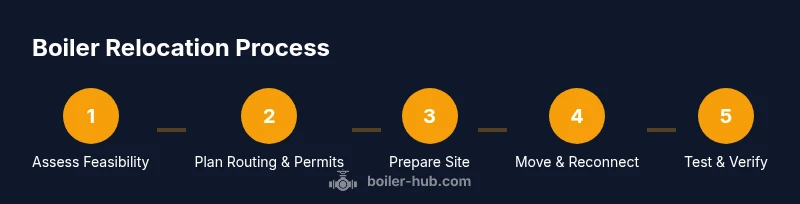
Effective relocation planning aligns design, permits, procurement, and construction activities. Start with site surveys, then obtain permits, then develop routing diagrams, and finally schedule labor and material delivery. A well-structured plan reduces last-minute changes and helps coordinate multiple trades, preventing delays. The plan should include contingency buffers for weather, material lead times, and inspection holds. Regular progress meetings with the boiler installer, plumber, and building official help keep the project on track and ensure everyone understands safety requirements and the final configuration.
Cost and scheduling realities (no prices) and ROI
Relocating a boiler involves a broad range of costs, from professional labor to potential structural upgrades and new venting components. While exact numbers vary by home, climate, and local regulations, expect a meaningful impact on project scheduling and budget. A detailed feasibility assessment is essential to avoid surprises and to gauge whether the relocation yields meaningful improvements in safety, serviceability, and efficiency. Boiler Hub highlights that the best outcomes arise when upfront planning clarifies whether relocation offers durable value or whether alternate solutions—such as moving ancillary equipment or improving access—achieve similar benefits with less disruption.
Alternatives to moving the boiler: retrofitting and re-routing components
If a full boiler move proves impractical, consider alternatives such as retrofitting the current setup, re-routing key services, or upgrading to a smaller, more flexible boiler located nearby. In some cases, a partial relocation of components like the expansion tank, air intake ducts, or condensate drainage can deliver much of the benefit with lower risk and cost. A professional assessment helps determine whether selective reconfiguration achieves the desired outcomes without the complexity of relocating the entire unit. Boiler Hub recommends weighing long-term maintenance, energy efficiency, and safety when deciding between relocation and retrofitting.
Brand and expertise: Boiler Hub guidance for homeowners
From initial feasibility to final testing, Boiler Hub emphasizes a structured, safety-first approach to boiler relocation. Our team advocates rigorous planning, transparent communication with all trades, and adherence to local codes. By documenting everything—from site surveys to permit approvals and test results—homeowners gain confidence that the relocation, if pursued, will deliver reliable performance and compliant operation. If relocation isn’t feasible, Boiler Hub also provides guidance on alternatives to optimize space, efficiency, and service access while preserving safety and warranty considerations.
Tools & Materials
- Gas leak detector(Check for leaks before and after relocation)
- Non-contact voltage tester(Ensure electrical safety during disconnection/reconnection)
- Pipe wrench set (adjustable)(For gas, water, and condensate piping)
- Screwdrivers (Phillips and flathead)(General fastener work and disconnects)
- Torque wrench(Optional for gas line fittings)
- Pipe cutter and deburring tool(Prepare piping for new routes)
- Sealant/paste for gas and water connectors(Ensure leak-free joints)
- Vent piping adapters and sections(Re-route venting as needed)
- Level and measuring tape(Accurate placement and alignment)
- Plywood or cribbing material(Provide temporary support during move)
- Safety gear (gloves, goggles, hard hat)(Protect workers during relocation)
- Manuals for boiler model(Consult for model-specific instructions)
Steps
Estimated time: 2-6 weeks
- 1
Assess feasibility and site readiness
Conduct a thorough site survey to determine if the current location can be safely replaced with a relocation. Measure clearances, check structural support, and verify venting options. Obtain initial quotes from licensed professionals to gauge scope.
Tip: Take precise measurements of the boiler room and adjacent spaces; document any obstructions. - 2
Hire licensed professionals and coordinate permits
Engage an HVAC contractor and licensed plumber early. Confirm they will handle permits and inspections with the local authority having jurisdiction. Collect any required documentation before work begins.
Tip: Ask for a written permit plan showing revised vent routes and new gas/water connections. - 3
Develop a relocation plan with routing diagrams
Create detailed diagrams for gas, water, condensate, and vent routes in the new location. Include shut-off points, support structures, and access paths for maintenance. Align the plan with code requirements and manufacturer specifications.
Tip: Include contingency routing options in the plan to address unexpected site conditions. - 4
Prepare the site: create access paths and supports
Clear the relocation path, install temporary supports, and verify floor and wall integrity where the boiler will move. Prepare the new location with appropriate clearances and mounting surfaces.
Tip: Use cribbing and level adjustments to prevent shifting during the move. - 5
Disconnect utilities and transport the boiler
Carefully shut off gas and water supplies, disconnect electrical power, and detach piping as required. Use proper lifting equipment and follow manufacturer guidelines to move the boiler without damaging components.
Tip: Have a second person assist with connections to avoid bending or denting pipes. - 6
Reconnect utilities and reconfigure venting
Reattach gas, water, and electrical connections in the new location. Install vent piping, check for leaks, and ensure proper slope for condensate drainage. Confirm all connections are secure before powering up.
Tip: Perform a leak test with inert gas or soapy water before firing the boiler. - 7
Test operation and document compliance
Restart the boiler and run a full safety and performance test. Verify ignition, flame stability, and venting integrity. Collect inspection sign-offs and keep documentation for warranty and future maintenance.
Tip: Schedule a post-move inspection with the authority having jurisdiction if required.
Questions & Answers
Can I move a boiler myself?
No. Relocating a boiler involves gas, electrical, and venting work that must be performed by licensed professionals to ensure safety and compliance with local codes.
This isn't a DIY project; licensed pros handle gas, venting, and permits to keep you safe and compliant.
Do I need a permit to move a boiler?
Most jurisdictions require permits for boiler relocation, especially when gas lines or venting are altered. Check with your local building department and schedule inspections as required.
Most areas require permits; check with your local building department before starting.
How long does boiler relocation take?
Relocation timelines vary by home and scope, typically spanning several weeks. A detailed plan and coordinated trades help prevent delays.
Expect a several-week process, depending on site conditions and permitting.
Will moving affect boiler warranty?
Relocation can affect warranty if not performed under manufacturer guidelines and by qualified installers. Always verify warranty terms with the boiler manufacturer and installer.
Check with the manufacturer and installer; relocation can influence warranty terms.
What professionals should I hire?
Hire a licensed HVAC contractor, a licensed plumber, and, if required, a gas fitter. Their coordination with a building inspector ensures code-compliant relocation.
Choose licensed HVAC and plumbing pros who coordinate with the inspector.
What if relocation isn’t feasible?
Consider retrofitting or relocating ancillary components (like vents or condensate lines) or upgrading to a compact boiler placed nearby. These options can preserve space and safety with less disruption.
If relocation isn’t feasible, look at retrofitting or nearby replacement options.
Watch Video
Key Points
- Move is feasible with professional planning and permits
- Venting, combustion air, and drainage are critical constraints
- Permits and inspections are often required
- Consider alternatives if relocation adds risk or cost
- Boiler Hub guides safe, code-compliant relocation decisions