How to Get a Boiler Out of the Basement: A Practical Guide
Learn a safe, step-by-step approach to move a boiler from a basement, with planning, tools, expert help, and essential safety checks. Boiler Hub guidance for homeowners and facilities.


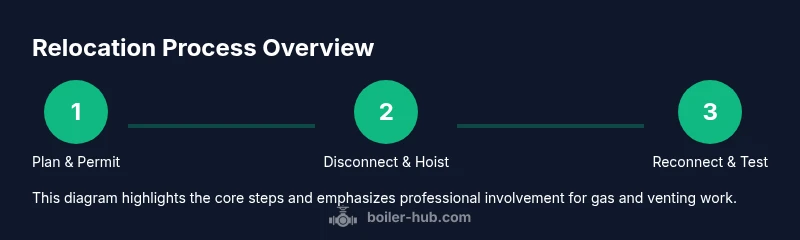
Moving a boiler out of a basement is a complex, high-risk project that demands planning, proper utilities shutoffs, and professional help for gas and venting work. Begin with a site assessment, obtain any necessary permits, disconnect safely, and use proper hoisting equipment. For safety and code compliance, hire a licensed boiler technician or contractor to perform the relocation.
Planning and safety prerequisites
Relocating a boiler from a basement is a major undertaking that requires careful planning. If you're wondering how to get boiler out of basement safely, according to Boiler Hub, relocating a boiler is not a DIY task; it demands professional involvement for gas, venting, and structural considerations. Start by reviewing why you want to relocate: space optimization, access for service, and safer clearance for maintenance. Create a rough layout showing the current boiler, the planned new location, and the route the unit will travel. Check for structural clearances around doors, stairwells, and ceiling joists, and identify a suitable exterior or ground-floor final site with solid footing. Consider the building’s ventilation requirements and the impact on indoor air quality during the move. Assemble a simple project plan with milestones, responsibilities, a rough schedule, and a pause point to confirm permits or inspections. Finally, assemble a team, including a licensed gas fitter, a skilled helper, and a professional mover if needed. Safety first means turning off power, gas, and water before any action and wearing PPE, and ensuring all personnel know emergency procedures.
Regulatory and permits: when to call in a pro
Whether you can relocate a boiler from basement to another location often depends on local building codes and the Home Energy or Gas Code in your area. Before lifting, contact your local building department to determine if permits are required and whether a licensed gas fitter must supervise the job. Many jurisdictions require a gas line re-pressurization test and vent system inspection after relocation. Keep a written plan, including scope, ventilation changes, and a proposed final installation, to present for permit review. If inspections are needed, schedule them early to avoid delays. It's wise to coordinate with your utility company as well; in some cases, utilities require a temporary disconnection or a service shut-off during the move. The overarching rule: safety and compliance come first, even if the project seems straightforward on paper. Boiler Hub analysis suggests that planning this step early reduces delays and protects occupants.
Structural and ventilation considerations
A basement boiler sits on a concrete pad or embedded base; relocating it means ensuring a level, solid foundation at the new site. Verify that the new location has adequate combustion air and that the venting path remains compliant in terms of slope, clearance, and backdraft risk. If you keep the boiler inside the building, ensure the crawl space or utility room meets clearance requirements for service and future maintenance. If the unit will exit to outside, plan for weather protection and a stable exterior pad. The path from the current location to the outside must be clear of obstacles such as electrical panels, plumbing, or low-hanging ductwork. Consider adding temporary cribbing or foam pads to prevent damage to floors and to minimize vibrations during transport. Finally, plan for a post-move check to verify that joists or supports weren’t compromised and that vibration isolation remains effective to avoid noise transmission.
Prerequisites for staging and safety
Before any movement, set up a staging area where the boiler can rest during repositioning. Mark a clear route from the basement to the final site and tape doors or stairs to prevent accidental entry by bystanders. Ensure all personnel wear PPE: steel-toed boots, gloves, eye protection, and a hard hat if overhead clearance is tight. Establish a communication plan and a clear hand signals set for guiding the lift. With a unit as heavy as a boiler, even small misalignments can lead to injuries or property damage, so never rush a lift. If the route includes stairs, consider a specialist with a moveable hoist or crane; never attempt to carry the boiler by hand through a narrow staircase. Lastly, verify that the utility shut-offs are accessible and that emergency shut-offs are labeled and functional.
Example relocation scenarios
- Scenario A: Basement-to-ground level with direct exterior door. A straight path makes the move faster but requires careful venting and gas line handling by a licensed pro.
- Scenario B: Narrow stairwell with tight turns. A professional mover and hoisting equipment are essential; plan for cribbing and protective mats to avoid floor damage.
- Scenario C: Concrete slab with limited headroom. You may need to temporarily remove or modify ceiling penetrations; only do this if permitted and by a pro.
Authority sources
- U.S. Department of Energy, Energy Saver: Home Heating Systems. https://www.energy.gov/energysaver/home-heating-systems
- Occupational Safety and Health Administration (OSHA): General Construction Safety. https://www.osha.gov
- National Fire Protection Association (NFPA): Gas Piping and Venting. https://www.nfpa.org
Tools & Materials
- Heavy-duty appliance dolly (rated for boiler weight)(Secure with straps; use at least two operators)
- Pipe wrenches and adjustable wrenches(For disconnecting gas and water lines; have multiple sizes)
- Screwdrivers and pliers(General fastener and clamp work)
- Cribbing wood and shims(Create stable supports and level the unit)
- Temporary vent and gas line caps(Used by licensed pro; do not cap yourself without approval)
- PPE (gloves, eye protection, hard hat, steel-toe boots)(Protective gear for all workers)
- Utility shut-off tools and lockout/tagout kit(Ensure energy sources are isolated)
- Camera or notes for documentation(Record before/after conditions)
- Licensed gas fitter contact(Have pro ready and schedule)
Steps
Estimated time: 8-14 hours
- 1
Assess constraints and plan the move
Survey the route from basement to the final location, check door widths, stair turns, and ceiling height. Create a simple diagram showing the boiler, path, and exit. Confirm whether a crane or hoist is required and identify any code or permitting steps early.
Tip: Take photos and mark chokepoints; obtain buy-in from building management if needed. - 2
Shut off utilities and drain the boiler
Turn off the gas supply and electricity at the main panels; close the water feed to the boiler and drain the system as recommended by the manufacturer. Label the shut-offs and lock them out if possible.
Tip: Never work on gas lines without a licensed gas fitter; verify gas is fully isolated. - 3
Coordinate permits and hire licensed professionals
Contact the local building department to determine required permits and schedule a licensed gas fitter and a professional mover if needed. Collect quotes in writing and factor in inspections along the way.
Tip: Get a written scope of work and a timeline; document all communications. - 4
Prepare the extraction path and staging area
Clear the route, protect floors and walls, and set up a stable staging area to receive the boiler. Establish clear communication and ensure team members know their roles.
Tip: Use protective mats and cribbing to minimize damage to floors during movement. - 5
Disconnect venting, gas, and water lines
Only a qualified technician should disconnect gas and venting; cap and secure lines per code. Disconnect water lines carefully and drain any residual water.
Tip: Document all disconnections with photos for reference during reinstallation. - 6
Set up hoisting equipment and secure the unit
Position the dolly or hoist, attach straps, and use cribbing to create a stable lift platform. Do a test lift with minimal height to confirm stability before full movement.
Tip: Never stand under a lifted load; use spotters and clear communication. - 7
Lift and move the boiler along the planned route
Slowly lift the boiler and guide it along the route, checking for obstructions at every bend. Move in short, steady increments and stop if anything binds.
Tip: Have a second person ready to assist with alignment at doorways. - 8
Reconnect at the new site and test
Have the gas fitter reattach lines and the venting system, reconnect electrical and water as required, and perform leak and vent tests. Verify proper air supply and ignition.
Tip: Do not energize the boiler until all gas joints are tested and approved.
Questions & Answers
Is it safe to move a boiler myself?
No. Moving a boiler involves gas, venting, and structural work that requires licensed professionals. DIY relocation can create dangerous leaks or fire hazards.
It's not safe to move a boiler yourself; you should hire licensed professionals for gas and venting work.
What permits do I need to relocate a boiler?
Permit requirements vary by location. Contact your local building department to determine needed permits and inspections before the move.
Permit requirements vary by area; check with your local building department.
How long does relocation typically take?
Most projects take a full day or longer, depending on route complexity, venting requirements, and access.
Usually a full day or more, depending on complexity.
Will moving affect boiler performance?
If performed correctly by qualified pros, performance should remain the same. Improper installation can cause safety issues.
Properly installed, performance remains the same; bad installation can cause problems.
Should I relocate inside the basement or outside?
Depends on layout, ventilation, and service access. Outside relocations require weatherproofing and vent adjustments.
It depends on layout and venting; outside moves need weatherproofing.
What are warning signs to stop and call a pro?
Gas odor, hissing noises, or obvious leaks require immediate action and professional intervention.
Gas smells or leaks mean stop and call a pro right away.
Watch Video
Key Points
- Plan thoroughly before moving the boiler
- Prioritize safety and professional involvement for gas/venting
- Secure permits and inspections before, during, and after relocation
- Test venting and gas connections at the new site