How Much to Put a Boiler in Loft: Cost & Guide
Explore loft boiler installation costs, factors shaping price, and practical budgeting tips. Learn when loft access, venting, and insulation raise costs, plus a step-by-step planning guide from Boiler Hub.


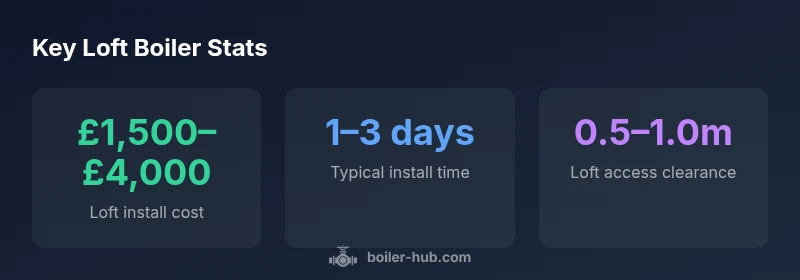
The installed loft boiler typically costs between £1,500 and £4,000, depending on boiler type, loft access, and required venting and piping work. Budget extra for insulation, hatch modification, and professional installation to ensure compliance and safety. Costs vary by location, contractor rates, and whether you replace an existing unit or add a new one. Boiler Hub Analysis, 2026 notes that loft installs with complex access or restricted space tend to run higher.
The reality of loft boiler installation
For homeowners exploring a loft installation, the most common question is how much to put boiler in loft. The short answer is: costs vary widely, and depend on boiler type, loft access, and how much venting and pipework is required. In practice, loft installations can range from modest upgrades for compact spaces to full replacements with additional insulation and access improvements. According to Boiler Hub, 2026 analysis, projects with straightforward access and a standard combi boiler tend to sit at the lower end of the range, while complex lofts with restricted headroom, long flue runs, or the need for extra ventilation can push prices higher. Budgeting also means thinking beyond the boiler itself: you may need new loft boards, better hatch insulation, intercepts for safety devices, and possibly scaffolding if access is tricky. This means the headline cost is not just the unit price, but a bundle of installation tasks that must be completed to ensure safety, performance, and compliance with building regulations. The rest of this guide helps you quantify those factors and plan accordingly.
Factors that affect loft installation costs
The big picture on how much to put boiler in loft starts with the main cost drivers. Boiler type matters: a compact combi boiler often costs less to install in a loft than a full steam system boiler, but the routing of flue gas and cold-water supply can swing prices. Loft access and headroom influence labor time and safety equipment needs; restricted spaces may require additional personnel or special access gear. Ventilation is crucial in loft spaces to manage condensation and carbon monoxide risks, which can add to kit and labor costs. Long or complex vent runs, additional condensate piping, and extra insulation steps also push the bill upwards. Finally, local permit requirements, building regulations compliance, and the choice between replacing an old unit or upgrading to a more efficient model all shape the final number. The keyword how much to put boiler in loft appears repeatedly as homeowners map out these cost factors.
Choosing your boiler type and its loft fit
When selecting a boiler for a loft installation, consider space constraints, heating demand, and future needs. A combi boiler delivers hot water and heat from a single unit, often ideal for smaller loft spaces but may limit hot-water delivery if you have high simultaneous demand. A system or regular boiler can handle larger homes and multiple zones, but requires more components and space for a cylinder or manifolds in the loft or another location. Floor-to-ceiling height, loft hatch size, and the weight of the boiler all influence fit. In many cases, combining a compact boiler with smart controls can maximize efficiency and minimize retrofit costs. As you evaluate options, always check the potential impact on running costs and reliability, since loft installations can affect heat distribution and system balance. The formula for how much to put boiler in loft is settled by matching boiler type to space and demand.
Access, ventilation, and building regulations
Loft installations demand careful planning around access and ventilation. Climbing into an attic work area raises safety considerations for installers and occupants. Adequate floor loading, secure ladders, and clear pathways reduce risk and speed up the job. Ventilation requirements prevent dangerous condensate buildup and ensure safe combustion; this often means adding or upgrading vents, ensuring proper flue termination, and installing CO detectors. Building regulations in many regions require professional, Gas Safe-certified installation for gas boilers, with an annual safety inspection after commissioning. This is a critical element of the process; underestimating regulatory requirements is a common reason for cost overruns. Keeping a checklist approach helps you manage how much to put boiler in loft and stay compliant throughout the project.
Additional costs to expect beyond the boiler price
Beyond the boiler unit, several line-items commonly appear in loft installs. Insulation work around the hatch and loft boarding to create a safe, accessible workspace can add to the bill. Ventilation upgrades and the installation of a dedicated flue system can be substantial drivers of cost. If the loft has limited headroom, you might need a compact or angled flue, which can also affect pricing. Electrical work for controls, thermostat wiring, and potential new circuits should be included in the estimate. Finally, some projects require temporary access equipment or scaffolding; these logistics can significantly influence labor charges. In all cases, document the scope clearly so you can understand how much to put boiler in loft and what each line item contributes.
Financing, incentives, and budgeting tips
Budgeting for a loft boiler installation benefits from a proactive financing plan. Start with a detailed quote from a Gas Safe-qualified installer and compare multiple quotes to gauge market rates. Look for bundled offers that include inspection, commissioning, and warranty coverage. Consider budgeting for energy-saving upgrades like smart thermostats and improved insulation, which may reduce running costs over time. If available locally, explore incentives or rebates for efficient boilers or loft upgrades; even small grants can tilt the economics in favor of a more robust system. Boiler Hub’s guidance suggests approaching the project as a whole, balancing upfront costs with long-term savings when determining how much to put boiler in loft.
Step-by-step: planning your loft boiler install
A structured plan minimizes delays and surprises. Step 1: confirm space and clearance in the loft, then measure for the chosen boiler’s dimensions. Step 2: obtain a formal quote from a Gas Safe installer and verify compliance with building regulations. Step 3: assess ventilation, flue routing, and potential noise considerations. Step 4: arrange access equipment and any needed loft-board or hatch upgrades. Step 5: schedule installation and post-install tests, including safety checks and boiler commissioning. Step 6: update home insurance and warranty documentation once the system is operational. Step 7: plan annual maintenance visits to sustain efficiency and safety. Step-by-step planning ensures the final cost aligns with the expected how much to put boiler in loft.
Maintenance after loft boiler installation
Maintenance after loft boiler installation protects your investment and keeps energy use efficient. Schedule an annual service with a Gas Safe engineer to inspect the flue, electrical connections, and heat exchanger. Keep an eye on thermostat behavior, pressure gauge readings, and any unusual noises or smells. Regular servicing reduces the risk of breakdowns and can extend the boiler’s life, particularly in a loft where temperature swings and dust can affect components. Install and test CO detectors near the boiler and ensure the loft access remains safe for future servicing. A well-maintained loft boiler not only improves safety but also supports consistent performance, which helps in estimating realistic ongoing costs when answering how much to put boiler in loft.
Common mistakes to avoid when loft installing a boiler
Avoid common missteps that inflate costs or compromise safety. Don’t skimp on ventilation or ignore the requirements of building regulations. Skipping a proper risk assessment for loft access can lead to delays or injuries. Choosing a boiler without calculating actual heat demand may result in underperforming or overworking the unit. Failing to obtain multiple quotes or assuming one-size-fits-all solutions can lock you into poor value. Finally, neglecting post-installation checks or warranty paperwork risks losing coverage if issues arise. By planning for these pitfalls, you can keep how much to put boiler in loft within a realistic budget and ensure a safe, durable installation.
Loft boiler installation cost comparison by boiler type
| Boiler Type | Loft Installation Cost (range) | Typical Time | Notes |
|---|---|---|---|
| Combi boiler | £1,600–£3,800 | 1–2 days | Compact lofts, minimal storage |
| System boiler | £2,000–£4,000 | 1–3 days | More components, scalable |
| Regular boiler | £2,000–£4,500 | 2–3 days | Requires larger space |
Questions & Answers
Is it safe to install a boiler in a loft?
Yes, safely possible with adequate ventilation, CO detectors, and compliant gas fittings. Always hire a Gas Safe engineer.
Yes; loft boilers can be safe when properly ventilated and installed by a Gas Safe professional.
Do loft installations affect boiler warranty?
Many manufacturers require certified installation for warranty. Check your boiler terms and ensure your installer is Gas Safe.
Warranties often require professional installation.
What factors influence loft installation cost?
Boiler type, loft access, venting requirements, insulation, and labor all affect price.
Boiler type and loft access are major cost drivers.
Can loft installations be DIY?
No. Gas boilers must be installed by a Gas Safe registered engineer. Electrical work may require an qualified electrician.
Don't attempt gas boiler work yourself.
Are there safety concerns with loft boilers?
Yes; ensure proper combustion, venting, CO detectors, and safe access. Pro installer ensures compliance.
There are safety concerns; get a pro.
Do you need planning permission?
Usually not for standard boiler replacement in a loft, but building regulations and local rules may apply.
Most loft boiler installs don't need planning permission, but building rules apply.
“Loft installations can be cost-effective and space-saving when planned with proper access, ventilation, and professional installation.”
Key Points
- Budget loft installs with multiple quotes to capture market rates
- Expect extra costs for insulation, hatch upgrades, and venting
- Choose boiler type based on space, demand, and future needs
- Ensure safe access, proper venting, and regulatory compliance
- Factor potential extra costs for electrical work and scaffolding if needed