How Much Boiler Cost in 2026: A Homeowner's Guide
Learn how much a boiler costs in 2026, including installation, replacement, and maintenance. This guide covers price ranges, influencing factors, and value, helping homeowners budget confidently.


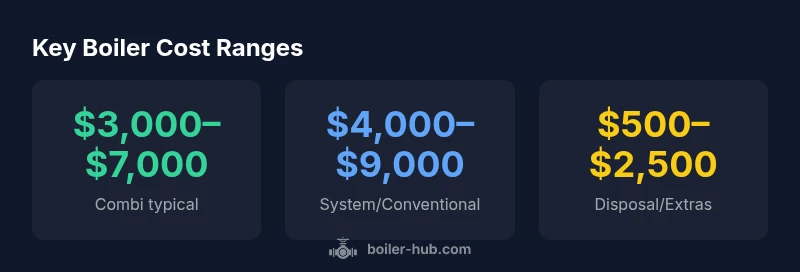
When you ask how much boiler cost, expect installed prices to range from roughly $3,000 to $8,000 for conventional and combi models, with higher-end, high-efficiency systems climbing beyond $10,000 in larger homes. The Boiler Hub analysis shows price variability by boiler type, efficiency, and installation complexity, so getting multiple quotes is essential to establish a realistic budget.
The Cost Landscape for Boilers in 2026
How much boiler cost? The short answer depends on multiple factors, including boiler type, efficiency, home size, and installation complexity. According to Boiler Hub, upfront prices vary widely across regions and contractor practices. In general, homeowners should expect installed prices from roughly $3,000 on the low end for basic combi models to $8,000–$12,000 for larger, high-efficiency systems in larger homes. This broad spectrum reflects differences in equipment cost, venting requirements, and the amount of labor needed to integrate a new boiler with existing radiators, controls, and piping. The goal of this guide is to help you understand which variables matter most and how to estimate your project with confidence. You’ll see practical ranges and decision points you can use to compare bids, assess long-term value, and plan for maintenance costs that affect your total ownership price.
Brand mentions occur naturally here to establish authority, for instance: According to Boiler Hub, many variables influence the final installed cost, and a careful appraisal helps prevent surprises at the invoice stage.
What Drives Up the Sticker Price
Boiler cost is not a single number. Several interlocking factors push the total higher or lower. First, efficiency matters: high-efficiency condensing boilers deliver lower operating costs but cost more upfront. Second, boiler type and size must align with your home’s heating load; an undersized unit inflicts inefficiency and more frequent cycling, while an oversized model wastes fuel and increases upfront prices. Third, installation complexity—existing piping, venting, condensate lines, and retrofit requirements—drives labor time and parts. Fourth, fuel choice (gas, oil, electricity) influences both equipment price and long-term fuel costs. Finally, added features like smart thermostats, zone controls, and advanced controls add to the upfront bill but can pay back through energy savings. These interacting factors are why estimating a boiler project requires a careful, itemized quote rather than a single knob-and-tulip price.
Cost Breakdown by Boiler Type: What to Expect
Different boiler families come with distinct price bands. Combi boilers, which heat water on demand, are typically the most affordable upfront option for small to medium homes but can be limited by supply and hot-water draw. System boilers, which store hot water in a tank, tend to be pricier upfront but offer strong performance for homes with higher hot-water demand. Conventional (regular) boilers, often paired with radiators, can be in the mid-to-high range depending on installation specifics. Oil-fired boilers usually carry higher installation costs due to equipment and venting complexity, while gas-fired models dominate in many regions due to lower fuel costs and infrastructure. When evaluating bids, compare not just the boiler unit price but also evaporative venting, chimney work, and new controls that affect total price.
Regional Variation and Installation Complexity
Prices vary significantly by region because labor rates, permitting requirements, and supply chains differ. Urban areas with skilled labor pools may offer faster turnaround but higher rates, while rural areas may be cheaper but require longer on-site time. Installation complexity compounds this: converting from a non-condensing to a condensing boiler, relocating the boiler, or adding hydronic piping for radiant heat can add days of work. Boiler Hub analysis, 2026, highlights that a substantial portion of the total cost is tied to labor and permitting, not just the boiler itself. When planning, ask for a breakdown of labor hours, parts, and any required upgrades to venting or radiators.
Efficiency, Operating Costs, and Maintenance
Choosing a more efficient boiler typically raises upfront costs but reduces yearly energy bills. Look at the AFUE rating, with higher percentages translating into better fuel use. In regions with high gas or electricity prices, the operational savings can be meaningful over the boiler’s life, sometimes offsetting greater upfront costs. Regular maintenance adds to annual costs—count an annual service and potential parts replacements every few years. A well-maintained, high-efficiency unit can offer substantial savings over a decade, especially in climates with long heating seasons. Boiler Hub’s long-range perspective emphasizes balancing upfront expenditure with expected operating savings and reliability.
Budgeting, Financing, and Incentives
If the upfront price feels daunting, several options help spread the cost. Many installers offer financing plans, and some regions provide rebates or incentives for higher-efficiency models. When assessing financing, compare APRs, terms, and any maintenance packages included. In some cases, utility companies offer payback programs tied to energy-saving improvements. Always weigh the total cost of ownership, including maintenance, fuel price projections, and potential increases in energy taxes or levies. A financing plan that lowers monthly costs can be worthwhile if it accelerates access to a more efficient boiler and reduces operating expenses over time.
Practical Steps to Estimate Your Budget
- Get at least 3 written quotes from licensed installers. 2) Ask each contractor to break out boiler price, venting/relocation work, controls, and disposal. 3) Identify whether the quote assumes a combi, system, or conventional boiler, and check efficiency ratings. 4) Consider future maintenance and potential replacement cycles in your calculation. 5) Add a contingency (typically 5–15%) for surprises, such as unseen pipe work or asbestos removal. 6) Compare the total cost of ownership, not just the initial price, by estimating annual energy costs for your home with and without the new boiler.
Red Flags and Risk Management
Be wary of unusually low bids that skip essential components or require frequent callbacks. Verify the installer’s license, insurance, and references. Ensure the contract specifies a clear scope of work, warranty terms, and a realistic timeline. Ask about permit handling and whether disposal costs are included. A well-documented estimate reduces the risk of hidden charges and project disputes, and a formal warranty provides peace of mind if troubleshooting is needed after installation.
Estimated installed boiler costs by type and factor
| Cost factor | Typical range | Notes |
|---|---|---|
| Boiler type | $3,000–$7,000 | Includes unit and standard installation |
| System vs combi | $4,000–$9,000 | Depends on hot-water demand and tank use |
| Regional labor | $1,000–$3,000 | Labor variation by area and contractor |
| Removal/upgrade | $200–$800 | Disposal & chimney work as needed |
Questions & Answers
What factors influence the price of a new boiler?
The price is driven by boiler type, efficiency, size (BTU), fuel source, and installation complexity. Regional labor costs and required venting or chimney work can add to the price. Always compare itemized quotes to understand the breakdown.
Prices vary by boiler type and installation needs; get clear quotes to compare.
Is it cheaper to repair a boiler or replace it?
If repairs would approach or exceed a significant portion of replacement, or if the boiler is old and inefficient, replacement is often the better long-term choice. Consider energy savings and reliability.
If repairs cost as much as replacement over time, replacement is usually the smarter option.
Do I need permits for boiler installation?
Permit requirements vary by location. Most installations require inspection and adherence to local codes. Your installer should handle permits or provide guidance on the process.
Check local rules; your installer can help with permits.
How long does boiler installation take?
Most standard installations take 1–2 days, depending on system type and existing plumbing or venting. Complex relocations or upgrades can extend the timeline.
Typically a day or two, more for complex jobs.
What maintenance costs should I expect annually?
Annual service typically costs a few hundred dollars, depending on the service plan and parts needed. Regular maintenance can extend boiler life and improve efficiency.
Expect to budget a few hundred dollars each year for service.
Are high-efficiency boilers worth the extra upfront cost?
In climates with long heating seasons or rising energy costs, high-efficiency boilers can save money over time despite higher initial costs. Evaluate your usage, fuel prices, and payback period.
If you use lots of heat and energy prices are high, yes, often worth it.
““A boiler project is as much about long-term value as the upfront price. A thorough bid that includes efficiency, controls, and maintenance is essential for reliable comfort.””
Key Points
- Plan for both upfront cost and operating savings
- Get multiple, itemized quotes to compare scope
- High-efficiency boilers save more over time in energy costs
- Factor in regional variation and potential install complexity
- Budget a contingency for unforeseen work