How Much Is a New Boiler in 2026: Costs, Options, and Savings
Discover how much a new boiler costs in 2026, including installation, efficiency upgrades, and long-term savings. Compare boiler types and learn how to get accurate quotes.


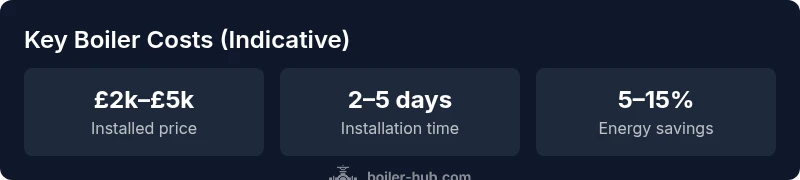
On average, a new boiler installed by a pro in 2026 typically costs between £2,000 and £5,000, depending on boiler type (combi, system, or heat-only) and installation complexity. The final price reflects the unit, moving old equipment, flue changes, and any needed system upgrades. For the most accurate figure, schedule an in-home survey and gather multiple quotes.
Understanding the price landscape for a new boiler
Prices for a new boiler are not a single number. They reflect two broad axes: the boiler itself (type, brand, and efficiency) and the installation process (labor, venting, and any system work). When homeowners ask how much is a new boiler, they’re really asking about the total installed cost. In 2026, a practical rule of thumb is that the installed price ranges from a mid-range to a premium setup, with the final figure driven by the boiler type, existing hardware, and whether any adjustments to the heating system are required. According to Boiler Hub, many homes see quotes that vary widely because of layout, access to the boiler space, and whether a full system upgrade (e.g., changing radiators or adding a smart control) is recommended. To avoid sticker shock, request a detailed, written quote that itemizes the boiler unit, installation labor, flue work, parts, and any required safety checks. Remember that price is not the only factor; reliability, warranty length, and service availability also affect long-term value. The bottom line is that how much is a new boiler depends on your home’s specifics and the installer’s approach, making an in-home assessment essential.
How boiler type affects price and performance
Boiler cost is strongly influenced by the type you choose. Combi boilers are typically compact and install more quickly, often resulting in lower upfront costs in smaller homes without a need for a domestic hot water cylinder. System boilers, which store hot water in a cylinder, tend to be pricier upfront but can offer better performance for households with higher hot water demand. Conventional/heat-only boilers, while less common in new installs, may be needed for older homes with existing tank-and-pipe layouts. Each type has distinct installation requirements, space considerations, and potential future maintenance costs. Efficiency ratings, such as ERP or SAP metrics used in your region, also shape price by driving up initial outlay but reducing ongoing energy bills. In practice, the choice should balance current needs with anticipated usage patterns and future maintenance costs, not just the sticker price.
Hidden costs that influence the final quote
Several add-ons can push a boiler project beyond the base price. Labour time increases if access is restricted, if flues require relocation, or if the installer needs to run new gas lines or relocate radiators. Additional components—such as expansion tanks, new controls, or smart thermostats—can add to the bill. If the home lacks a venting assessment or needs a gas safety check, those safety and compliance steps incur fees. Removal of the old boiler, disposal of old parts, and any required chimney or ventilation work also contribute to total cost. Finally, VAT and warranty terms can shift the final figure. It’s crucial to ask installers to break out these items so you can compare apples to apples across quotes.
How to get accurate quotes and compare
The most reliable way to determine how much is a new boiler is to obtain in-home surveys from multiple reputable installers. Ask each contractor for a formal quote that includes the same scope: the boiler unit, installation, removal of the old unit, venting, part replacements, safety tests, and a warranty certificate. Ensure quotes specify whether VAT is included. Compare not only the price but also the installation timeline, post-install support, and the length of the written warranty. Check whether the quotes assume existing piping and radiators in good condition or anticipate upgrades. Finally, request references and verify that the installer is Gas Safe (or local equivalent) certified. By collecting and comparing three to five quotes, homeowners can discern value and avoid overpaying.
When to upgrade for efficiency and long-term savings
Upgrading to a high-efficiency boiler can yield meaningful long-term savings, especially in homes with older systems or high fuel costs. A newer unit might offer better reliability, quieter operation, and compatibility with smart controls that optimize running times. While the upfront cost is higher, improved efficiency can reduce annual energy use and lower maintenance needs. Consider potential eligibility for incentives or rebates in your region, and weigh the payback period against energy price forecasts. Remember that even a mid-range modern boiler paired with a good thermostat strategy can outperform a premium unit without intelligent controls. The decision should factor in current energy prices, your home’s heat-loss characteristics, and how you use hot water.
Comparison of common boiler types and typical installed cost ranges
| Boiler Type | Typical Installed Cost Range | Installation Complexity | Efficiency Range | Pros | Cons |
|---|---|---|---|---|---|
| Combi Boiler | £2,000–£4,500 | Low–Medium | 90–95% ERP | Compact, fast install, saves space | Limited hot water when multiple taps used simultaneously |
| System Boiler | £2,800–£5,000 | Medium | 88–92% ERP | Good for higher hot water demand | Requires hot water cylinder and more space |
| Conventional/Heat-only | £2,000–£4,000 | High | 85–90% ERP | works well with existing tanks | Less efficient, bulkier, older homes only |
Questions & Answers
What is the typical installed price range for a new boiler?
Prices vary widely by boiler type and installation complexity. A formal in-home survey is essential to produce an accurate quote.
Prices vary by boiler type and installation complexity; schedule an in-home survey for an accurate quote.
Do price ranges differ by boiler type?
Yes. Combi boilers are usually cheaper upfront and smaller, while system and conventional boilers may cost more due to cylinders, tanks, and space requirements.
Yes—different boiler types affect price due to size, cylinders, and space needs.
What costs are included in installation?
The quote should cover the unit, labor, ventilation or flue work, removal of the old boiler, safety checks, and warranty provisions. Ask for a line-by-line breakdown.
Includes the boiler, labor, venting, removal of the old unit, safety tests, and warranty.
Is high-efficiency worth the extra up-front cost?
For homes with higher energy bills or older systems, higher efficiency can lead to meaningful energy savings over time, shortening the payback period.
High efficiency can pay off over time if energy costs are high and usage is steady.
How long does a boiler installation take?
Most installations take 2–5 days, depending on space accessibility, venting needs, and whether any radiator work is required.
Typically two to five days, depending on the setup.
How can I reduce boiler replacement costs?
Compare three quotes, check inclusions, and negotiate for single-supplier packages that include parts and labor. Scheduling during off-peak times can sometimes yield discounts.
Get multiple quotes and ask for bundled packages to save on costs.
“Prices for a new boiler vary widely by type and installation complexity; a thorough in-home survey is essential to lock in an accurate quote.”
Key Points
- Obtain at least three written quotes for accuracy
- Choose boiler type based on hot water needs and home size
- Factor installation complexity and potential retrofits into cost
- Consider efficiency gains for long-term savings