How Much Does Boiler Installation Cost: A Homeowner's Guide
Discover what drives boiler installation costs, from boiler type and labor to permits and regional rates. Boiler Hub analyzes price ranges for homeowners.


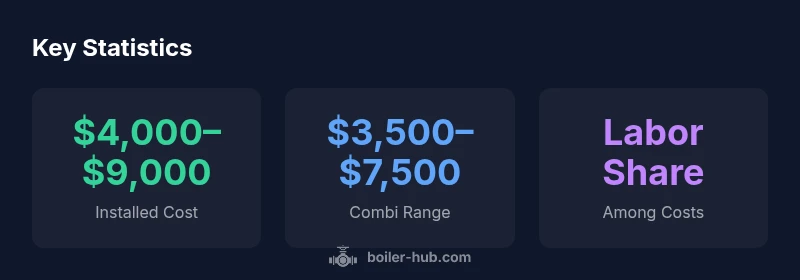
Typical boiler installation costs range from about $4,000 to $9,000, depending on boiler type, existing piping, and location. Labor, venting, piping, and unit selection all influence final price, along with permits and retrofit needs. For precise planning, request multiple quotes with itemized line items and allowances for contingencies. Costs can also rise with retrofit work, permits, or old-system challenges.
how much does boiler installation cost
When homeowners ask how much does boiler installation cost, the answer depends on several factors. The base price covers the boiler unit, but the total outlay includes labor, venting, piping, and integration with your existing heating system. In the United States, installed costs for a replacement boiler typically fall within a broad range, roughly $4,000 to $9,000, reflecting variations in boiler type, fuel source, and the complexity of retrofitting an older home. Regional differences, permits, and retrofit needs can push the final price higher or lower. This article maps the major cost drivers, shows typical price bands by boiler type, and outlines a practical approach to budgeting. By understanding these elements, homeowners and facility managers can set realistic expectations and prepare for contingencies during installation projects. The discussion also highlights how different configurations—combination boilers, system boilers, and traditional heat-only boilers—change the cost landscape. Remember, the exact price should come from on-site quotes, but having a clear framework helps you compare apples to apples and avoid common bidding pitfalls.
Major cost components explained
Beyond the boiler unit itself, the largest portion of the installation price is labor. Skilled technicians account for on-site assessment, removal of the old unit, installation of the new boiler, connections to gas lines or electrical feed, venting, and commissioning. Materials such as pipes, fittings, insulation, condensate traps, and system flushing add to the bill. Permits and inspections are often required and can add time and cost, depending on your local authority. If the existing chimney or venting needs upgrading, or if gas lines must repositioned, expect additional charges. Retrofit complications—like upgrading radiators, balancing zones, or adding a condensate pump—also raise costs. Indirect costs such as temporary heating during installation, disposal of the old boiler, and potential duct work might appear in the quote. When planning, request itemized quotes that separate boiler cost, labor, parts, and permits so you can compare precisely.
Price ranges by boiler type
Boiler choice influences not just upfront cost but long-term operating economics. Combi boilers are typically cheaper to install because they handle heating and hot water in one unit, but space and venting constraints can affect price. System boilers with a separate hot water tank may cost more upfront but can be advantageous for high hot-water demand. Conventional or regular boilers, common in older homes, may require more piping and system balancing, increasing both unit and labor costs. As a result, the installed price bands are broad: combi options often land in the mid-range, while system and conventional configurations trend higher if retrofits are needed. The key is to align your choice with household needs, space, and energy goals, and to use quotes as anchors for price planning.
Getting quotes and what to ask
To manage how much does boiler installation cost, collect at least three written quotes from licensed installers. Ensure each quote includes removal of the old unit, installation of the new boiler, venting, gas or electrical connections, flushing of the system, new expansion tank if needed, insulation, and startup testing. Ask for a breakdown of parts, labor, permits, and any disposal fees. Confirm whether new radiators or zone controls are required and whether the estimate accounts for potential retrofit work. Inquire about warranty coverage, what is included in service after installation, and response times for emergencies. Verify that installers are properly licensed, insured, and capable of handling any regional code requirements. Finally, compare not only the price but also the schedule, communication quality, and the installer’s readiness to discuss long-term maintenance and efficiency upgrades.
Hidden costs and maintenance to consider
Some costs aren’t obvious until the work begins. If the home has outdated gas lines or insufficient ventilation, upgrades may be necessary. Flushing and filling the system, installing a corrosion inhibitor, and calibrating the boiler for maximum efficiency can add to the initial outlay but save money over time. Regular maintenance is essential to preserve performance and avoid costly breakdowns; factor in annual service visits, potential parts replacement, and the cost of energy efficiency improvements over the boiler’s life. Don’t overlook safety-related costs, such as CO detectors, gas line pressure testing, and attic or crawlspace access improvements. If you plan to upgrade radiators, add a zone control system, or install a smart thermostat, anticipate incremental costs. Finally, consider how installation timing or supply-chain delays might push back start dates and incur temporary heating solutions.
Financing options and long-term cost considerations
Many homeowners finance boiler installation to ease upfront costs. Options include home improvement loans, promotional financing from manufacturers, and local utility programs that offer rebates or low-interest loans for high-efficiency models. When evaluating financing, compare total cost of ownership, not just the upfront price, including expected energy savings, maintenance plans, and warranty terms. A higher-efficiency boiler may cost more initially but can reduce operating costs over 10–15 years, potentially lowering the overall price-per-heat unit. Conduct a simple break-even analysis: weigh the incremental purchase price against projected energy savings and fuel price trends. If you’re replacing an older boiler, consider whether upgrading to a high-efficiency model aligns with future heating needs and climate considerations. Always read the finance agreement carefully, noting the APR, fees, and any penalties for early repayment.
Regional factors and timing for installation
Regional factors influence how much does boiler installation cost in practice. Local demand, contractor availability, and climate can affect labor rates and lead times. In areas with strict energy codes or required permits, prices may rise due to compliance work. If you install in shoulder seasons with milder weather, scheduling can be more flexible and prices may be more favorable. Geographic variations in fuel prices, venting requirements, and even permitting durations create price bands that installers use when preparing bids. For facilities managers coordinating multiple units, bulk-install pricing or service contracts can offer long-term savings. Finally, plan ahead for seasonal maintenance, inspections, and potential upgrade cycles to keep your system efficient and reliable.
Typical boiler installation cost ranges by boiler type
| Boiler Type | Typical Installed Cost Range | Notes |
|---|---|---|
| Combi Boiler | $3,500–$7,500 | Unit + labor + basic installation |
| System Boiler | $4,000–$9,000 | Separate hot water cylinder may be required |
| Conventional/Regular | $3,800–$8,000 | Older homes or complex piping |
Questions & Answers
What factors influence the overall cost of boiler installation?
The total price depends on boiler type, existing piping or venting, fuel source, and the complexity of retrofitting your home. Local codes and permit fees can add to the quote.
Costs depend on boiler type and retrofit needs, plus local permits.
Do I need permits for boiler installation?
Most regions require some permit or inspection when installing a new boiler. The installer should handle permit requests or advise you if your municipality requires one.
Yes, permits are often required.
Is it cheaper to replace an old boiler or repair it?
If the boiler is beyond its typical life expectancy or shows frequent failures, replacement is usually more cost-effective in the long run.
Often replacement is cheaper over time.
How long does boiler installation take?
Most residential installations take one to two days, depending on existing piping and venting.
Usually one to two days.
Are financing options available for boiler installation?
Yes, many homeowners use financing, rebates, or utility programs to cover upfront costs. Check with installers and local programs for eligibility.
Financing and rebates are common.
What maintenance costs should I plan for after installation?
Plan for annual service visits, parts replacement, and potential efficiency upgrades to maintain performance.
Expect yearly maintenance.
“A precise boiler installation cost starts with an on-site assessment that accounts for existing piping, venting, and space constraints.”
Key Points
- Get multiple quotes to gauge true costs.
- Costs vary by location and retrofit needs.
- Include permits and inspections in your budget.
- Consider efficiency and long-term costs when choosing.