Boiler for House Cost in 2026: What to Expect and Plan
Learn the true cost of a home boiler in 2026, from upfront installation to long-term energy spend. This Boiler Hub guide covers pricing ranges, efficiency impacts, installation considerations, and budgeting strategies.


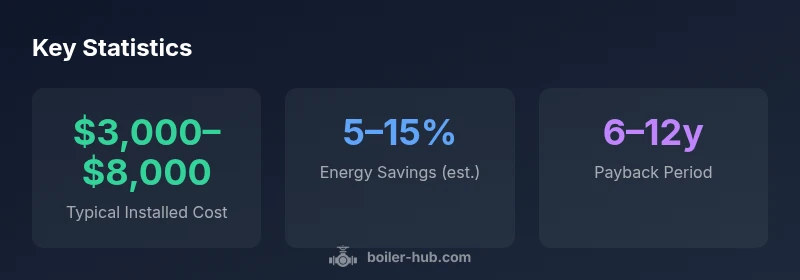
According to Boiler Hub, the typical installed cost for a residential boiler ranges from $3,000 to $8,000, with higher-efficiency models toward the upper end. Additional labor and permit costs commonly add $1,000–$2,500. Long-term costs depend on fuel type and efficiency, so plan for energy use and maintenance.
Understanding the cost landscape for boiler cost in a home
In 2026, homeowners evaluate boiler options through the lens of total cost of ownership, not just sticker price. The phrase boiler for house cost captures both upfront installed price and ongoing energy costs, maintenance, and potential repairs. The Boiler Hub team emphasizes that while a lower upfront price can seem attractive, the long-term cost often hinges on efficiency, fuel type, and installation complexity. According to Boiler Hub, the typical installed cost range for a residential boiler spans from a modest lower end to a higher end depending on boiler type, size, and labor. Buyers should consider a total budget that includes equipment, installation, permit fees, venting, and any necessary system upgrades. The goal is to pick a boiler that meets heating demands with minimal waste, ensuring comfort and reliability.
Key cost components you should budget for when buying a boiler
Costs break down into several components:
- Equipment price: Boiling down to type and efficiency; combi, system, and conventional boilers have different price bands.
- Installation labor: Labor hours depend on current piping, venting, and required upgrades.
- Permits and inspections: Local codes may require permits, which add to the upfront cost.
- Venting and condensate piping: Proper venting is essential for safe operation and efficiency.
- Ancillary hardware: Expansion tanks, relief valves, and zone controls can influence price.
- System upgrades: Older homes may need upgrades to radiators or piping to ensure full compatibility.
By budgeting across these items, homeowners reduce surprises and align expectations with 2026 pricing realities.
Comparing boiler types and associated price ranges
Boiler choice strongly affects installed cost and long-term operating expenses. In general:
- Combi boilers save space and deliver domestic hot water on demand, but may require higher upfront investment if you need large heating outputs.
- System boilers pair with a hot water cylinder and radiators, often costing more upfront but delivering robust hot water for larger homes.
- Conventional boilers (regular boilers) work well with older heating systems and can be cheaper upfront but may need more space and maintenance.
Prices reflect not only equipment but installation complexity; expect ranges that correspond to boiler type, efficiency class, and required venting upgrades. Boiler Hub analysis shows that higher-efficiency models tend to incur higher upfront costs but pay back over time through reduced energy consumption.
Efficiency and fuel type impact on true cost over time
Efficiency matters. High-efficiency boilers (condensing models) reduce fuel usage, which lowers annual energy bills and can shorten payback periods, especially in colder climates. Fuel choice also shapes long-term costs: gas-fired units may have different operating costs than oil or electric boilers, depending on local energy prices and access. While upfront prices vary, the lifetime cost often leans toward high-efficiency options when paired with well-insulated homes. Energy price volatility in 2026 further reinforces the value of choosing modern, efficient technology.
Installation considerations that affect the price
Several installation factors can push a project from the mid-range to the upper end:
- Home accessibility and existing ductwork or piping quality
- Venting route length and complexity
- Need for system upgrades (radiators, expansion tanks, or a larger flue)
- Local building codes and permit requirements
- Contractor qualifications and warranties
A well-planned install reduces future maintenance costs and minimizes energy waste. Planning ahead with a qualified installer can help avoid unexpected expenses and ensure optimal boiler sizing for your home.
Maintenance and operating costs over the boiler's life
Ongoing costs include annual servicing, parts replacement (e.g., heat exchangers, pumps), and potential repairs. High-efficiency boilers often require high-quality components and regular service to sustain efficiency. Set aside funds for routine maintenance and consider service contracts that cover inspection and parts; these can reduce the risk of sudden, costly failures. A well-maintained boiler not only delivers comfort but also helps keep total cost of ownership in check over a typical 10–15 year horizon.
How to estimate costs for your home: a step-by-step approach
- Assess current heating needs and fuel availability. 2) Determine preferred boiler type and efficiency targets based on your home size and insulation. 3) Obtain multiple quotes from licensed installers and ask for itemized line items. 4) Check for required venting, piping, or system upgrades. 5) Clarify warranties and aftercare options. 6) Build a budget that includes equipment, installation, permits, and contingencies. 7) Plan for annual energy costs and maintenance to gauge long-term value. 8) Use a simple payback calculator to estimate when energy savings offset upfront costs. 9) Consider timing: off-season installs can reduce labor costs. 10) Review total cost of ownership rather than upfront price alone.
Financing options and incentives you might access
Financing can smooth the upfront hit. Look for installation loans, manufacturer rebates, or utility efficiency programs that apply to boiler replacement. Availability varies by region and program year, so check local energy agencies or utility portals for current offers. When incentives exist, they can shorten the payback period and improve overall value, especially for high-efficiency models. Always read the fine print and confirm eligibility before committing.
Cost comparisons: boiler vs alternative heating solutions
Boilers compete with heat pumps, radiant floors, and other heating systems. In milder climates, heat pumps may offer favorable operating costs, while boilers can excel in very cold regions with high radiative heat needs. The decision should weigh upfront costs, climate, insulation, and electricity or gas prices. The goal is to maximize comfort while minimizing energy waste and long-term expenses, aligning with the home’s heating profile and occupant schedule.
Common mistakes that inflate boiler costs
Avoid oversizing the boiler, which increases upfront price and operating costs. Skipping a professional sizing assessment risks under- or over-heating, leading to inefficiency. Delaying maintenance or using subpar parts raises the risk of costly failures. Finally, accepting the lowest bid without checking install quality and warranties can result in hidden costs later. A careful, informed selection protects long-term value.
Getting the best value: planning and timing
Planning ahead yields the best value. Schedule replacement during shoulder seasons to reduce labor costs and potential delays. Bundle boiler work with other upgrades (insulation, leaks, or thermostat upgrades) to leverage installer trips and get better package pricing. Finally, prioritize a reputable contractor with solid reviews and a robust warranty to safeguard your investment across the boiler’s lifecycle.
Typical boiler types and installed cost ranges
| Boiler Type | Typical Cost Range | Notes |
|---|---|---|
| Combi boiler | $3,000–$7,000 | Space-saving; instant hot water |
| System boiler | $4,500–$9,000 | With hot water cylinder; larger homes |
| Conventional boiler | $3,500–$8,000 | Works with existing piping; variable output |
Questions & Answers
What factors affect boiler for house cost?
Multiple factors determine price: boiler type, efficiency, size, installation complexity, venting, and local permitting. Understanding these helps you estimate total cost of ownership rather than just the sticker price.
Costs vary by boiler type, efficiency, and installation needs, so plan for the full project—equipment plus labor and permits.
Is a high-efficiency boiler worth the extra upfront cost?
High-efficiency boilers reduce yearly energy bills and may shorten payback periods, especially in cold climates. The decision depends on your energy prices, insulation quality, and heating demands.
Higher efficiency often pays off through lower energy bills, depending on your climate and usage.
How long does installation typically take?
Installation duration depends on system size and existing infrastructure. Typical projects run from a day to a few days, with longer times if extensive venting or upgrades are required.
Most installs take a day or two, longer if extra upgrades are needed.
Repair or replace—what should I choose?
Repairs can be cost-effective for minor issues, but recurring problems or an aging boiler may justify replacement to avoid ongoing maintenance costs and inefficiency.
If problems keep recurring, replacement may be cheaper in the long run.
Are there incentives for boiler replacement?
Incentives vary by region and program year. Check local utility programs and government energy agencies for rebates or financing options that support high-efficiency installations.
Look for regional rebates or financing programs to offset upfront costs.
What maintenance costs should I expect?
Annual servicing helps prevent costly failures. Budget for parts replacement over time and consider a service contract that covers inspections and components.
Regular service helps prevent big, unexpected bills.
“The most cost-effective boiler solution isn't always the cheapest unit; it's the one that minimizes total cost of ownership through efficiency, reliable service, and proper sizing.”
Key Points
- Budget for total cost of ownership, not just upfront price
- Prioritize high-efficiency models to reduce long-term energy costs
- Get multiple quotes and verify contractor credentials
- Plan for installation time, permits, and potential upgrades
- The Boiler Hub approach: align choice with home heating needs for best value