Boiler Heating System Cost: What Homeowners Need to Know in 2026
Comprehensive overview of boiler heating system cost, including installed price ranges, efficiency impacts, and practical tips to reduce total expenditure in 2026.


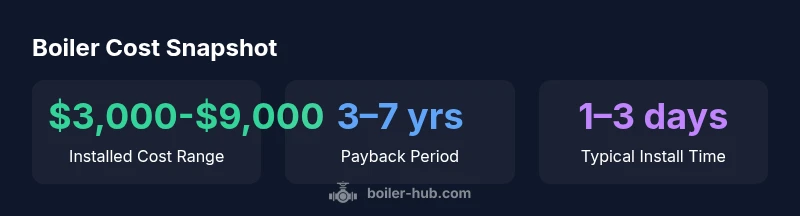
The boiler heating system cost for a typical home varies widely by boiler type, efficiency, and installation complexity, with installed price ranges spanning roughly the low five figures in some cases. In 2026, homeowners should budget for both upfront costs (boiler, labor, and permits) and ongoing fuel and maintenance expenses. According to Boiler Hub, planning for total cost now helps prevent costly surprises later, especially when upgrading to a high-efficiency unit.
Why boiler heating system cost matters
Understanding the boiler heating system cost goes beyond the sticker price of a new unit. The total investment includes the boiler itself, labor for installation, possible system reconfigurations, venting or condensate piping, and permits. In 2026, homeowners who plan for the full lifecycle costs — including energy use and routine maintenance — typically end up with a more reliable system and lower long-term bills. The Boiler Hub team emphasizes that the best value often comes from balancing upfront expenditure with ongoing fuel savings and system longevity. When you evaluate cost, also consider your climate, fuel source, and whether you plan to stay in the home long enough to recoup the investment through energy savings.
Boiler types: cost implications and value
Different boiler configurations offer distinct cost profiles. A combi boiler can have a lower upfront install in smaller homes but may require more robust heat distribution in larger residences, influencing both price and performance. System boilers, paired with a separate hot-water cylinder, tend to have higher upfront costs but can deliver strong performance for homes with higher hot-water demand. Conventional or regular boilers can present moderate installation costs but may require additional components. Electric boilers often have lower upfront costs but higher running costs unless you have very favorable electricity rates. In all cases, the efficiency rating (AFUE) and local installation requirements shape the final boiler heating system cost. For 2026, homeowners should compare the long-term fuel savings against the initial price to determine the best value.
Installation considerations that drive price
The total installed cost is influenced by boiler type, efficiency, venting or chimney modifications, space constraints, and whether you’re converting from an older system. Labor cost can vary by region and contractor experience. If the existing piping and radiators are compatible, you can reduce labor time and expense; otherwise expect higher costs for re-piping or upgrading radiators and zones. Permits, inspection fees, and potential seismic or safety upgrades may add to the project. Boiler Hub’s practical guidance is to obtain multiple detailed quotes that itemize boiler price, parts, labor, and any incidental work so you can compare apples to apples.
Ongoing costs: fuel, efficiency, and maintenance
Operating costs depend heavily on fuel price trends and the unit’s efficiency. High-efficiency boilers can shave annual fuel bills by a meaningful margin, particularly in colder climates with long heating seasons. Routine maintenance includes annual service and periodic cleaning to sustain efficiency. The cost of maintenance itself is typically modest, but neglecting service can lead to efficiency losses or unexpected repairs. When evaluating a quote, confirm the service interval, parts coverage, and whether maintenance plans transfer with ownership.
Budgeting and financing: planning for the total cost
Create a two-tier budget: (1) upfront installed cost (boiler, labor, permits) and (2) ongoing annual costs (fuel, maintenance, potential repairs). Use a conservative range for installed costs and a separate estimate for annual fuel use based on your climate. Look for financing options, rebates, or utility demand-side management programs that can offset the initial price. Boiler Hub notes that many homeowners benefit from funding plans that split payments across project milestones, smoothing cash flow while achieving a higher-efficiency upgrade.
Practical steps to lower boiler heating system cost
- Get at least three written quotes with itemized line items.
- Choose a high-efficiency model if your climate makes longer payback periods feasible.
- Right-size the boiler to your home to avoid oversizing and wasted capacity.
- Leverage existing piping and radiators where possible to reduce labor.
- Schedule installation during off-peak contractor seasons for potential discounts.
- Consider rebates, tax credits, or financing offers to spread the upfront cost.
These practical steps help reduce boiler heating system cost without compromising reliability or comfort.
How Boiler Hub analyzes boiler cost (methodology behind the estimates)
Boiler Hub combines industry benchmarks, regional labor rates, and efficiency data to produce cost ranges that reflect real-world projects. By separating upfront costs from ongoing operating expenses, we provide a clearer view of total cost of ownership. Our analysis emphasizes the impact of efficiency ratings (AFUE and ERP/ER) and regional fuel prices to project long-term savings. All figures cited in this article use the Boiler Hub Analysis, 2026 as the primary source.
Estimated installed costs and efficiencies by boiler type
| Boiler Type | Installed Cost Range | Typical Efficiency | Maintenance |
|---|---|---|---|
| Combi boiler | $3,500-$6,500 | 90-95% AFUE | Annual service advised |
| System boiler | $4,500-$8,500 | 89-93% AFUE | Annual service advised |
| Regular/conventional boiler | $3,000-$6,000 | 80-85% AFUE | Annual service advised |
| Electric boiler | $2,500-$4,500 | 95%+ EF | Annual service advised |
Questions & Answers
What is the typical installed cost range for a boiler heating system?
Installed costs depend on boiler type, fuel source, and installation complexity. A typical range covers several thousand dollars, with higher-efficiency models and system upgrades pushing toward the upper end. Always get multiple quotes to capture regional variations and avoid underestimating labor and permitting fees.
Costs vary by boiler type and installation complexity. Expect several thousand dollars upfront, with higher-efficiency models costing more but offering longer-term savings. Gather multiple quotes to compare specifics.
Are condensing boilers more expensive upfront but cheaper to run?
Yes, condensing boilers typically cost more to install than non-condensing units, but they extract more heat from exhaust gases, delivering higher efficiency and lower annual fuel costs. Over time, this can lead to substantial savings, especially in colder climates.
Condensing boilers cost more upfront but tend to save more on fuel each year, especially in longer heating seasons.
How long does boiler installation usually take?
Typical installation spans 1–3 days, depending on boiler type and existing system compatibility. More complex retrofits or venting changes can extend the timeline.
Most installations take about one to three days, depending on the setup.
Do I need permits to install or replace a boiler?
In many regions, a permit and inspection are required for boiler installation or replacement. Your contractor can confirm local requirements and help with the approval process to ensure safety and code compliance.
Yes, permits are often required. Your installer will handle the approval process.
How does boiler efficiency affect total cost?
Higher efficiency raises upfront cost but lowers ongoing fuel usage. The payoff depends on your energy prices and heating needs; in colder climates, the savings can be meaningful over the system’s life.
Higher efficiency means higher upfront costs but lower yearly fuel bills, and the payback varies by climate.
When should I replace a boiler rather than repair it?
Consider replacement when repairs become frequent, efficiency is poor, or installation costs approach or exceed the price of a new unit with modern efficiency. A benchmark is to compare ongoing repair costs against an upgrade’s long-term savings.
Replace if frequent repairs and poor efficiency make repairs uneconomical.
“Choosing the right boiler is about balancing upfront cost with long-term energy savings and reliability. A high-efficiency unit can cut annual fuel bills enough to pay back the difference over time.”
Key Points
- Assess total cost, not just purchase price
- Higher efficiency often lowers long-term fuel costs
- Get multiple quotes with itemized cost breakdowns
- Plan for upfront permits and potential upgrades
- Explore rebates or financing to ease cash flow