Boiler Cost for Home: What to Expect in 2026
Understand boiler cost for home installations, including upfront price ranges, influencing factors, regional variations, and strategies to save. This guide from Boiler Hub breaks down types, permits, and maintenance for homeowners and facility managers.


Installed boiler cost for a typical home ranges from $3,000–$8,000, depending on boiler type (combi, system, or heat-only), efficiency, and installation complexity. This estimate includes labor and basic materials but excludes ongoing maintenance and future upgrades. Prices can swing with regional labor costs, permit fees, and whether venting or gas line upgrades are needed. For precise figures, obtain multiple local quotes.
What goes into boiler cost for home
Replacing or installing a boiler triggers a price that reflects more than the nameplate on the unit. The installed cost for a home boiler includes the boiler itself, mounting hardware, and controls, plus labor to install and commission the system. Labor can vary widely based on accessibility; if the boiler is in a cramped utility room, or if walls must be opened, the job becomes more time-consuming and expensive. Additional charges commonly appear for venting, condensate piping, upgrading the gas line or electrical service, and installing new flue hardware. Permits and mandatory inspections also add to the bill in many regions. Finally, if you’re moving the unit to a new location, upgrading from an older non-condensing model to a modern condensing boiler, or tying in a larger hot-water cylinder, expect higher upfront costs. According to Boiler Hub, the cost journey—from selection to installation—shapes the final price just as much as the boiler model itself.
Boiler types and relative cost brackets
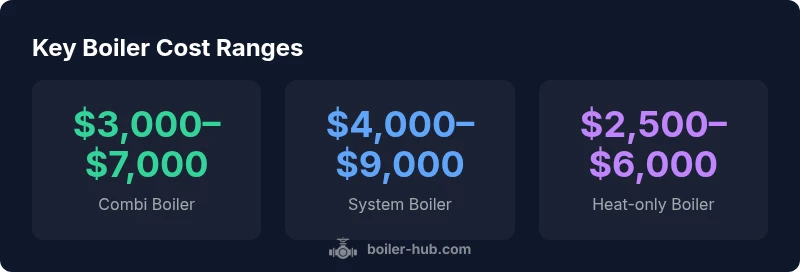
Boilers come in several common configurations, and the choice affects upfront price and long-term cost. A typical gas-fired combi boiler, which provides space and domestic hot water from a single unit, commonly falls in the range of $3,000–$7,000 including basic installation. A system boiler, paired with a hot water cylinder, typically runs higher, around $4,000–$9,000. A basic heat-only boiler without a modern hot water cylinder can be cheaper, roughly $2,500–$6,000. Condensing variants—now the standard in most new installations—tend to sit at the higher end of these ranges, but their improved efficiency can reduce operating costs over time. The exact price depends on fuel type, boiler size (output in BTU or kW), and the sophistication of controls (smart thermostats, zoning, etc.).
Efficiency and fuel type impact on price and operating costs
Upfront price typically climbs with higher efficiency. Non-condensing older designs may sit in the lower end of the range, while modern condensing boilers with AFUE ratings of 90–95% command a premium. Fuel type matters too: gas-fired boilers are common and usually cheaper to install than oil-equipped or electric boilers in many markets, though electricity prices can tilt the lifetime cost in some regions. Beyond sticker price, the efficiency difference translates into annual energy savings, particularly in cold climates or homes with larger heating demands. Boiler Hub Analysis, 2026 shows that the year-over-year savings from improved efficiency can offset higher upfront costs within 3–7 years, depending on usage and energy prices. When planning, factor both the initial cost and expected operating expenses over a typical 10–15 year ownership horizon.
Installation challenges and house layout effects
Installation complexity is a major driver of price. If the existing piping network requires rerouting or if the new boiler must fit in a tighter space, contractors add labor hours and may require new wall supports or a different vent path. Homes with long runs to radiators, baseboard heated zones, or multiple floors can drive up both materials and labor costs. In older houses with limited access to the utility room, electricians may need to upgrade circuits or install new breakers. In some cases, upgrading the flue or chimney to support a high-efficiency boiler adds cost but is essential for safe operation. Plan for these contingencies in your budget and discuss them upfront with your installer.
Regional variation and price quotes: how to price-check
Prices can vary notably by region due to labor costs, permit fees, and local supply chains. Boiler Hub Analysis, 2026 indicates price bands are wider in rural areas with fewer qualified installers than in dense urban markets. To get a reliable picture, request written quotes from at least three licensed installers and ask them to itemize the boiler, controls, venting, permits, removal of the old unit, and any necessary electrical or gas-line upgrades. Confirm that the quotes include disposal of the old boiler and cleaning of the work area. If possible, invite the same technician to review your current setup—a consistent assessor can reduce deltas between estimates.
Cost-saving strategies and smart shopping
Smart shopping can trim upfront costs without compromising safety or reliability. Consider the following approaches: 1) Size the boiler correctly—oversized units waste energy and money; 2) Choose high-efficiency models where climate and energy prices justify the premium; 3) Bundle installation with related upgrades (thermostats, zoning, or insulation improvements) to reduce site visits; 4) Ask about manufacturer rebates, utility incentives, or financing options; 5) Schedule installation during off-peak seasons when contractors are more available and rates may be lower. Finally, avoid cutting corners on essential components like flue work, venting, or professional commissioning; the long-term costs of a failed installation are far higher than the initial savings.
Long-term ownership costs and maintenance planning
After installation, ongoing costs include annual maintenance, periodic part replacements, and potential repairs. A routine service can catch failing seals or worn components before they cause breakdowns, preserving efficiency and comfort. Consider a maintenance agreement with a reputable installer. The cheapest boiler upfront may end up costing more over a 10–15 year horizon if it requires frequent service or replacement parts. When evaluating total cost of ownership, include expected energy savings from efficiency, potential repairs, and the impact of downtime on comfort and productivity. Planning ahead with a clear maintenance calendar helps homeowners and facility managers balance upfront price against long-term reliability.
Typical installed boiler cost ranges by boiler type
| Boiler Type | Installed Cost Range | Notes |
|---|---|---|
| Combi boiler | $3,000–$7,000 | Most common for small to mid-size homes |
| System boiler | $4,000–$9,000 | Works with separate hot water cylinder |
| Heat-only boiler | $2,500–$6,000 | Basic heat-only system |
Questions & Answers
What is the typical installed cost for a home boiler?
Most homes see installed boiler costs in the range of a few thousand to several thousand dollars, depending on type and complexity. Getting quotes from multiple contractors provides a clear picture.
Most homes spend a few thousand dollars upfront. Get multiple quotes to see what's included in the price.
Do electric boilers cost more upfront than gas boilers?
Electric boilers often have lower installation costs but higher running expenses. Gas boilers usually cost more to install due to venting and gas line needs, but can be cheaper to run, depending on fuel prices.
Electric boilers can be cheaper to install, but gas tends to be cheaper to run if gas is cheaper in your area.
How long does boiler installation typically take?
Installations typically take 1-3 days depending on boiler type, existing piping, and space. Complex upgrades may extend to a week.
Most installs finish in a couple of days, with some projects taking longer if piping or venting must be updated.
Are permits and inspections required for boiler replacement?
Yes. Most jurisdictions require permits and post-install inspections to ensure safety and code compliance. Check with your local authority and contractor.
Permits and inspections are usually required; your installer can guide you.
Can I finance a boiler replacement?
Many lenders offer installment plans or energy-efficiency loans. Utilities or manufacturers may provide rebates or zero-interest programs in some regions.
There are often financing options and rebates available; ask your installer about what's offered locally.
What maintenance reduces long-term boiler costs?
Regular annual service, annual safety checks, and timely part replacements extend life and prevent expensive breakdowns.
Keep up with annual servicing to avoid costly breakdowns and keep efficiency high.
“Upfront cost is only part of the story. Efficiency, maintenance, and proper sizing drive long-term value for home heating systems.”
Key Points
- Get quotes from at least three licensed installers to compare scope and price.
- Prioritize high-efficiency boilers to reduce operating costs over time.
- Factor permits, venting, and space changes into the upfront budget.
- Plan for future maintenance; maintenance contracts can lower long-term costs.
- Consider financing or utility rebates to soften upfront expenditure.