Hot Water Boiler Replacement: Step-by-Step Guide
Learn how to safely replace a hot water boiler with practical tips, tool lists, step-by-step instructions, and safety considerations. Ideal for homeowners and facility managers seeking reliable boiler guidance.


This guide helps homeowners achieve a safe hot water boiler replacement by outlining a practical plan, essential tools, and step-by-step actions. It covers safety, sizing, and startup considerations, and highlights when to hire a licensed pro for gas or electrical work. By following the steps, you’ll reduce downtime, improve efficiency, and protect your family from potential hazards.
What triggers a hot water boiler replacement and planning considerations
A hot water boiler replacement is a major home improvement decision driven by reliability, safety, and energy performance. As boilers age, they lose efficiency and become more prone to breakdowns, short cycling, and inconsistent hot water delivery. A well-timed replacement can reduce energy bills, improve comfort, and lower the risk of dangerous failures such as gas leaks or carbon monoxide production. According to Boiler Hub, careful planning minimizes downtime and ensures proper venting, fuel supply, and electrical connections. If your current boiler is older than 15-20 years, shows frequent leaks, or requires repeated repairs, it’s worth evaluating a replacement rather than continuing repair work. When planning, set clear goals: better energy efficiency, improved hot water reliability, and compatibility with your existing heating system. Consider factors such as the existing fuel type (gas, oil, or electricity), available space, venting requirements, local building codes, and warranty conditions. Document current system details, including model numbers, pipe layouts, and radiator zones, so you can compare replacements on the same footprint. A thoughtful plan helps you avoid mismatches in size, venting, or electrical needs during installation.
Safety, permits, and code compliance
Safety comes first in any hot water boiler replacement. Work on gas lines, electrical circuits, and venting must follow local codes and manufacturer instructions. A permit and inspection are often required, especially if you’re changing fuel types, adjusting venting, or moving equipment to a new location. The Boiler Hub team emphasizes ensuring proper combustion air, secure mounting, and correct venting to prevent carbon monoxide buildup. Before starting, verify that the area is well ventilated and free of flammable materials. Gather required PPE, disconnect power at the main breaker, and perform a gas-test after installation. If you’re unsure about gas piping or electrical connections, hire a licensed professional to perform or supervise the work. Improper installation can void warranties and create safety risks for occupants.
Choosing a replacement boiler: sizing, efficiency, and fuel type
When selecting a replacement boiler, size and efficiency matter more than cosmetic features. A correctly sized boiler delivers consistent comfort without excessive cycling, while a high-efficiency model reduces operating costs over time. Fuel type affects installation needs, venting, and ongoing costs. Gas boilers are common in many homes, but oil and electric options exist, each with its own installation requirements and space needs. Efficiency ratings (such as AFUE and seasonal efficiency) guide long-term savings, with condensing models typically offering the best performance. Compatibility with existing radiators or underfloor loops, as well as your climate and hot-water demand, should guide your choice. Don’t forget venting and air supply requirements; an undersized system may never achieve the promised comfort level, while an oversized unit wastes energy.
Cost considerations and budgeting
Replacing a boiler is a multi-faceted financial decision. Total costs vary with boiler type, fuel, installation complexity, and local labor rates. In many projects, permits, venting, and labor make up a large portion of the expense, with the boiler unit itself being a smaller fraction. To avoid surprises, obtain at least three written quotes and request a breakdown for equipment, labor, permits, and disposal of the old unit. If you’re replacing an older system with a higher-efficiency model, you may see energy savings that offset some of the upfront cost over time. Consider potential rebates or incentives in your area and factor in ongoing maintenance needs and warranty coverage.
Environmental and efficiency impact, venting, and warranties
Modern hot water boiler replacement options focus on safety, efficiency, and reliability. Condensing boilers and modulating burners are common choices for homes seeking to reduce energy use and emissions. Proper venting is critical to ensure safe operation and to avoid backdrafts that could impact indoor air quality. Warranties vary by manufacturer and installation scope, so review coverage for the boiler, parts, and labor. Choosing a model with a robust warranty and a reputable service network can save headaches if issues arise. Regular maintenance, including annual inspections and equivalent checks, helps preserve efficiency and extend the life of the new boiler.
Step-by-step installation scenarios and planning notes
Every installation has unique challenges based on existing piping, venting, and space constraints. In a typical single-family home, you’ll evaluate whether the new boiler fits the footprint of the old one and whether venting routes can be reused or must be updated. If you’re upgrading to a different fuel type, plan for gas line upgrades or electrical service improvements. In apartments or smaller homes, space-saving designs like wall-hung boilers or combinations may be appropriate, but they require careful assessment of hot water demand and boiler recovery rates. Always confirm clearances around the unit to prevent heat damage to nearby materials and ensure safe access for service.
Authority sources and further reading
For additional context and detailed guidance, consult credible sources on boiler replacement, safety, and efficiency. The following provide authoritative information on installation requirements, energy efficiency, and safety practices. They can help you prepare for permits, inspections, and best-practice installation.
Tools & Materials
- Digital multimeter(Verify electrical connections and safety grounds.)
- Adjustable pipe wrenches(For gas and water piping connections.)
- Pipe cutter(For copper/PEX piping as needed.)
- Thread sealant tape (PTFE) and pipe dope(Seal threaded connections to prevent leaks.)
- Gas shut-off tool or valve locator(Ensure shut-off is accessible.)
- Venting kit and appropriate flue sections(Match your boiler’s exhaust requirements.)
- Expansion tank and attachments(Size to system; check mounting points.)
- New boiler unit with mounting hardware(Replace unit; ensure model matches space.)
- Pipe insulation, brackets, and mounting supports(Support and insulate piping.)
- Soldering kit and torches (if needed)(Only for copper piping modifications.)
- Personal protective equipment (PPE)(Gloves, eye protection, and hearing protection.)
- Drain pan and absorbent material(Contain spills during drain and removal.)
- Temporary power supply or power breaker, if required(For electrical work in tight spaces.)
Steps
Estimated time: varies by home and boiler model
- 1
Shut off utilities and prepare workspace
Turn off the boiler’s power and gas supply at the main shutoffs. Close the water feed and relieve system pressure. Clear a safe workspace and lay out tools and containment for leaks. Confirm area venting and ensure no combustibles are nearby.
Tip: Double-check that power is truly off with a multimeter before touching electrical components. - 2
Drain and depressurize the system
Attach a drain hose to the boiler’s drain valve and open the valve to release water. Open the pressure relief valve to vent air and prevent pressure buildup. Allow the system to cool before continuing to minimize scald risk.
Tip: Do not open discharge valves if the system is hot; allow it to cool to avoid burns. - 3
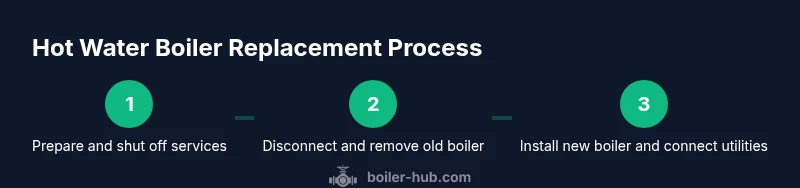
Disconnect and remove the old boiler
Label piping and electrical connections as you disconnect. Remove the vent, flue, gas line, or electrical feed, and then carefully lift the boiler from its mounting. Use proper lifting techniques and assistive devices to avoid injury.
Tip: Take photos of the setup for reference when reassembling. - 4
Prepare installation site and venting
Inspect the alcove or mechanical room for clearances and structural support. Install or verify mounting brackets, ensure a proper vent path, and confirm combustion air supply meets code requirements.
Tip: Check that the venting path is unobstructed and sloped for drainage. - 5
Install the new boiler and connect utilities
Mount the new boiler, connect water supply/return lines, install the expansion tank, and attach the venting system. Connect gas supply and electricity per code, ensuring shutoffs are accessible. Reinstall or replace vent components as needed.
Tip: Leak-test gas joints with a soapy water solution and inspect electrical connections for secure contacts. - 6
Fill, purge air, test, and commission
Fill the system with water, bleed air from radiators and piping, and verify pressure and temperature settings. Power up the boiler, run through startup cycles, and confirm safe operation and emissions. Check for leaks and confirm all safety devices function properly.
Tip: Document start-up readings and verify the boiler responds to thermostat calls.
Questions & Answers
Do I need a permit to replace a hot water boiler?
In many regions a permit and inspection are required, especially if venting, gas, or electrical work changes. Check local codes and consult a licensed contractor if in doubt.
Yes. Check your local codes; a permit and inspection are often required for boiler replacements.
Can I replace my boiler with the same fuel type?
Usually yes, but it depends on venting, clearances, and new unit compatibility. A professional can verify whether a straightforward swap is possible.
Generally, you can keep the same fuel type, but you should confirm venting and compatibility with a pro.
What is the typical cost range for replacement?
Costs vary by boiler type, labor, and region. Obtain multiple quotes and request itemized estimates for equipment, labor, and permits.
Costs vary a lot; get several quotes to understand your budget needs.
What are common signs my boiler needs replacement?
Frequent breakdowns, rising energy bills, cold spots, abnormal noises, or leaks indicate replacement should be considered.
If it keeps breaking or your bills rise, replacement is worth evaluating.
Should I hire a professional for replacement?
Gas and electrical work carry substantial risk. A licensed professional helps ensure safety, code compliance, and warranty validity.
Yes, for safety and proper installation.
Are tankless or condensing options worth considering?
Condensing boilers are common for efficiency gains; tankless systems exist but require careful assessment of space, heat demand, and existing radiators.
Condensing models save energy; discuss options with a pro to match your home.
Watch Video
Key Points
- Assess boiler condition and plan before purchase
- Prioritize safe venting and code compliance
- Size and efficiency drive long-term savings
- Obtain multiple quotes and verify warranties
- Hire pros for gas and electrical work when required