DIY Boiler Replacement: A Step-by-Step Installation Guide
Learn how to plan, prepare, and execute a DIY boiler replacement with safety, compliance, and efficiency in mind. This Boiler Hub guide covers planning, tools, installation steps, and troubleshooting.


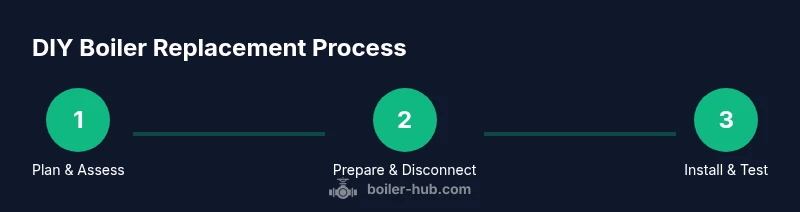
This guide helps you assess, plan, and execute a DIY boiler replacement where local codes permit, covering safety prerequisites, required tools, and a step-by-step overview. You’ll learn how to choose a compatible replacement, prepare the workspace, and properly vent, connect utilities, and test the new unit while minimizing risk for a safer, compliant install. This quick answer captures the core process and safety caveats.
What a DIY boiler replacement involves and who should consider it
Replacing a boiler is a major home project that affects comfort, safety, and energy bills. According to Boiler Hub, planning is half the job when undertaking a major replacement like a boiler. A do-it-yourself approach can be feasible in homes with straightforward layouts and readily accessible equipment, but the complexity grows with gas piping, venting, and local code requirements. Before you begin, identify your current boiler type (gas, oil, or electric), the layout of your mechanical room, and whether you have the necessary permits. If the space is cramped, the venting is unconventional, or you lack basic drafting and measuring skills, this is a strong sign to involve a licensed professional. The aim here is to help homeowners and facility managers understand the process, recognize safe boundaries, and decide when to DIY versus hire a pro. Throughout, safety, proper venting, and adherence to local regulations are essential for a reliable, long-lasting installation.
Safety and regulatory prerequisites
Working with gas-fired appliances carries real risk. Ensure the main gas supply is shut off before any disassembly, and have a working CO detector in the area. Local regulations typically require a permit and inspection for boiler replacement; check with your authority having jurisdiction (AHJ) before starting. The Boiler Hub Team emphasizes following the manufacturer's installation instructions exactly and using approved venting paths and fittings. If you smell gas, evacuate immediately and contact emergency services. Keep kids and pets away, and never bypass safety devices or venting requirements. This section outlines the non-negotiable safety steps and regulatory expectations you must meet before moving forward.
Planning and selecting a replacement boiler
Choosing a replacement boiler involves matching capacity, efficiency, fuel source, and venting to your home. The Boiler Hub analysis shows that properly sized boilers deliver consistent comfort and lower operating costs. Calculate the heating load for your space using established methods and compare efficiency ratings (AFUE or ERP depending on region). Ensure compatibility with existing piping, water or steam connections, and venting. Decide between combi, system, or conventional boilers based on hot-water demand, space, and future needs. Budget for installation and potential retrofit costs; while DIY can save money, improper sizing or venting can negate the savings.
Tools, materials, and prepping the worksite
Before you start, assemble essential tools and materials. Required tools include a wrench set, screwdrivers, pipe wrench, adjustable pliers, a torque wrench, a pipe cutter, a level, a multimeter, and a gas leak detector if you have one. You’ll also need pipe dope or approved thread sealant for gas connections, new gaskets or O-rings for the boiler, and compatible seals for condensate traps. Have a drain pan, towels, spill containment, a carbon monoxide detector, and a fire extinguisher on hand. Keep the boiler manufacturer’s installation manual accessible and follow its exact recommendations for clearances and venting.
Venting, combustion air, and critical clearances
A safe replacement hinges on correct venting and adequate combustion air. Verify that the flue size matches the boiler exhaust and that joints are well sealed to prevent leaks. Provide sufficient combustion air in enclosed spaces, using passive or mechanical ventilation as required by code. Maintain required clearances from walls and combustibles per the manual and local codes. If you’re uncertain about venting type—direct vent, induced-draft, or natural vent—consult the installation guide and plan for a future upgrade if needed.
Commissioning and safety checks after installation
After the new boiler is connected, complete a careful commissioning sequence. Fill and purge the system to remove air, then check for gas and water leaks using soapy water. Confirm ignition with the manufacturer's procedure and verify proper burner operation and flame color. Bleed radiators and balance the system, set the thermostat and controls, and run several heat cycles to ensure consistent heating. Install and test CO detectors and ensure the venting paths are unobstructed. If at any point you detect a gas smell, turn off the supply and call emergency services. Consider having a professional inspection if you’re not completely confident in the final setup.
Tools & Materials
- Safety gear (goggles, gloves, and hearing protection)(Protect eyes, hands, and ears during disassembly and testing)
- Adjustable wrench(Use for fitting gas and water connections)
- Pipe wrench (set)(Crush and tighten thicker piping)
- Screwdrivers (Phillips and flat-head)(Disconnect electrical components and mounting screws)
- Torque wrench(Helps meet manufacturer torque specs on connections)
- Pipe cutter / tubing cutter(Prepare new pipes and trims cleanly)
- Gas-rated sealant or thread sealant(Use approved sealant; avoid tape on gas lines)
- Multimeter(Test circuits, thermostat wiring, and controls)
- New boiler gaskets/O-rings(Ensure airtight seals for the replacement unit)
- Drain pan, towels, and spill containment(Contain leaks during disconnection and draining)
- CO and smoke detectors(Critical for safety in boiler rooms)
- Manufacturer’s installation manual(Follow boiler-specific clearances and venting specs)
Steps
Estimated time: 3-8 hours
- 1
Assess and document the existing system
Survey the current boiler, take photos of connections, and collect model and venting details. This helps you plan compatibility with a replacement and identify required permits.
Tip: Capture clear photos of piping, wiring, and vent connections for reference. - 2
Shut off gas, power, and water
Isolate all energy sources to the boiler to prevent accidental ignition, electrical shock, or flooding. Verify isolation with appropriate testers.
Tip: Double-check that the gas valve is fully closed and the breaker is off before touching any wires. - 3
Drain and disconnect the old boiler
Drain the system into a drain pan, disconnect gas and water lines, and remove mounting hardware. Label hoses for reassembly.
Tip: Have towels ready to catch residual water and avoid spills. - 4
Remove the old boiler
Carefully extract the unit from its alcove, avoiding damage to surrounding components and ensuring safe disposal per local rules.
Tip: Work with a helper for heavy units and use proper lifting techniques. - 5
Position and mount the new boiler
Place the new unit in position, level it, and secure mounting brackets as specified by the manufacturer.
Tip: Use a spirit level to ensure level installation; misalignment affects venting and seals. - 6
Connect gas and water supply lines
Attach the gas supply and water feed to the new boiler, using gas-rated sealant and tightening to spec.
Tip: Gradually tighten fittings and recheck for leaks after initial test gas pressurization. - 7
Install venting and combustion air provisions
Connect the flue and ensure adequate combustion air as per the manual and local codes.
Tip: Check for leaks with soapy water and verify vent alignment before finalizing. - 8
Fill, purge, and test the system
Fill the boiler, purge air from the radiators, ignite the burner, and verify proper flame color and operation. Monitor for leaks and check safety devices.
Tip: Run multiple heat cycles and verify thermostat control and zone valves. - 9
Finalize safety checks and document
Install CO detectors, re-check for leaks, and complete a log of all settings, serials, and inspections. If anything feels uncertain, pause and call a pro.
Tip: Keep a detailed record for warranty and future service.
Questions & Answers
Is a DIY boiler replacement legal in my area?
Whether you can replace a boiler yourself depends on local codes. Many jurisdictions require a licensed professional for gas boiler work and inspections. Always check with your AHJ before starting.
Whether you can replace a boiler yourself depends on local codes; many places require a licensed professional for gas work and inspections.
Do I need a permit to replace a boiler?
In most regions, a permit is required for boiler replacement to ensure safety and proper venting. Your AHJ will outline the process and required inspections.
Most places require a permit for boiler replacement and inspections by the local authority.
How do I know if DIY is feasible for my home?
Feasibility depends on the boiler type, accessible space, presence of an existing venting system, and your comfort with gas and electrical work. If gas piping or complex venting is involved, hire a professional.
Feasibility depends on your setup and comfort with gas and electrical work; consult a pro if uncertain.
What are the main risks of DIY boiler replacement?
Risks include gas leaks, carbon monoxide exposure, fire hazards, water damage, and incorrect venting. Do not bypass safety devices and seek professional help if you’re unsure.
Gas leaks and CO exposure are serious risks; don’t bypass safety devices and get professional help if unsure.
How long does installation typically take?
Time varies with system complexity, but plan for several hours up to a full day. Budget for potential retrofits and permit processes.
It can take several hours to a full day, depending on complexity and permits.
When should I call a pro instead of DIY?
Call a pro if you’re uncertain about gas connections, venting options, or local code requirements. Professional installation ensures code compliance and safety.
Call a pro if gas work or venting is unclear or if codes require professional installation.
Watch Video
Key Points
- Plan before you touch any equipment.
- Prioritize safety, venting, and compliance.
- Size and vent the new unit correctly.
- Know when to call a pro.