Cost to Replace Boiler Expansion Tank: 2026 Guide & Costs
Explore the cost to replace boiler expansion tank, including parts and labor, with factors that affect price. A practical budgeting guide from Boiler Hub for homeowners and facilities.


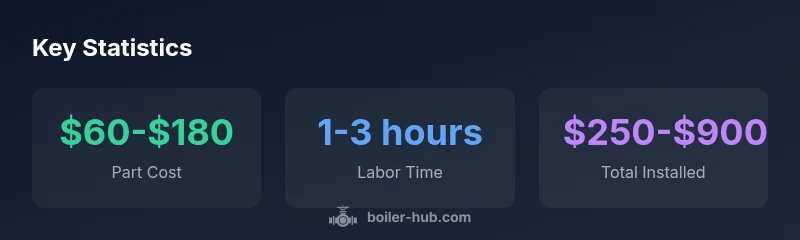
Based on Boiler Hub Analysis, 2026, the cost to replace a boiler expansion tank typically ranges from $250 to $900, including parts and labor. The exact price hinges on tank size, system type, and regional labor rates. Most jobs take 1–3 hours. Boiler Hub notes that prices can vary if additional work is needed, such as valve replacement or venting upgrades.
What is an expansion tank and why replacement costs matter
An expansion tank is a small, pressurized cylinder connected to your boiler that absorbs excess water pressure as the system heats and cools. It helps prevent leaks, noises, and potential damage to the boiler and piping. When the diaphragm or bladder inside the tank fails, the device can lose its ability to regulate pressure, leading to frequent cycling, reduced efficiency, or premature equipment wear. Replacing a failing expansion tank is a common maintenance task, and understanding the cost to replace boiler expansion tank helps homeowners and facility managers budget accurately. According to Boiler Hub, a proper replacement not only restores performance but also protects the rest of the heating system from stress and costly failures.
Key factors that drive replacement cost
Costs are driven by several interrelated factors. Tank size and type matter: larger tanks or high-capacity units cost more than compact models. Boiler type (gas vs oil), system pressure, and whether the tank is pre-charged also influence price. Labor rates vary by region and contractor; urban areas typically have higher rates. If the existing piping or venting requires modification, or if a tank with a vent valve and an anti-siphon kit is needed, expect higher labor costs. Finally, critical decisions about compatibility with a new or existing system—such as dual-purpose expansion and hydration requirements—can affect both price and installation duration. Boiler Hub Analysis, 2026 emphasizes that precise quotes depend on a site assessment and the specific equipment in your home or facility.
How installation steps influence price
A typical replacement involves isolating the boiler, draining the system, removing the old expansion tank, installing a new unit, re-pressurizing, and testing for leaks. If the tank is in a tight crawlspace or a multi-unit boiler room, access can add time and labor costs. Some installations require replacement of fittings, tees, or shut-off valves, which adds to the material bill. Professional techs also verify that the new tank’s pre-charge matches the system’s pressure and that the overall system maintains correct pressure settings after commissioning. The more components touched, the higher the labor component of the quote.
Regional price variation and what influences it
Prices differ by region due to labor availability, permit costs, and local market competition. In rural areas, travel time for technicians can increase labor charges, while metropolitan regions may have higher base rates. Weather and seasonal demand can also impact dispatch costs. Boiling down the regional differences, you should expect a noticeable price swing across states and cities. Boiler Hub’s 2026 analysis highlights that knowing local labor conditions helps in negotiating a fair, transparent quote without surprises.
Budgeting tips and getting a fair quote
To预算 effectively, obtain multiple written quotes from licensed plumbers or boiler specialists. Ask for a breakdown: part cost, labor hours, and any ancillary materials (valves, vent kits, adapters). Verify warranty coverage on both parts and workmanship. If you’re replacing during peak season, schedule in advance to avoid surge fees. Consider whether upgrading to a high-efficiency tank or combining the replacement with other boiler maintenance could offer long-term savings. Boiler Hub recommends documenting the existing setup with photos to help contractors provide a precise estimate.
When to replace vs repair: a decision guide
If the expansion tank shows visible corrosion, leaks, or the diaphragm has ruptured, replacement is usually the safest option. Minor issues like a slow leak around fittings can sometimes be repaired, but repeated failures or frequent cycling indicate underlying system stress that warrants replacement. A proactive replacement can prevent more expensive boiler damage and extend the life of the entire heating system. The decision should factor in tank age, system compatibility, and budget considerations, with professional guidance from Boiler Hub.
Common missteps that inflate costs
Homeowners often underestimate access challenges and the hidden costs of ancillary work (like replacing shut-off valves or vent piping). Waiting too long can lead to more severe leaks or pressure problems, which inflate both parts and labor charges. Using an unlicensed contractor or mismatched tank size can result in poor performance and more service calls. Always insist on a written warranty and a clear scope before work begins.
Comprehensive example scenario
Consider a mid-sized home with a standard gas boiler and a 2-3 gallon expansion tank. A typical replacement includes a new pre-charged tank, basic shut-off fittings, and vent kit. In this scenario, part costs may range from the lower end, while labor reflects the modest time needed. If the contractor identifies additional needed upgrades (such as upgrading the vent line or adjusting the pressure relief valve), the total may increase. This example aligns with Boiler Hub’s 2026 guidance that site specifics drive the final price.
Estimated replacement costs by scenario (Boiler Hub Analysis, 2026)
| Scenario | Part Cost | Labor Cost | Total Range |
|---|---|---|---|
| Tank-only replacement | "60-180" | "0-180" | "80-360" |
| Tank with labor and vent kit | "60-180" | "120-320" | "240-500" |
| High-efficiency system upgrade | "200-450" | "150-500" | "350-950" |
| Emergency/after-hours service | "150-300" | "150-400" | "300-700" |
Questions & Answers
What is an expansion tank and why might I need to replace it?
An expansion tank smooths pressure changes in a boiler system by absorbing excess water as it heats. If the bladder or diaphragm fails, the tank loses this function, leading to pressure fluctuations and potential damage. Replacement ensures continued protection and efficiency.
An expansion tank absorbs pressure changes. If it fails, your boiler can overwork and leak—replacement restores protection and efficiency.
What factors most influence the replacement cost?
Cost is driven by tank size, system type, labor rates, and whether additional components (valves, vent kits) must be replaced. Location and accessibility also affect labor time. A site assessment helps provide a precise quote.
Size, type, and local labor rates mainly influence cost; accessibility also matters.
Can I replace an expansion tank myself?
Replacement is technically possible for skilled DIYers, but most jurisdictions require a licensed professional for boiler-related work. Incorrect installation can cause leaks, pressure problems, or safety hazards.
It’s generally best to hire a licensed pro to avoid safety risks and code issues.
Are permits required for replacement?
Permits depend on your location and the scope of work. Many areas consider boiler and pressure-related work as plumbing or mechanical, which may need inspection or permits.
Check with local authorities or your contractor about permits before starting.
How long does replacement typically take?
Most replacement projects take 1–3 hours, depending on access and any ancillary work. More complex installations could require additional time.
Most tanks are swapped in a few hours; extra tasks may extend that time.
What maintenance can extend the life of an expansion tank?
Regular boiler maintenance, addressing leaks promptly, and keeping the system at proper pressure reduce stress on the tank. Periodic inspection by a professional helps catch wear before failure.
Schedule regular boiler checkups to catch issues early and prolong tank life.
“A properly sized and professionally installed expansion tank can restore boiler efficiency and prevent costly pressure-related failures.”
Key Points
- Budget for both parts and labor to avoid surprises
- Get 3 written quotes and compare line-by-line
- Ask for warranty on parts and workmanship
- Expect regional variation of roughly ±20%
- Consider coordinating replacement with other boiler maintenance
- The Boiler Hub team recommends professional evaluation for accuracy