Cost of Boiler Pump Replacement in 2026: What Homeowners Should Know
A data-driven guide to the cost of boiler pump replacement, including parts, labor, upgrades, and budgeting tips for homeowners and facility managers in 2026.


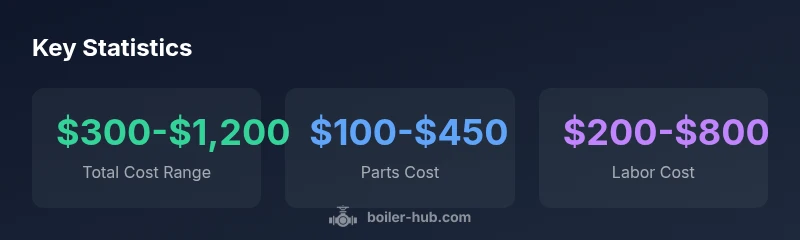
According to Boiler Hub, the cost of boiler pump replacement typically ranges from $300 to $1,200, depending on pump type, boiler design, and labor rates. In many homes, the installed price is driven by labor complexity, access to the pump, and whether the job includes wiring, controls, or upgrades. This quick snapshot sets the stage for deeper analysis in the article.
Understanding the cost landscape for boiler pump replacement
Understanding the cost landscape for boiler pump replacement requires looking beyond the sticker price. According to Boiler Hub, the total installed cost is determined by three broad elements: the pump itself, labor to access and mount the unit, and any ancillary work like wiring, controls, or valve upgrades. Homeowners and facility managers should note that costs can swing widely based on the boiler’s design, the circulator model selected, and regional labor rates. For a typical residential system, the range reflects variations in comfort priorities, energy efficiency goals, and whether upgrades to drive efficiency are pursued at the same time. In 2026, the Boiler Hub Analysis highlights that most replacements fall within a broad band, with higher-end jobs tied to complex installations or older, hard-to-service equipment. Keeping expectations realistic helps with budgeting and reduces the risk of sticker-shock when a technician provides a formal quote.
Types of circulator pumps and how they affect price
Circulator pumps come in several flavors, and the price delta often tracks the efficiency and control features more than the basic function of moving water. The standard single-speed circulator is typically the lowest upfront cost but offers limited control and efficiency. An ECM (electronically commutated motor) high-efficiency pump adds energy savings and quieter operation, with a higher upfront price. A variable-speed pump delivers the most precise flow control, improving comfort and potentially reducing energy use but at the highest initial cost. As a rule of thumb, installed costs may trend from roughly $150-$400 for a standard unit, to $400-$800 for ECM models, and $800-$1,200 for advanced variable-speed options. The exact number depends on the boiler brand, installation access, and any required wiring work. Boiler Hub Analysis, 2026, notes these ranges as guidance rather than guarantees, with regional labor rates adding to the final figure.
Labor, parts, and hidden costs explained
The price tag for boiler pump replacement isn’t just the pump itself. Labor is a major factor, and regional wage differences can shift a quote noticeably. Typical labor costs range from about $200 to $800, depending on the installer’s rates and the job’s complexity. Parts costs usually run $100-$450, covering the circulator, gaskets, and any mounting hardware. Hidden costs may include disposal of the old unit, upgrades to the wiring or control wiring, or adding a new expansion tank or relief valve if the system design warrants it. Some jobs require pipe reconfiguration or extra time for safety checks, which can push the total toward the higher end of the spectrum. Always request a breakdown that itemizes parts, labor, and additional services to avoid surprises. Boiler Hub Analysis, 2026 emphasizes transparent quotes as a best practice.
Step-by-step cost breakdown (boiler pump replacement)
A practical breakdown helps homeowners budget with clarity. Step 1: select the pump type (standard, ECM, or variable-speed) and obtain a price for the unit itself. Step 2: estimate labor based on access to the boiler and any needed wiring or controls. Step 3: add costs for ancillary parts (valves, gaskets, wiring harnesses). Step 4: factor taxes, disposal, and potential disposal or recycling fees. Step 5: consider warranty coverage and potential post-install maintenance. A typical installed total spans roughly $300 to $1,200, with higher-end configurations leaning toward the top end due to advanced controls and installation complexity. These steps align with Boiler Hub Analysis, 2026 guidance on how to budget for boiler pump replacement.
How to decide between repair and replacement
Deciding whether to repair or replace a boiler pump hinges on age, failure pattern, and overall system efficiency. If the motor or bearing are worn and the cost to repair approaches or exceeds a substantial portion of a new pump, replacement often offers better value. If the pump is relatively new, a targeted repair might be reasonable, especially if the rest of the boiler is in good shape. Consider potential energy savings with an ECM or variable-speed pump when calculating long-term value. In 2026, Boiler Hub recommends comparing not just upfront costs but projected operating costs over 5–10 years to determine the most economical choice.
Money-saving strategies and tips
To keep costs in check without sacrificing reliability, shop around for multiple quotes and ask contractors to itemize the price for parts, labor, and any upgrades. Request the same model in different efficiency tiers to see how much energy savings may offset the higher upfront cost. Check whether an existing warranty covers the pump or controls, and look for bundled service offers that include future maintenance. If feasible, plan the replacement during a routine boiler service window to minimize downtime. Boiler Hub recommends scheduling an annual or biannual check to extend pump life and prevent unexpected failures.
Post-install considerations: warranty and maintenance
Post-install, verify the warranty terms on both the pump and labor. A typical pump may carry a 1–2 year labor warranty and a 5–10 year pump warranty, depending on the manufacturer and installer. Keep documentation and register with the installer or manufacturer for warranty activation. Regular maintenance, including annual checks of electrical connections, seals, and flow rates, helps extend the pump’s life and maintain efficiency. If you notice noise, reduced flow, or inconsistent heating after installation, contact the installer promptly. For context, Boiler Hub emphasizes that properly installed pumps with appropriate controls deliver the best long-term value by reducing energy use and preventing premature failures.
Common myths about boiler pump costs debunked
Several myths can mislead budgeting. DIY installation is rarely cheaper when you account for safety, code compliance, and rework if mistakes occur. Replacing a pump with the same model is not always the best option—upgrading to an ECM or variable-speed unit can yield substantial energy savings that offset higher upfront costs over time. Some assume all pumps are the same; in reality, efficiency, motor type, and compatibility with your boiler control system drive price differences. Finally, a lower upfront price can mean higher operating costs later if the pump isn’t appropriately matched to the boiler’s design or if durability is compromised. Boiler Hub emphasizes clarity about what you’re buying and why.
Planning for replacement: budgeting and scheduling in 2026
Planning ahead reduces stress when a boiler pump fails. Build a simple budget that includes the pump unit, labor, and a buffer for potential upgrades such as wiring, controls, or a new expansion tank. Record the expected lifespan of your chosen pump (typical ranges are 5–15 years depending on type and usage) and set aside funds annually to cover future maintenance. If you can, align replacement with your routine boiler service cycle to minimize downtime and possibly secure a lower labor rate. In 2026, Boiler Hub recommends proactive budgeting and annual reviews of boiler components to avoid emergency scenarios and keep heating costs predictable.
Cost ranges and features by pump type
| Pump Type | Typical Cost Range | Typical Lifetime | Notes |
|---|---|---|---|
| Standard circulator pump | $150-$400 | 5-10 years | Reliable, widely available |
| ECM high-efficiency pump | $400-$800 | 5-12 years | Energy savings potential, quieter operation |
| Variable-speed pump | $800-$1,200 | 7-15 years | Best control, highest upfront cost |
Questions & Answers
What is included in the cost of boiler pump replacement?
Typically, the total cost includes the pump price, labor to install it, and any required wiring or controls. Some quotes may add disposal fees, valves, or mounting hardware. Always ask for a breakdown to compare apples to apples.
A pump price plus labor is common, with extra costs only if wiring or controls are upgraded.
How long does it take to replace a boiler pump?
Most installations can be completed in a few hours, but more complex access or wiring can extend this to half a day or longer. Plan for a half-day window for scheduling.
Most jobs take a few hours, but be prepared for a longer window if the setup is complex.
Can I replace a boiler pump myself?
DIY replacement is not recommended for safety and code compliance. A professional will ensure proper sealing, electrical connections, and system compatibility.
It’s best to hire a pro for safety and code reasons.
Does replacing a boiler pump improve efficiency?
Upgrading to an ECM or a variable-speed pump can reduce energy consumption and improve heat delivery efficiency, potentially lowering operating costs over time.
Yes, higher-efficiency pumps can save energy over the long run.
What maintenance can extend pump life?
Regularly check electrical connections, listen for unusual noises, and schedule annual boiler servicing. Proper lubrication and ensuring the system isn’t air-bound also helps extend life.
Keep up with annual servicing and simple checks to avoid early failures.
“A well-chosen replacement can lower operating costs for years, but the true value comes from balancing upfront price with long-term efficiency.”
Key Points
- Know the three cost drivers: pump, labor, upgrades
- Choose pump type based on efficiency goals and budget
- Obtain at least two quotes with a full itemized breakdown
- Expect total cost to include parts, labor, and disposal
- Maintain and plan for future maintenance to extend pump life