Can You Put a Boiler Under the Stairs? A Practical Guide
Learn whether placing a boiler under stairs is feasible, what safety and code factors to consider, and safer alternatives. This guide covers ventilation, clearance, permits, and how Boiler Hub recommends handling space-constrained installations.


Generally, you should not place a boiler under stairs. This space often fails ventilation, clearance, and access requirements that boilers need for safe operation. Local codes and manufacturer guidelines favor dedicated boiler rooms or well-ventilated service enclosures. If under-stair placement is being considered, hire a licensed professional first. According to Boiler Hub, safety, proper installation, and code compliance must come first to protect occupants and equipment.
Can a Boiler Fit Under Stairs? Key Factors
Determining whether a boiler can legally and safely occupy the space under stairs begins with three core questions: Is there adequate combustion air, ventilation, and service access? Is the enclosure noncombustible, dry, and easy to keep clear of obstructions? Are there any architectural constraints that would prevent safe installation, maintenance, or emergency shutoff access? According to Boiler Hub, the safest approach is to keep boilers in dedicated utility spaces with proper ventilation, clearances, and accessible service panels. Under-stair enclosures often fail one or more of these criteria, creating risks for carbon monoxide buildup, fire hazards, and difficult maintenance. If your goal is to maximize living space, explore noninvasive options like relocating the boiler to a compliant utility closet or a corner of an exterior wall with proper venting. This section lays the groundwork for a safety-first decision.
In practice, many stair enclosures are too tight or irregular to meet required service clearances. A boiler requires room to breathe, exhaust, and be serviced without moving furniture or dismantling cabinetry. Limited air supply can impair combustion efficiency, while cramped access can complicate valve shutoffs and routine inspections. As a result, even when the space seems to fit physically, the functional requirements around venting, gas supply isolation, condensate disposal, and electrical connections often rule out under-stair placement. Always verify by measuring available clearance, testing air supply, and consulting a licensed professional before committing to a plan.
noteValue":null}
Regulatory and Ventilation Considerations
Code compliance and proper ventilation are the first lines of defense when evaluating any under-stairs installation. Local building codes govern where boilers may be located, how exhaust and fresh air are supplied, and what constitutes safe access for maintenance. In many jurisdictions, installations beneath a stairwell require documented ventilation strategies, approved venting paths, and mechanical access that remains unobstructed. Boiler Hub analysis shows that many inspectors scrutinize combustion air provisions and emergency egress when a boiler is placed in a nontraditional enclosure. Even small deviations from standard practice can trigger costly amendments or relocation. Working with a licensed gas engineer ensures that the proposed space meets code, manufacturer specifications, and safety standards for installation and ongoing operation.
Ventilation strategies fall into two broad categories: open combustion air (with exterior air intake and proper exhaust) and sealed combustion (tight enclosure with dedicated air supply). A critical concern is preventing backdraft, gas leaks, or carbon monoxide buildup. Any enclosure under stairs should permit continuous airflow, allow a safe exhaust route, and maintain working CO detectors. When in doubt, pursue a plan that provides well-ventilated clearance and direct access to shutoff valves and electrical disconnects.
noteValue":null}
Space, Access, and Safety: Why Clearance Matters
Clearance around a boiler is not a cosmetic preference—it directly affects serviceability, heat dissipation, and safety. The space must accommodate all routine maintenance tasks, including removing panels, accessing the gas shutoff, and checking condensate lines without disassembly of surrounding structure. In cramped under-stair configurations, service人员 may be unable to reach the unit safely, increasing the risk of gas leaks or mis-diagnosed faults. Aesthetics should never trump safety or reliability. From a design perspective, exterior wall installations or purpose-built utility cupboards provide predictable access and easier inspection paths, which reduces long-term risk to occupants and equipment.
If you’re evaluating dimensions, measure the width, height, and depth of the available compartment, then compare with the boiler’s service clearance requirements as specified by the manufacturer. Include space for venting accessories, condensate drain, isolation valves, and any future replacement needs. Planning for future service minimizes the need to move bulky components later and supports easier inspections by Boiler Hub-approved technicians.
noteValue":null}
Alternatives to Under-Stairs Placement: Safer and Practical Options
Before committing to under-stairs placement, compare practical alternatives that preserve space while preserving safety. A dedicated boiler room or utility closet on an exterior wall often provides the most straightforward compliance path. If a room is not feasible, a purpose-built cabinet on an interior wall with a vented panel and a dedicated combustion air path can sometimes work, provided it meets code and manufacturer guidance. Another option is relocating the boiler to a nearby garage or utility area that has direct venting to the outdoors and unobstructed access for maintenance. Each alternative has trade-offs in terms of cost, thermal performance, and noise, but they typically offer superior long-term reliability and simpler compliance.
Start by sketching layouts, listing required clearances, and consulting a professional about feasibility. A balanced approach considers not only current needs but also potential future equipment upgrades or expansions, which can influence the best location choice.
noteValue":null}
Planning, Permits, and Professional Involvement
If you decide to pursue any installation in a nonstandard location, start with a professional assessment. A licensed gas engineer will verify combustion air, venting, gas supply, electrical connections, and drainage. In many areas, permits and inspections are mandatory for any change to gas appliances, and failing to obtain approvals can void warranties or insurance coverage. Prepare to provide floor plans, stair dimensions, and any existing venting diagrams. A pro can also help you compare the total cost of under-stairs installation versus alternative placements and identify any required upgrades to meet code.
Document everything. Keep copies of engineering assessments, permits, and inspection reports in case you need to prove compliance in the future. Transparent record-keeping supports safety and peace of mind for homeowners and facilities managers alike.
noteValue":null}
Practical Layouts and How to Measure a Potential Space
For any space you’re evaluating, precise measurements are essential. Start by documenting the width, height, and depth of the under-stairs cavity, then check for obstructions like piping, electrical conduits, or structural members that could impede ventilation or service access. Use a laser measure for accuracy and create a simple scale drawing showing where a wall, door, or access hatch would be placed. Evaluate whether a ventilation duct, condensate drain, and utility connections can be routed without compromising structural integrity. Create a short list of must-haves for any proposed layout, including access to shutoffs, a clear path for maintenance, and a practical route for venting. If measurements indicate a mismatch with boiler specifications, pivot to one of the safer alternatives described earlier.
This planning phase reduces the risk of later modifications and helps you communicate clearly with your installer. Remember to involve a pro early in the process, so the final plan aligns with code requirements and safety best practices.
noteValue":null}
Venting, Drainage, and Combustion Air Realities in Small Enclosures
The most challenging aspect of under-stairs installations is ensuring proper venting and drainage in a compact enclosure. Exhaust venting must be connected to a safe outdoor outlet without leaks. Condensate drainage paths require a reliable slope and trap to prevent backups. Combustion air must come from an appropriately sized exterior source or be supplied through a code-compliant interior route that does not rely on a cramped stair void. When space constraints drive a design, it’s especially important to involve a professional who can verify that all safety pathways remain clear and functional. In many cases, safer alternatives—such as relocating to an exterior wall or dedicated boiler room—are preferable to cramming a boiler into a tight under-stair space.
noteValue":null}
Common Mistakes and Red Flags to Watch For
Rushing to install a boiler under stairs without a thorough feasibility assessment leads to costly mistakes. Look for red flags such as restricted service access, inadequate ventilation, hidden gas lines, or any construction that blocks combustion air. Other warning signs include poor vent routing, forced-air heating that could disturb the boiler, or proximity to flammable materials. If you notice any of these issues, pause the project and consult a licensed professional for a revised plan. A safe installation is one that prioritizes accessibility, ventilation, and compliance over space-saving convenience.
noteValue":null}
Safer Path Forward: Boiler Hub's Final Guidance
The path forward, especially in space-constrained homes, is to prioritize safety, compliance, and long-term reliability. The Boiler Hub team recommends evaluating all nonstandard sites with a professional and, where possible, choosing a location with explicit access for maintenance and proper venting. If under-stairs placement is unavoidable, ensure there is a clear, code-compliant plan for combustion air, venting, drainage, and service access, and be prepared for inspections and potential relocation. By focusing on these fundamentals, homeowners and facility managers can avoid dangerous configurations and protect occupants and equipment for years to come.
noteValue":null}
Tools & Materials
- Licensed gas engineer(HVAC professional with current certification and gas safe/registration where applicable)
- Tape measure(For accurate space assessment (width, height, depth))
- Ventilation assessment checklist(To verify airflow and exhaust paths in enclosure)
- Permit application (if required)(Check local authority requirements and timelines)
- Noncombustible enclosure materials(Inspector-approved panels or liners to meet clearance and fire safety)
Steps
Estimated time: varies by jurisdiction (permits and inspections can add time)
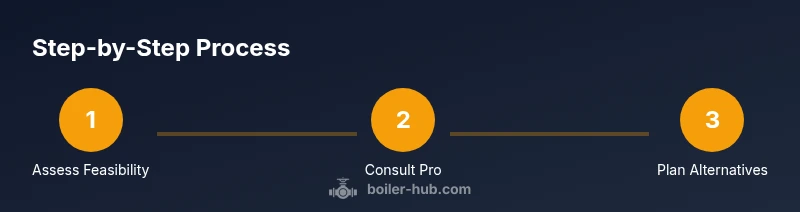
- 1
Assess feasibility and risks
Review the space under the stairs for ventilation, access, and proximity to combustibles. Document current clearances and note any structural constraints. This step helps decide if moving forward with an under-stairs concept is wise, or if a safer alternative is preferable.
Tip: Take photos and measurements from multiple angles to share with your installer. - 2
Consult a licensed professional
Engage a gas-safe or equivalent licensed professional to evaluate the space for combustion air, venting options, and accessibility. A pro can confirm whether the under-stairs location can meet code requirements before any purchase or demolition occurs.
Tip: Ask for a written assessment that outlines required changes and expected costs. - 3
Measure space and assess ventilation
Precisely measure the cavity and compare with the boiler’s documented clearance and venting needs. Ensure there is a path for a vent pipe, condensate drain, and service access that does not require removing parts of the stairs.
Tip: Use a tape measure and a level to verify flat, unobstructed mounting surfaces. - 4
Review codes and manufacturer specs
Cross-check local building codes and the boiler’s installation manual for required clearances, venting, and combustible-material restrictions. Any discrepancy should push the plan toward a compliant alternative.
Tip: Do not rely on memory—have the pro reference the latest code edition. - 5
Explore safer alternatives
Evaluate options such as a dedicated boiler room, utility closet on an exterior wall, or a purpose-built cabinet with adequate ventilation. Weigh long-term maintenance ease against upfront costs.
Tip: Document pros/cons to aid decision-making. - 6
Obtain permits and schedule inspections
If required, submit plan applications and arrange inspections. Permit processes vary by jurisdiction and can add weeks to the project timeline.
Tip: Track deadlines and keep copies of all approvals. - 7
Prepare the site and plan venting
If proceeding, prepare the site with noncombustible materials, a clear venting path, and safe drainage. Ensure access for a professional to complete the installation without structural modification.
Tip: Keep a clean workspace to avoid accidental damage. - 8
Finalize and document compliance
After installation, obtain final inspections and save all documentation. Maintain a maintenance schedule and monitor for any signs of ventilation issues or leaks.
Tip: Store manuals and inspection reports with your home records.
Questions & Answers
Is it legal to install a boiler under stairs in homes?
Code requirements vary by jurisdiction. A professional assessment and potential permit are often required. If the space does not meet ventilation or clearance standards, relocation is advised.
Code rules vary by area; get a professional assessment and any required permits.
What clearance does a boiler need for safe servicing?
Manufacturers specify service clearances and maintain accessibility to shutoffs and panels. Local codes may add requirements for ventilation and safe maintenance routes.
Follow the boiler's manual and local codes for clearance.
Can I install a boiler under stairs with exterior venting?
Even with exterior venting, under-stair placement is often not recommended due to accessibility, combustion air needs, and potential fire hazards.
Exterior venting doesn’t automatically make it safe.
What are safer alternatives to under-stairs installation?
A dedicated boiler room, utility closet, or location on an exterior wall with proper venting and access is typically safer and easier to maintain.
Safer options include dedicated rooms or exterior-wall placements.
How do I know if my space is code-compliant?
A licensed gas engineer will assess ventilation, combustion air, venting, and access. They will confirm compliance or recommend relocation.
A pro will confirm compliance or advise relocation.
What are signs of an unsafe boiler installation?
Gas smells, soot, inconsistent burner operation, or moisture near the unit indicate potential dangers and require immediate review.
Gas smells or soot signal hazards.
What if I already have a boiler under stairs?
Have a qualified technician inspect immediately. If it fails to meet code or safety standards, relocation may be required.
Call a pro to inspect and determine next steps.
Watch Video
Key Points
- Verify space meets ventilation and clearance needs.
- Consult a licensed pro before any work.
- Consider safer alternatives like a dedicated boiler room.
- Obtain required permits and follow local codes.
- Document all steps and keep records for safety and warranty.