Where to Put Boiler in Kitchen: Safe Placement Guide
Learn safe, code-compliant guidance for locating a boiler in or near your kitchen. This practical guide covers space requirements, clearances, venting, drainage, electrical needs, and sensible alternatives.


According to Boiler Hub, locating a boiler in the kitchen is possible but must meet strict space, venting, and safety requirements. This guide explains how to evaluate your layout, what clearances are needed, and when to consider alternative locations such as a utility room or basement. By following these steps, you’ll ensure a compliant, safe installation.
where to put boiler in kitchen: Core considerations
According to Boiler Hub, deciding where to place a boiler is not just about convenience; it determines safety, efficiency, and long-term maintenance. The kitchen is a high-traffic area with appliances, cabinets, plumbing, and often gas lines all in close quarters. Before you settle on a location, you must balance accessibility with proper ventilation, clearance from heat sources, and code requirements. In practice, the best location depends on your home's layout, the type of boiler (gas, electric, or combi), and whether you can run exhaust to the outdoors without creating nuisance drafts or moisture problems. By focusing on space, venting, service access, and drainage, you can evaluate whether the kitchen is viable or if a different utility zone would be safer and more efficient.
This article is designed to help homeowners and facility managers assess the feasibility of kitchen placement for a boiler and to prepare for a compliant, safe installation. Where you put the boiler in your home affects how often you or a pro will access it for service, how you vent it, and how you drain condensate. According to Boiler Hub, an early design decision saves time and reduces costly rework later.
Key considerations when evaluating placement in the kitchen
Placing a boiler in a kitchen requires balancing convenience with essential safety features. The space must accommodate easy service access, reliable venting paths, and robust condensation management. Vent routes should lead outdoors with sealed joints and proper fall paths to prevent backdrafts. Clearances around the unit must align with the manufacturer’s guidelines and local regulations, ensuring heat-sensitive cabinetry and appliances are protected. Consider the impact on cabinetry, splash zones, and spill risk near sinks and dishwashers. If the kitchen design limits these factors, it may be wiser to locate the boiler in an adjacent utility room or basement and route plumbing and vent lines accordingly. This approach often yields better long-term reliability and easier maintenance.
Ventilation and clearance: why this matters when placing a boiler in the kitchen
Ventilation is a non-negotiable factor for any boiler, especially when it's located in a kitchen. A well-planned vent path moves combustion byproducts safely to the outdoors and reduces humidity that can damage cabinets and appliances. In compact kitchens, vertical venting through exterior walls or attic routes must be sealed and fire-stopped, with no gaps that could draw in kitchen air. Clearance around the boiler includes the space needed to service valves, filters, and the heat exchanger. Follow the manufacturer's minimum clearances and local code requirements; never crowd the unit behind doors or deep cabinets. The result of proper ventilation and clearance is reliable operation, reduced risk of leaks, and easier future maintenance.
According to Boiler Hub Analysis, 2026, kitchens often present challenges for venting and space planning, so early design decisions matter.
Space planning: common layouts and mistakes
An effective kitchen boiler layout keeps essential services accessible without obstructing work zones. Common mistakes include placing the unit behind tall cabinets, near sinks with splash risk, or in tight corners where a technician cannot reach shut-offs. A practical approach is to allocate a dedicated vertical or semi-enclosed space with a clear, straight vent path to the exterior. If cabinetry must be altered, design a recessed niche with finished sides and a fire-rated barrier to protect surrounding structures. When detailing layouts, simulate service movements—checking valve access, electrical panel clearance, and safe routes for condensate drainage. A thoughtful plan reduces the need for later rework and helps maintain kitchen aesthetics while meeting safety standards.
This block emphasizes how to translate high-level rules into concrete layouts that respect where to put boiler in kitchen while preserving daily kitchen use.
Practical safety features to include in kitchen installations
Safety should drive every decision about kitchen boiler placement. Install a condensate drain to exterior plumbing and include a drip tray with an integrated automatic shut-off if leakage occurs. Use flame-retardant cabinet materials and ensure combustible surfaces are not directly in contact with the boiler. Install gas leak and carbon monoxide detectors in appropriate zones and maintain proper clearance from fuel sources like ovens or water heaters. Keep emergency shut-offs clearly labeled and accessible. Fire-rated barriers or sleeves may be required where ducts pass through walls or cabinets. Finally, integrate access panels or service hatches that allow technicians to perform maintenance without removing major cabinetry. These steps help prevent overheating, leaks, and unsafe working conditions.
Code and safety reminders
Regional codes and manufacturer guidelines govern boiler placement as much as design aesthetics or convenience. The safest approach is to verify local code requirements and obtain any necessary permits before proceeding. Keep documentation of clearances, venting routes, and drainage plans for inspections. Regular maintenance and annual safety checks by a licensed professional are essential to keep a kitchen boiler running safely and efficiently. Boiler Hub Team emphasizes that code-compliant installation protects occupants and reduces the risk of costly adjustments later.
Alternatives to kitchen placement: when to choose utility room, basement, or garage
If space, venting, or proximity to combustibles makes kitchen installation impractical, consider relocating the boiler to a dedicated utility room, basement, or garage. Many homes benefit from a mechanical or boiler room where dedicated ventilation, drainage, and service access can be optimized without compromising kitchen functionality. In some designs, you can route water and gas lines through existing walls to connect to a boiler located in a more suitable area. When evaluating alternatives, weigh the construction costs, potential energy losses, and long-term maintenance access. This proactive approach can save time and ensure you meet safety standards without forcing a compromise in your kitchen’s design.
Case study sketches: practical layouts that work
Layout A: Boiler in a utility alcove adjacent to the kitchen. A short vent run exits through an exterior wall, with a left-to-right service path and a condensate line draining to a nearby floor drain. Accessibility is maintained on both sides for maintenance. Layout B: A compact boiler placed in a dedicated mechanical closet off the kitchen, with sealed walls, heat shielding, and a vent duct running up and out. These sketches show that safe kitchen integration is possible when ventilation and service access are considered from the start.
Hiring a professional: what to ask and expect
A licensed boiler installer or gas fitter should assess your space, confirm code compliance, and design a venting plan. Ask about permitting, required shut-offs, and whether your draft assessments will include condensate capture and drainage plans. Request a written checklist of clearances, venting routes, and maintenance access. Expect a final layout that minimizes kitchen disruption and provides safe, long-term operation. The right expert will also review future expansion possibilities should you later upgrade to a more efficient boiler.
Next steps: evaluating if you can relocate an existing boiler
If you already have a boiler in or near the kitchen, begin with a professional evaluation to determine if current placement meets safety and code requirements. Document dimensions, venting paths, and service access, and compare them to the manufacturer’s specifications. If relocation or alteration is advised, obtain a clear, written plan outlining costs, downtime, and temporary accommodations. By taking a proactive approach, you can avoid safety risks and ensure your home remains comfortable and compliant.
Tools & Materials
- Tape measure(at least 25 ft)
- Stud finder(to locate walls and joists)
- Level(to ensure proper alignment)
- Gas leak detector(for safety checks)
- Notepad and pencil(to record measurements)
- Marker or painter's tape(optional for marking positions)
Steps
Estimated time: 2-6 hours
- 1
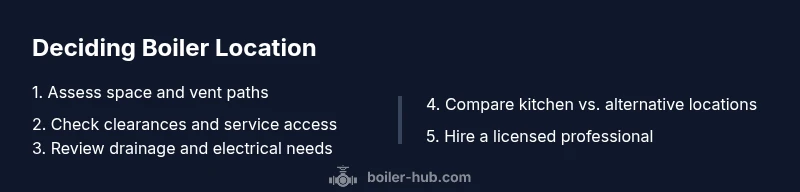
Check local codes and permits
Start by reviewing local building codes and permit requirements related to boiler placement and ventilation. This sets the baseline for acceptable locations and any required inspections.
Tip: Call the building department early to confirm which permits, if any, are needed. - 2
Measure space and ventilation routes
Measure the available space, doors, and potential vent paths. Map a route that leads exhaust outdoors without creating drafts or moisture issues in the kitchen.
Tip: Choose a location with a clear vent line and unobstructed access for service. - 3
Plan service access and maintenance clearance
Ensure there is room to reach valves, panels, and the heat exchanger. Avoid cramped corners where technicians cannot work comfortably.
Tip: Maintain at least two sides of access for future maintenance. - 4
Assess drainage and spill containment
Design a condensate drainage path to exterior plumbing or an internal drain with a trap. Install a drip tray if leakage risk is possible.
Tip: Direct condensate away from cabinetry and electrical components. - 5
Decide viability or alternative location
Compare kitchen viability against utility room or basement options. If constraints overwhelm safety, opt for relocation.
Tip: Document a written decision with pros/cons and cost estimates.
Questions & Answers
Is it legal to install a boiler in the kitchen?
Legality varies by jurisdiction and depends on ventilation, clearances, and space. Always check local building codes and obtain required permits before proceeding.
Whether you can place a boiler in the kitchen depends on local codes and safety requirements. Always verify with the local authority before starting.
What clearance is required around a boiler in the kitchen?
Clearance is determined by the manufacturer and local codes. Maintain enough space for service access, heat shielding, and safe vent routing; avoid cramped enclosures.
Keep manufacturer clearance distances and ensure technicians can reach valves and panels.
Can I vent a boiler directly into a kitchen?
Direct kitchen venting is not advisable. Exhaust should be routed outdoors with proper sealing and vent termination to prevent backdrafts and moisture buildup.
No, you should vent to the outdoors with proper termination and sealing.
What should I do if space in the kitchen is too tight?
If space is insufficient, relocate the boiler to a utility room, basement, or garage and route services accordingly. This often improves safety and maintenance access.
If the kitchen is too cramped, relocate to a more suitable area and reroute lines.
Who should install or relocate a boiler?
Hire a licensed boiler installer or gas fitter who can handle permitting, venting, and safe connections. A qualified pro minimizes risk and ensures code compliance.
Always hire a licensed professional for installation or relocation.
What are warning signs of unsafe placement?
Excessive heat near cabinets, poor venting, signs of moisture, or frequent trips of breakers indicate unsafe placement. Investigate and consult a pro promptly.
If you notice heat, moisture, or venting problems, stop and seek expert advice.
Watch Video
Key Points
- Evaluate ventilation and code requirements before kitchen placement.
- Maintain clear service access and condensate drainage.
- Consider alternatives if space constraints are severe.
- Always hire a licensed professional for safety and compliance.