Can You Put a Boiler in the Bathroom? Safety and Placement Guide
Explore whether installing a boiler in a bathroom is feasible, the safety risks, code considerations, and safer alternatives with a step-by-step approach from Boiler Hub.


Generally, boilers should not be installed in bathrooms due to moisture, electrical, and ignition risks. Local codes almost always require a dry, ventilated space away from direct water exposure. A licensed boiler installer can evaluate safer locations and guard against moisture, leaks, and accidental contact with heat sources. If there's already a boiler in a bathroom, plan for upgraded ventilation, splash protection, and regular safety checks.
Can a boiler be installed in the bathroom? Key safety boundaries
In most homes, the bathroom is a high-moisture environment that challenges the safe operation of any heating appliance. From the moment a boiler is considered for proximity to water to the risk of splash exposure and humidity-driven corrosion, the space demands extra safeguards. According to Boiler Hub, safety-first principles guide where a boiler can reasonably be located. The core idea is to keep moisture-prone areas separate from heat-producing equipment and to ensure adequate ventilation, access, and monitoring. While some modern appliances are rated for bathroom use, they must meet strict standards and zoning rules. If you are evaluating a bathroom as a potential site, involve a licensed installer who can interpret local regulations, assess risks, and identify compliant alternatives already proven to work in typical home layouts.
Moisture, humidity, and corrosion risks in bath spaces
Bathrooms are notoriously humid, with frequent exposure to water splashes and steam. Over time, moisture can accelerate corrosion on metal components, degrade electrical insulation, and increase the likelihood of condensation affecting flame sensors, electrical connections, and control panels. Even if a unit is water-resistant, corrosion can shorten its service life and raise maintenance costs. In addition, condensation can affect venting pathways and create hidden trip hazards or slip risks near kneewalls and cabinetry. Engineers emphasize that moisture management and stable ambient temperatures are prerequisites for any boiler installation outside a dedicated boiler room or utility area. A properly designed enclosure with splash guards and moisture barriers can mitigate some risk, but it does not convert a bathroom into a suitable boiler space by itself. Boiler Hub recommends weighing alternative locations first and consulting a qualified professional before any purchase or installation.
Codes and permits: what you need to know
Code requirements vary by country, state, and municipality. In many jurisdictions, bathroom installations are limited to specific appliance types in designated zones, with clearances mandated to protect occupants and service personnel. A licensed installer will review the relevant code sections, verify ventilation adequacy, and determine whether the bathroom meets minimum clearance and protection standards. The goal is to ensure safe operation, reliable service access for maintenance, and proper fire and moisture barriers. If you already have a bathroom boiler, you should expect an inspector or AHJ (Authority Having Jurisdiction) to review the setup and require updates if necessary. Boiler Hub analysis shows that most modern codes favor non-moisture-prone spaces for primary heating equipment but allow certain exceptions with strict controls. Always obtain written approvals before moving forward.
Boiler types and bathroom suitability
There are several boiler categories to consider: gas-fired, oil-fired, electric, and combination (combi) units. Gas and oil-fired boilers typically require venting and combustion air that may be incompatible with a moist bathroom environment. Electric boilers, while generally less hazardous in terms of combustion, still demand appropriate electrical protection and moisture barriers. Combi units provide hot water and space heating from a single appliance; however, their installation location must satisfy stringent safety and electrical standards. The takeaway is not to assume all boiler types can sit in a bathroom; many are better suited to dry, ventilated spaces such as utility rooms, basements, or dedicated boiler closets in living areas. A correct assessment depends on the appliance model, venting options, and the bathroom’s design.
Ventilation, combustion air, and CO safety considerations
Ventilation is a core safety concern for any boiler. In bathroom-adjacent spaces or rooms with direct water exposure, adequate combustion air supply must be preserved to prevent unsafe fuel-burning conditions. Poor ventilation can lead to the buildup of carbon monoxide and other hazardous byproducts. Modern codes require a continuous supply of fresh air and, in some cases, dedicated exhaust or makeup air. Detectors for CO and traditional smoke alarms should be placed according to code; testing and maintenance should be part of the annual safety routine. The right approach prioritizes a well-ventilated, dry environment and ensures that the boiler’s venting system is unobstructed and correctly installed.
Electrical safety and bathroom zones
Bathrooms are divided into zones that determine what electrical devices may be installed and where. Electrical equipment in zones with high moisture exposure requires special IP ratings, enclosure protection, and reduced risk of electric shock. Even when a boiler is water-resistant, the surrounding wiring, controls, and electrical connections must meet zone requirements and clearance standards. A licensed electrician and a qualified heating technician should coordinate to ensure wiring, grounding, GFCI protection, and circuit sizing comply with local codes. Remember, DIY electrical work in bathrooms increases the risk of serious harm and code violations.
How to evaluate if a bathroom can work (or if relocation is better)
Start with a space assessment: measure clearance around plumbing, gas lines, and electrical panels; check ventilation capacity and window or exterior vent availability; assess access for service and maintenance; evaluate the potential for a dedicated boiler closet or utility room nearby. If the bathroom space cannot accommodate safe clearances, consider relocating the boiler to a non-bathroom location. A practical evaluation also includes reviewing insurance requirements and warranty coverage, as some manufacturers void warranties if installations do not meet their specifications. This stage is best handled by a professional who can provide a documented plan.
Safer alternatives: where to relocate or install instead
If the bathroom proves unsuitable, reliable options include a dedicated utility room, basement, garage, or laundry room. The chosen site should offer: dry conditions, adequate ventilation, unobstructed service access, and a path for venting and exhaust. For homes with space constraints, consider an outdoor or semi-enclosed vented installation with proper weather protection and frost protection, where permitted by code. In all cases, ensure you have a clear route for maintenance and that the space remains easily accessible for annual servicing and safety checks. A well-planned relocation can improve energy efficiency and system longevity while preserving occupant safety.
What to ask a contractor before moving forward
Engage a licensed HVAC or boiler technician and ask targeted questions: Is the bathroom permitted for this appliance under current codes? What is the proposed location, and how will venting and combustion air be addressed? Will the installation require a permit, and what inspections will be performed? What are the clearance requirements for service access, and how will carbon monoxide monitoring be implemented? Request a written plan with diagrams, a detailed bill of materials, and a timeline. A thorough turnkey plan helps avoid costly delays and ensures compliance.
Maintenance and access considerations after relocation
Relocating a boiler to a non-bathroom area typically simplifies maintenance access, reduces exposure to moisture, and protects electrical components. Ensure that the final installation provides convenient access to the boiler, valves, and filters, along with a clear route for draining, servicing, and replacing parts. Document the system with schematics and manuals, and schedule annual safety checks, vent inspections, and combustion analysis as recommended by the manufacturer. Regular maintenance supports reliability and extends the equipment’s lifespan.
Quick-start checklist for next steps
- Engage a licensed installer for a no-obligation space assessment
- Verify code requirements and permit needs with the local Authority Having Jurisdiction
- Evaluate non-bathroom locations that meet space, ventilation, and serviceability needs
- Plan for CO detectors, proper venting, and splash protection where applicable
- Schedule the installation and ensure manufacturer guidelines are followed to protect warranties
Final safety note: moving forward with confidence
Boiler placement in bathrooms is generally discouraged, and most safe solutions center on non-moisture-prone spaces. The best path combines professional assessment, code compliance, and a practical relocation plan that prioritizes safety and long-term reliability. With the right approach, you can keep your home comfortable without compromising safety.
Tools & Materials
- Licensed boiler installer(Qualified professional for gas/oil boiler installation and code compliance)
- Local building permits(Check with local authority; may require drawings and inspections)
- CO detector and smoke detector(Install and test in accordance with code; maintain regularly)
- Measuring tape(Useful to confirm space clearance and access doors)
- Electrical contractor access(Coordination for wiring, GFCI protection, and grounding)
Steps
Estimated time: 1-2 days
- 1
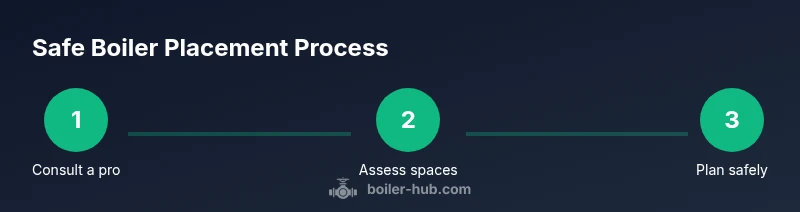
Consult a licensed installer
Engage a qualified professional to evaluate site options, assess code requirements, and determine if bathroom installation is permissible. A licensed expert can interpret local rules and present compliant alternatives.
Tip: Ask for a written assessment and a diagram showing the proposed location and clearances. - 2
Assess space and options
Measure the bathroom, adjacent spaces, and potential relocation sites. Consider ventilation routes, access for service, and proximity to water lines and electrical panels.
Tip: Create a simple sketch of room layouts to compare options quickly. - 3
Check permits and approvals
Determine if you need permits or inspections. Some jurisdictions require plan reviews and on-site verification before work begins.
Tip: Submit all plans in writing to avoid delays and ensure traceability. - 4
Design the compliant plan
Work with your installer to design a plan that includes ventilation, combustion air (if applicable), and safe clearances. Ensure the plan aligns with manufacturer instructions.
Tip: Prefer a non-bathroom location if possible to simplify compliance. - 5
Prepare the relocation site
Ready the chosen space by ensuring dry conditions, access, and protective splash barriers. Confirm that the path for venting and exhaust is clear.
Tip: Clear the area of obstacles and protect surrounding finishes from spills. - 6
Move or install the boiler
The installer relocates or installs the boiler following manufacturer guidance, local codes, and safe wiring/venting practices.
Tip: Never modify vent systems or gas lines without authorization from a licensed pro. - 7
Install safety devices and venting
Install CO detectors, verify venting integrity, and ensure airtight connections. Test for leaks and proper exhaust flow.
Tip: Perform a post-installation CO and combustion test as part of commissioning. - 8
Commission and adjust controls
Commission the boiler, calibrate controls, and verify that safety shutoffs and pressure relief devices function correctly.
Tip: Document control settings and maintain a service log for future maintenance. - 9
Finalize paperwork and warranties
Complete all permit red tapes, obtain inspector approval if required, and ensure manufacturer warranties remain valid under the new installation.
Tip: Keep copies of permits and manuals with your home records. - 10
Plan ongoing maintenance
Schedule annual safety checks, vent inspections, and a routine service plan so the system operates safely and efficiently.
Tip: Set reminders for yearly inspections and component replacements.
Questions & Answers
Is it illegal to install a boiler in a bathroom?
Laws vary by location, but many codes restrict boiler installations in bathrooms. Always verify with the local building department and a licensed installer before proceeding.
Check your local codes and consult a licensed installer before placing a boiler in a bathroom.
Can an electric boiler be installed in a bathroom?
Electric boilers can be subject to bathroom zone regulations. They may be allowed in certain zones with proper IP-rated equipment and electrical protection, but always confirm with a pro and code officials.
Electric boilers may be allowed in some bathroom zones with the right protections—verify with a professional.
What are the safe alternative locations for a boiler?
Safe alternatives include a dedicated utility room, basement, or garage. These spaces typically offer better ventilation, moisture control, and service access.
Try a utility room, basement, or garage for safer boiler placement.
What should I ask a contractor before relocation?
Ask about code compliance, required permits, venting plans, service access, and warranty implications. Request written diagrams and a detailed timeline.
Ask about permits, venting, and warranty implications before relocation.
Will relocating affect home insurance?
Relocating a boiler can influence insurance coverage. Inform your insurer and ensure documentation aligns with code-compliant installation.
Check with your insurer and provide documentation of a compliant installation.
How long does relocation typically take?
Timeline varies by home size and permit process; expect planning and actual work to span several days, plus potential inspections.
Depends on permits and space, but plan for several days total.
Watch Video
Key Points
- Avoid bathroom installation whenever possible; safety comes first.
- Always use a licensed installer and secure proper permits.
- Evaluate non-bathroom locations that meet ventilation and access needs.
- Ensure venting, CO safety, and electrical protections are in place.
- Maintain ongoing maintenance and keep thorough installation records.