Where to Put a Boiler in House: A Practical Guide
Learn where to place a boiler in your home with practical, code-conscious guidance on safety, efficiency, and future-proofing from Boiler Hub.


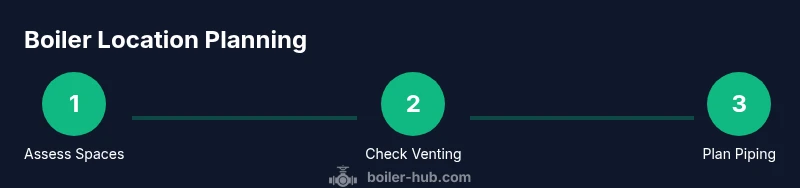
Goal: determine the safest, most accessible, and code-compliant location for your boiler. The process starts with choosing a space that has adequate ventilation and drainage, then ensuring easy access for service, compliance with manufacturer and local code clearances, and a clear pipe and vent route to heat emitters. This guide walks you through criteria and practical steps you can take to place a boiler in a home. Prioritize safety, access, and future needs.
Why location matters for boiler placement
Where to put a boiler in a house isn't just about space—it's about safety, efficiency, and serviceability. According to Boiler Hub, the best location balances access for maintenance, proper combustion air, venting, and proximity to heat emitters. The wrong choice can increase fuel use, complicate piping, or create safety hazards. In this guide, we cover principles, common layouts, codes, and practical steps you can take to determine the ideal spot for your boiler. The goal is to minimize heat loss, avoid long and complex piping runs, and keep controls and shutoffs accessible for routine maintenance and emergency situations.
Beyond space, consider the layout of your home: where will radiators or underfloor heating connect, how will supply pipes run to zones, and how will the flue or vent interact with other exhausts in the building? Accessibility matters not only for you, but for service techs who may need to inspect gas lines, test pressure, or adjust a valve. Local code requirements and manufacturer instructions should guide every decision, so consult the specs for your boiler model and consult your local authority having jurisdiction.
Space and safety requirements
Optimal boiler placement starts with space and safety. You need a location that allows for safe installation and ongoing service. Ensure there is adequate vertical clearance for venting, enough room to access valves and controls, and a dry, stable surface that can support the boiler’s weight. Avoid spaces prone to flooding, extreme temperatures, or high humidity, which can shorten equipment life and complicate maintenance. Keep stairways and exits clear for emergency access, and install detectors (CO and smoke) where approved by code. The space should also accommodate any future upgrades, such as a larger boiler or additional expansion tanks. Finally, verify nearby electrical, gas lines, and water connections to prevent clashes during installation.
Tools & Materials
- Tape measure(For space planning and piping routes)
- Stud finder(Locate framing to avoid drilling into joists or hidden wiring)
- Level(Ensure boiler base is perfectly level for safe operation)
- Marker or pencil(Mark layout and clearance outlines on the floor or wall)
- Utility knife(Cut protective coverings or access panels as needed)
- Adjustable wrench(Tighten/loosen fittings during rough-in piping)
- Pipe cutter(Prepare copper pipes for connections)
- Screwdriver set(Secure mounting brackets and electrical connections)
- Safety goggles(Protect eyes during cutting and drilling)
- CO detector(Place per code to monitor combustion byproducts)
Steps
Estimated time: 4-8 hours
- 1
Define criteria and check codes
Start by identifying the room options that meet basic criteria: ventilation, drainage, access, and proximity to heat emitters. Review manufacturer installation specs and your local codes to confirm permitted locations and required clearances before you move any equipment.
Tip: Consult the boiler manufacturer’s manual early to avoid incompatible locations. - 2
Evaluate potential spaces
Survey basement, utility rooms, attached garages, and dedicated mechanical rooms. For each option, assess ventilation paths, potential for condensate drainage, and the ease of piping routes to radiators or underfloor heating loops.
Tip: Map each space with a simple diagram showing pipes, vents, and service access. - 3
Check combustion air supply
Ensure there is adequate combustion air either from outside or a properly vented interior space per code. Sealed combustion models require different air supply rules than atmospheric units.
Tip: Avoid sealing the space so tightly that it restricts air flow to the boiler. - 4
Plan venting and flue routing
Choose a venting strategy (direct-vent, power-vent, or natural draft) and sketch a path for the flue that minimizes length and turns while complying with setback rules.
Tip: Keep the vent path as straight as possible to maintain draft and efficiency. - 5
Outline piping routes
Draft a rough route for supply and return lines to the heating zones. Consider future expansion and keep lines accessible for maintenance and leaks.
Tip: Label valves and keep a clean path for future servicing. - 6
Prepare the installation surface
Clear a stable, level base; install a drip pan if required; and ensure there’s a safe, dry environment free of dust, moisture, or corrosive vapors.
Tip: Use vibration isolators to minimize noise and movement. - 7
Coordinate utilities and permits
Work with a licensed pro to confirm gas, electrical, and water connections are up to code. Obtain any necessary permits and schedule inspections.
Tip: Don’t skip permit processes; they validate safety and code compliance. - 8
Install and connect
Mount the boiler, connect gas, electrical, and water lines, then install venting and condensate drainage per the plan. Double-check clearances and connections before commissioning.
Tip: Have a second pair of eyes review the work for leaks and proper venting. - 9
Commission and test
Fill and purge the system, test pressure and venting, and verify safety devices operate correctly. Document findings and schedule a follow-up check.
Tip: Test all safety shutoffs and check for gas leaks with approved detectors.
Questions & Answers
What is the best room to locate a boiler?
A dedicated mechanical room or a basement utility space is typically best, as it offers ventilation, drainage, and easy service access. Local codes and manufacturer specs should guide the final choice.
A dedicated mechanical room or basement utility space is usually best, but always follow local codes and the boiler maker's specs.
Can you install a boiler in a garage?
Installations in attached garages are possible in some cases, but they must meet ventilation, clearance, and safety standards specific to your boiler and local regulations.
Garage installations can be allowed in some cases, but require proper ventilation and clearances.
Do boilers require dedicated venting?
Yes. Boilers must vent safely to the outdoors, with the venting system sized and installed per manufacturer instructions and local codes.
Yes, boilers require venting to the outdoors with proper sizing and installation per code.
Do I need permits to move a boiler?
Most jurisdictions require permits for relocation or replacement of a boiler and an inspection afterward to ensure code compliance.
Permits are usually required, and inspections ensure safety and compliance.
Who should install a boiler?
A licensed HVAC contractor or licensed plumber should perform boiler installation to meet safety and codes.
A licensed pro should install the boiler to ensure safety and code compliance.
Is placement in an exterior enclosure acceptable?
Some setups allow exterior enclosures if allowed by code and the unit’s venting and combustion air requirements are met.
Exterior enclosures are possible where permitted, with proper venting and air supply.
Watch Video
Key Points
- Choose a location with easy service access.
- Follow manufacturer and local code clearances.
- Ensure proper combustion air and venting.
- Plan piping routes for efficiency and future expansion.
- Secure permits and professional installation for safety and compliance.