Can You Use the Boiler Room as Storage? A Practical Guide
Explore whether boiler rooms can be used for storage, safety considerations, and practical alternatives. Boiler Hub provides expert guidance to keep boiler rooms safe and compliant for homes and facilities.


Storing items in a boiler room is generally not advised. Boiler rooms house heat, pressure equipment, and safety systems that require clear access, ventilation, and strict clearance. Instead, use a dedicated storage area away from the boiler, utilities, and exhaust. If temporary storage is unavoidable, keep items off the floor, labeled, and within safe height clearances.
Can you use boiler room as storage? Scope and quick verdict
This section clarifies the core question: can you use a boiler room as storage? In most settings, the answer is no. Boiler rooms house heat sources, combustion equipment, valves, pumps, and critical safety systems that require unobstructed access and proper ventilation. Cramming items into the space can impede airflow, hinder maintenance, and elevate fire and carbon monoxide risks. According to Boiler Hub, responsible storage decisions begin with protecting equipment integrity and ensuring safe, swift egress in an emergency. The Boiler Hub team emphasizes that storage should never impede shutoff valves, pressure gauges, or access to fuel lines. If you are renovating or reorganizing, treat the boiler room as a controlled service zone—designating a separate storage area nearby is often the safer choice. In short, can you use boiler room as storage? Not for long-term or general use; instead, plan a dedicated storage area that keeps your boiler room strictly for its intended function. This guidance aligns with Boiler Hub Analysis, 2026, which highlights safety-driven design choices over ad-hoc storage solutions.
Why boiler rooms are not suitable for storage
Boiler rooms are designed to support heating equipment, not as general stockrooms. The physical space is typically packed with heat sources, insulation, and sometimes fuel lines or gas piping. Materials stored here can heat up quickly, creating a fire hazard or accelerating deterioration of packaging, containers, and stored goods. Poor ventilation can trap heat and fumes, increasing the risk of carbon monoxide buildup if a combustion appliance operates or leaks. Finally, blockages around valves, gauges, or access panels slow maintenance and emergency shutoff, which can be catastrophic in an urgent scenario. Even short-term storage in a boiler room can become a long-term habit, slowly eroding the safe operating envelope of the space. To reduce risk, designate a separate storage area with proper ventilation, lighting, and shelving that does not crowd the boiler’s access routes or exhaust paths. Boiler Hub’s practical guidance stresses keeping the boiler room as a dedicated utility zone and treating storage as a separate function.
Safety hazards you must consider
Any storage activity in a boiler room introduces several safety hazards that homeowners and facility managers must weigh. First, heat sources and hot surfaces pose burns and ignition risks for nearby items. Second, gas lines, fuel valves, and electrical components increase the chance of leaks or short circuits if containers or bins are tucked too close. Third, poor ventilation can cause heat buildup or fumes to accumulate, creating a hazardous environment for workers who must access the space for routine maintenance. Inadequate clearance around critical components can hinder emergency shutoff and routine servicing, amplifying risk during an incident. Finally, storing combustible or flammable materials near ignition sources is a direct fire hazard. Given these hazards, even short-term use of a boiler room as storage should be avoided, and any necessary items should be relocated to a designated storage area that meets ventilation and clearance requirements.
Regulations and guidelines you should follow
There are clear safety standards that govern boiler rooms and storage practices in both residential and commercial settings. OSHA outlines general machine-room safety practices, while NFPA codes provide specific guidance for boiler installations, combustion safety, and ventilation. In the context of storage, it’s essential to keep combustible materials away from heat sources, maintain unobstructed access to shutoffs, and ensure adequate air exchanges to prevent fuel buildup. Boiler room policies should align with local building codes and the equipment manufacturer’s recommendations for required clearances around equipment, venting, and electrical panels. As a practical baseline, supervisors and building managers should document storage zones outside the boiler area, post clearly labeled access points, and implement routine checks to verify that no items encroach on heat sources or service access. Boiler Hub analysis, 2026, emphasizes consistent adherence to these standards to minimize risk and preserve system reliability.
Safer storage alternatives and layout ideas
If you’re redesigning or reorganizing, redirected storage planning is essential. Consider a dedicated storage room or closet with good ventilation, away from the boiler and any fuel lines. Use sturdy shelving or racking with sealed containers to protect contents from dust, moisture, and incidental heat exposure. Label every bin clearly and implement a simple inventory system to track what’s stored and where. For items that must be accessed regularly, install a small, ventilated storage cabinet in a utility corridor that remains separate from the boiler room. If space is limited, explore external storage options such as off-site storage or a secure shed with weather protection and climate control. The main goal is to maintain practical separation between boiler-critical components and stored goods while maintaining access for routine maintenance and emergency response.
How to plan a storage relocation without compromising boiler safety
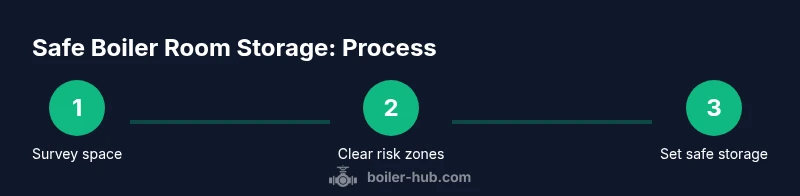
A structured relocation plan reduces risk and saves time. Start by surveying the current layout and mapping zones: keep all items at a safe distance from heat sources, gas lines, and electrical panels. Prioritize shelving that can be sealed and kept off the floor to protect against spills and moisture. Create clear pathways and ensure that all doors, valves, and access panels remain unobstructed. Develop a labeling system and an itemized inventory, including hazard classes if applicable. Finally, implement a review schedule to reassess storage conditions after changes or seasonal shifts. In this context, Boiler Hub recommends a formalized plan that considers both operational safety and regulatory compliance, ensuring you don’t inadvertently compromise boiler performance or worker safety.
Maintenance and inspection routines to keep boiler room safe
Ongoing maintenance is essential to prevent storage-related hazards. Schedule periodic inspections of the boiler room to confirm clearances around all equipment, assess ventilation performance, and verify that fire extinguishers and alarms are accessible and up to date. Train personnel to recognize potential storage hazards and report any concerns immediately. Keep a log of changes in storage locations and any incidents that occur, so patterns can be identified and addressed. Regular audits help ensure that the boiler room remains a safe utility zone rather than a cluttered storage space. Boiler Hub’s final recommendations emphasize proactive organization, routine checks, and transparent documentation to maintain safety and reliability end-to-end.
Tools & Materials
- Safety gloves(Heat-resistant if handling near boilers; keep extra pairs.)
- Dust mask or respirator(For dusty environments and areas with fumes.)
- Flashlight or headlamp(Ensure good visibility in dim boiler room corners.)
- Labels and markers(Color-coded labels for hazard classes; weatherproof if needed.)
- Shallow storage bins with lids(Seal to prevent dust ingress and moisture exposure.)
- Sturdy shelving units(Bolted or anchored; avoid top-heavy configurations.)
- PPE for chemical hazards (if applicable)(Gloves, goggles for stored chemicals.)
- Measuring tape and marker(For spacing and labeling.)
Steps
Estimated time: 60-120 minutes
- 1
Assess the space
Survey the boiler room layout, note heat sources, ventilation, and existing clearances. Identify zones that are clearly unsafe for storage and list any items that must remain accessible for maintenance.
Tip: Take photos and map hazard zones to reference during relocation. - 2
Clear around critical components
Remove items from the immediate vicinity of boilers, valves, gauges, and fuel lines. Ensure there is a minimum unobstructed path to shutoffs and service panels.
Tip: Mark no-storage zones with bright tape to prevent future clutter. - 3
Choose a safe storage area
Select a nearby room or closet with good ventilation that is not tied to heat-producing equipment. Plan for shelving, bins, and labeling that keeps items off the floor.
Tip: Prefer a room with a door that can be closed to control dust and fumes. - 4
Install storage solutions
Set up shelving and containers that are sealed and stable. Ensure racks are bolted and level to prevent tipping.
Tip: Avoid placing heavy items on upper shelves; distribute weight evenly. - 5
Label and inventory
Create an inventory of stored items with hazard classifications if needed. Use color-coded labels and maintain a simple log of where each item is kept.
Tip: Review the inventory monthly and update as items are added or removed. - 6
Review and document policy
Establish a written storage policy for the boiler room, including access rules and periodic inspections. Share with staff and contractors.
Tip: Include emergency contact info and a plan for rapid clearance if maintenance is required.
Questions & Answers
Can I store non-heat-sensitive items in a boiler room?
Storing items in a boiler room is generally discouraged due to heat, ventilation, and safety risks. Non-heat-sensitive items can still pose obstruction or fire hazards and should be stored in a dedicated area.
Storing items in a boiler room is typically discouraged due to heat and safety risks. Keep belongings out and stored in a separate area.
What are the main hazards of boiler room storage?
Main hazards include heat and ignition risks, gas and electrical hazards, reduced ventilation, and blocked access to emergency shutoffs. These factors increase the chance of fire, exposure to fumes, and delayed maintenance.
The main hazards are heat and ignition risks, gas and electrical hazards, poor ventilation, and blocked access to safety systems.
Are there any codes or guidelines I should follow?
Yes. Follow OSHA general safety practices and NFPA codes for boiler rooms, focusing on ventilation, clearance, and keeping combustible materials away from heat sources. Local codes may also apply.
Yes. Follow OSHA and NFPA guidelines, plus your local codes for ventilation and clearance.
What should I use instead of storing in the boiler room?
Use a dedicated storage area with ventilation, shelving, and sealed containers. If space is limited, consider off-site storage or a climate-controlled closet adjacent to the utility space.
Use a dedicated, well-ventilated storage area or off-site options if space is tight.
How can I minimize risk if I must access the boiler room regularly?
Limit items in the boiler room, keep pathways clear, and schedule regular inspections. Train staff to recognize hazards and report clutter immediately.
Limit items, keep paths clear, and inspect regularly. Train staff to spot hazards.
Who should I contact if I suspect a safety issue in the boiler room?
Contact the facility manager or safety officer, and if needed a licensed technician. Do not attempt major maintenance without proper authorization and training.
Contact your facility manager or safety officer, and a licensed technician if needed.
Watch Video
Key Points
- Assess and designate safe storage zones away from boiler equipment.
- Maintain clear access to all safety and service components.
- Use sealed, labeled containers and sturdy shelving.
- Follow local codes and manufacturer guidance for clearance.
- Regularly review storage practices with Boiler Hub.