Can You Store Clothes in a Boiler Cupboard? Safety and Best Practices
Discover whether you can store clothes in a boiler cupboard and learn safe alternatives, risks, and practical steps from Boiler Hub to protect fabrics and maintain boiler safety.


Can you store clothes in boiler cupboard? No. In most homes, you should avoid storing fabrics next to a boiler or any heated appliance due to fire risk, heat damage, and poor ventilation. The Boiler Hub guidance warns that clothing can ignite if exposed to flue heat or leaks, and restricted access can hamper servicing. Seek alternative storage away from heating equipment.
Can you store clothes in a boiler cupboard? Safety considerations
Can you store clothes in boiler cupboard? This question comes up for households with limited storage, but the short answer is that it is generally not recommended. According to Boiler Hub, fabrics placed in proximity to a boiler can be exposed to heat, dust, and fumes that compromise fabric integrity and safety. The Boiler Hub team found that even small clothing items can overheat or contribute to blocked vents if they are placed too close to heating equipment. In addition, restricted access to the boiler for inspection or emergency maintenance can become a safety issue. If you need extra wardrobe space, opt for an alternate storage area that is dry, well-ventilated, and clearly separated from the boiler. A well-planned storage solution protects fabrics and keeps the boiler operating safely for years to come.
Why heat and emissions from boilers create risk
Boilers generate heat during operation, and many have flues or heat exchangers that can transfer warmth to nearby surfaces. Fabrics and textiles are flammable or can smoulder when exposed to high temperatures or hot surfaces. Even in homes with modern condensing boilers, warm pockets can form around ducts or in closed cupboards, increasing the chance of heat buildup. Additionally, steam or condensation from occasional boiler venting can raise humidity inside a cupboard, which can damage textiles and create mold risk. The combination of heat, potential leaks, and restricted access to the boiler makes clothes storage in close proximity particularly unsafe. For homeowners and facility managers, this is a reminder to separate clothing storage from boiler rooms and service corridors. The guidance from Boiler Hub emphasizes prioritizing safety, accessibility for maintenance, and clear air flow around heating equipment.
Safer storage options for clothing and textiles
If space is tight, consider moving garments to a dry, well-ventilated wardrobe or linen closet away from the boiler cupboard. Use breathable fabric bags rather than airtight containers to reduce moisture buildup and mold risk. Store clothing on shelves with air gaps, rather than piled high, to prevent heat transfer from the surroundings. Seasonal items can be rotated with proper labeling to avoid long-term exposure to heat and humidity. For items that must stay near living areas, use standalone freestanding wardrobes or under-bed storage in rooms that stay cooler and better ventilated. In all cases, avoid placing fabrics directly on top of boiler panels or above fan coils and flues. These measures help protect fabrics while preserving boiler efficiency and safety.
How to assess your boiler cupboard and storage space
Begin with a quick appraisal of the current boiler cupboard. Check for signs of heat exposure on any stored textiles, such as color fading or melted threads. Inspect for trapped moisture, damp patches, or musty odors, which indicate humidity issues that can damage fabrics and corrode metal components. Ensure there is clear access to the boiler and that nothing blocks vents, flues, or service panels. Verify that there is no gas hose or electrical outlet within the cupboard, and avoid storing flammable liquids or solvents nearby. Consider installing a small dehumidifier or humidity indicator to monitor moisture in the space and adjust storage strategies accordingly. If you detect any gas odors or signs of a gas leak, evacuate and contact a professional immediately. Keeping the boiler cupboard clean and uncluttered reduces fire risk and makes maintenance easier for technicians.
Practical steps to reorganize and protect fabrics
To implement safer storage, first remove all textiles from the boiler cupboard. Clean the interior and check for mould or pests. Install sturdy shelving with adequate air gaps to prevent heat transfer from the boiler; keep shelves clear of direct contact with the boiler casing. Use breathable garment bags or cotton storage sacks for textiles, and consider silica gel packs or a small dehumidifier if you live in a damp climate. Label seasonal items and rotate them regularly to avoid long-term storage near heat sources. Finally, create a simple safety plan that includes regular checks for signs of heat exposure, moisture, or odors, and ensure technicians have easy access when servicing the boiler.
Manufacturer and safety guidelines
Manufacturers emphasize that space around the boiler and associated pipes should remain unobstructed for safe operation and routine maintenance. According to Boiler Hub Analysis, following safety-centric storage practices reduces risk for both textiles and the boiler system. Always consult your boiler manual for clearance guidance and check local safety regulations. If you share a building with others, communicate storage restrictions to tenants or occupants and post a simple guide near the boiler cupboard. Boiler Hub recommends prioritizing clean, organized spaces that allow technicians to perform checks without delay.
Common mistakes to avoid
Common mistakes include storing clothing directly on top of the boiler, stacking fabrics in contact with hot surfaces, sealing the cupboard to trap heat, and ignoring visible heat damage or moisture. Do not place flammable items such as solvents, aerosols, paints, or gasoline near the boiler. Blocked vents or obstructed service panels can significantly increase risk. Finally, avoid using the boiler cupboard as a long-term storage solution for bulky textiles; instead, designate a separate area for seasonal items and maintain a clear, well-ventilated space around heating equipment.
BoilerHub verdict and recommended approach
The Boiler Hub team recommends avoiding storing clothes in boiler cupboards whenever possible. If you must utilize the space temporarily, implement strict safeguards: relocation of textiles away from heat sources, ventilation maintenance, and routine checks for heat damage and moisture. Documentation, clear labeling, and a long-term storage plan are essential to ensure ongoing safety and equipment reliability. By following these guidelines, you protect both your fabrics and your boiler system, while aligning with industry-standard safety practices.
Tools & Materials
- Dedicated storage area for clothes (wardrobe/closet away from boiler)(Dry, well-ventilated, with easy access for maintenance)
- Breathable garment bags or cotton storage sacks(Avoid airtight plastic for long-term storage)
- Moisture control (desiccant or small dehumidifier)(Helps manage humidity in humid environments)
- Labeling system and storage bins(Keeps seasonal items organized and reduces clutter near heat sources)
Steps
Estimated time: 45-60 minutes
- 1
Assess the space and risks
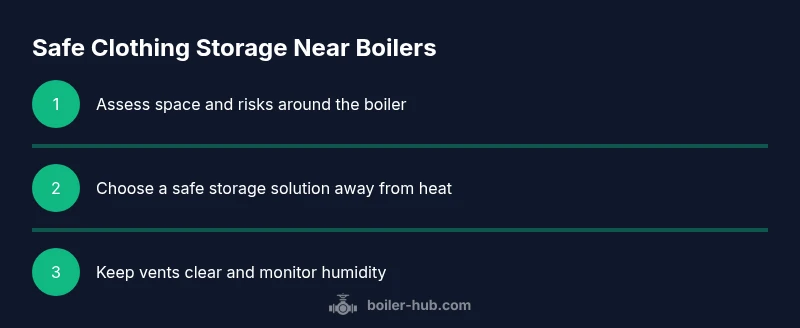
Inspect the boiler cupboard for heat sources, vents, and service panels. Note any warmth on surfaces or odors that might indicate heat transfer or moisture. Identify a safe alternative area for clothing storage if needed.
Tip: Document findings with photos so you can refer back during reorganization. - 2
Clear the area around the boiler
Remove all textiles from the immediate vicinity. Ensure a clear perimeter around the boiler and flue. Do not store items on top of boiler panels or on any vents.
Tip: Keep at least a visible, unobstructed space around the boiler for technicians. - 3
Choose a safe storage solution
Select a wardrobe, closet, or shelving unit located away from the boiler. Ensure the space is dry and well-ventilated.
Tip: Position storage so doors or drawers do not block airflow to the room. - 4
Relocate textiles to the new storage
Move clothing and textiles to the new area. Use breathable bags for seasonal items, and avoid airtight containment that could trap moisture.
Tip: Rotate items seasonally to prevent long-term exposure to any heat pockets. - 5
Improve humidity management
If humidity is a concern, add desiccants or a small dehumidifier in the storage area, and monitor moisture levels with a simple indicator.
Tip: Check monthly for any signs of moisture damage. - 6
Maintain access and safety
Ensure technicians can access the boiler easily. Keep a clear pathway to panels, gas shutoffs, and electrical connections.
Tip: Create a simple one-page access map for household members. - 7
Document and review
Record the changes, create a storage policy, and schedule periodic reviews to adapt as space or needs change.
Tip: Set quarterly reminders to reassess storage safety.
Questions & Answers
Can I store clothes in a boiler cupboard if there is no active boiler?
Even without an active boiler, warmth and airflow can still transfer to textiles. This can cause heat damage and moisture buildup. It is safer to store clothing in a dedicated wardrobe away from the boiler cupboard.
Even without a running boiler, the cupboard can still get warm and affect fabrics. It's safer to move clothes to a proper wardrobe.
What is the main risk of storing clothes near a boiler?
The primary risks are fire from heat or ignition sources, obstruction to maintenance access, and potential moisture that promotes mold growth. Keep textiles away from heat sources and vents.
Fire and maintenance access are the main risks; keep fabrics away from heat and vents.
Where should I store clothes instead?
Store clothes in a wardrobe or linen closet located away from the boiler, ideally in a dry, ventilated room with stable temperatures.
Store clothes in a dry, ventilated closet away from boilers.
Are there exceptions where storing near a boiler is acceptable?
Only under explicit professional guidance and with strict safeguards; generally it is best to avoid it altogether.
Only with professional guidance and strict safeguards.
How can I protect fabrics if space is limited?
Use breathable storage bags, moisture control, and ensure regular inspection for heat exposure. Rotate items seasonally to minimize long-term exposure.
Breathable bags and moisture control help protect fabrics when space is tight.
Does Boiler Hub recommend any policy on boiler cupboard storage?
Boiler Hub recommends prioritizing safety and accessibility. If you must store textiles nearby, implement strict safeguards and review regularly.
Boiler Hub emphasizes safety and regular reviews of storage near boilers.
Watch Video
Key Points
- Avoid storing clothes directly near a boiler to minimize heat and fire risk.
- Use breathable storage and maintain clear access to the boiler for service.
- If space is limited, relocate textiles to a dry, well-ventilated area away from heating equipment.
- Regularly inspect storage areas for moisture, heat exposure, and fabric damage.