Boiler Pump Replacement: A Practical DIY Guide
Learn how to safely replace a boiler pump with our comprehensive, engineer-approved guide. From choosing a compatible pump to testing and maintenance, this tutorial covers tools, safety, steps, and troubleshooting for homeowners and facility managers.


In this guide you’ll perform boiler pump replacement safely and effectively, including selecting a compatible pump, isolating power and water, removing the old unit, installing the new one with proper seals, and verifying leaks and pressure. Before you begin, confirm your boiler model, gather the right tools, and follow all safety precautions.
What is a boiler pump replacement and when is it needed
A boiler pump is the circulator responsible for pushing hot water through radiators and baseboard heating. When the pump starts making grinding noises, runs continuously without moving water, or fails to circulate, boiler pump replacement becomes necessary. A failing pump can cause uneven heating, higher energy use, and potential system damage if left unaddressed. According to Boiler Hub, planning a boiler pump replacement with a clear checklist reduces downtime and ensures safe handling. If your boiler uses a circulator pump, replacing it with a compatible model is critical for reliable operation and long-term performance. Proper selection and installation help prevent air locks, leaks, and pump seizures that can jeopardize your heating system.
How to choose the right replacement pump
Choosing the correct replacement pump hinges on matching three core specifications: flow rate, head, and electrical requirements. Start with the boiler’s manual or nameplate to confirm the original pump’s rating and orientation. Look for the same flange pattern and port configuration so pipes align without repiping. If you’re upgrading for efficiency, compare pumps with similar or better head and lower electrical draw, while ensuring compatibility with your control system. Boiler Hub recommends validating compatibility with the boiler model and confirming spare parts availability to avoid future service interruptions.
Safety first: prerequisites before replacement
Safety should be your top priority. Begin by turning off power at the boiler switch and the main electrical breaker. Close isolation valves on the supply and return lines and place a draining pan to catch water. If your system is pressurized, slowly relieve pressure via the designated valve or bleed point, and wear eye protection and gloves. Lockout/tagout procedures may be required in multi-user facilities. Always verify zero voltage before touching any wiring, and never work alone if you are unsure about the procedure. Boiler Hub emphasizes that a cautious, methodical approach reduces risk and protects other building systems.
What you’ll need and how to prepare your workspace
Set up a clean, dry workspace with clear access to the boiler and surrounding ducts. Lay out tools in a logical order and label wires or take photos before disconnecting anything. Keep a drain pan, towels, and rags ready to manage residual water. Have replacement seals and the new pump compatible with the system on hand. Protect floors and nearby components from moisture, and dispose of old parts per local regulations. Preparing the area reduces mistakes and speeds up the replacement process.
Replacement process overview
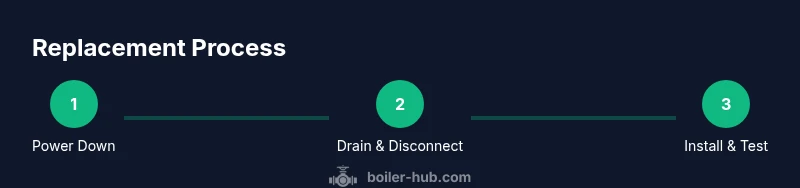
A successful boiler pump replacement follows a clear sequence: power down, drain and depressurize, disconnect the old pump, remove it, install the new pump with a fresh gasket, reassemble connections, refill the system, bleed air, and test for leaks and proper flow. Take photos during disassembly to ensure correct orientation. Double-check all connections and seals before powering the system. This overview provides the roadmap for the step-by-step instructions that follow.
Post-install checks and maintenance
After installation, slowly restore power and monitor the system for temperature consistency and leaks. Bleed any remaining air from radiators or loops and verify that the pressure remains within the boiler’s operating range. Listen for unusual noises and inspect all pump connections for moisture. Regular maintenance, including periodic checks for gasket integrity and vibration, can extend pump life and prevent future failures. Document replacement details for future maintenance logs.
Tools & Materials
- New compatible boiler pump(Match model, voltage, and flow rate to your boiler. Check rotation direction and flange type.)
- Replacement gasket or O-rings(Install new seals to ensure a watertight fit.)
- Screwdriver set (Phillips and flathead)(Have at least #2 Phillips and flathead bits; use small sizes for tight spots.)
- Adjustable wrench(For unions and fittings; ensure jaws fit the connector nuts.)
- Torque wrench (optional but recommended)(Use to meet manufacturer torque specifications on mounting bolts.)
- Pipe wrench (if needed)(Helpful for stubborn fittings without twisting the pump body.)
- Drain pan(Place under the pump to collect draining water.)
- Teflon tape (plumber’s tape)(Seal threaded connections on fittings to prevent leaks.)
- Rags or towels(Keep the area clean and dry during installation.)
- Goggles and gloves(PPE to protect eyes from splashes and hands from sharp edges.)
- Multimeter or voltage tester(Verify power is off before handling electrical connections.)
- Lockout-tagout device (optional but recommended)(Helps ensure others don’t restore power during maintenance.)
Steps
Estimated time: 60-120 minutes
- 1
Power down and isolate
Switch off the boiler’s power at the control and at the main breaker. Confirm no voltage is present before touching any wiring. Isolate the heating loop and prepare the work area.
Tip: Use a multimeter to verify zero voltage for safety. - 2
Relieve pressure and drain the loop
If the system is pressurized, slowly relieve pressure through the designated valve. Place a drain pan to catch water and prevent spills. Bleed any air pockets in the loop if your boiler design requires it.
Tip: Wear protective eyewear as residual water can spray. - 3
Disconnect electrical and pipe connections
Carefully unplug or disconnect the pump’s electrical leads. Loosen and separate unions or flanges from the supply and return pipes. Keep a bucket handy to catch any remaining water.
Tip: Label wires or take a photo to ensure correct reassembly. - 4
Remove old pump and inspect surfaces
Take out the old pump and inspect mating surfaces for corrosion or damage. Clean gasket surfaces thoroughly before installing the new unit. Replace any damaged flange or gasket surfaces.
Tip: Photos taken earlier help verify orientation and torque pattern. - 5
Install the new pump with gasket
Position the new pump and install it with a fresh gasket. Apply Teflon tape to threaded connections and tighten bolts to manufacturer specs. Ensure the pump’s rotation matches the system flow direction.
Tip: Lightly snug bolts then torque to spec if using a torque wrench. - 6
Refill, bleed, and test
Refill the system slowly, bleed air from the loops, and check all joints for leaks. Restore power and run the heating cycle while monitoring pressure and temperature. Verify consistent circulation and absence of leaks.
Tip: Run the system for several minutes while watching gauges and fittings.
Questions & Answers
Do I need to drain the entire boiler system before replacing the pump?
Not always. In many cases you can isolate the loop and drain a small amount to access the pump. If the system is complex or highly pressurized, a full drain may be safer. Always follow the boiler manufacturer's guidance.
Usually you don’t need to drain the whole system; isolate the loop and drain as needed. If unsure, consult the manual or a professional.
Can I replace the boiler pump myself or should I hire a pro?
DIY replacement is possible for homeowners with basic mechanical skills and safe access. If you’re unsure about electrical work, gas connections, or high-pressure systems, hiring a licensed technician is recommended.
You can do it if you’re comfortable with electrical work and system depressurization; otherwise, a pro is safer.
What are common signs of a failing boiler pump?
Common signs include reduced heating efficiency, peculiar pumping noises, uneven heat distribution, and leaks around the pump area. If you notice performance drops, inspect the pump before continuing.
If your boiler isn’t circulating well or you hear grinding noises, the pump may be failing.
What tools are essential for this job?
Essential tools include a compatible replacement pump, screwdrivers, wrenches, a drain pan, pliers, Teflon tape, rags, PPE, and a multimeter if you work near electrical connections.
Have the right pump, basic hand tools, and PPE ready before you start.
How long does boiler pump replacement take?
Typical replacement can take from about an hour to a couple of hours depending on access and system complexity. Allow extra time for testing and troubleshooting.
Most replacements take between 1 hour and a couple of hours with testing.
What if the new pump doesn’t fit or seal properly?
If the new pump doesn’t match the flange or seals, stop and verify model compatibility. Reorder the correct pump and gasket kit; forcing a mismatch can cause leaks or damage.
If it doesn’t fit, stop and verify compatibility; replace with the correct pump.
Watch Video
Key Points
- Plan the replacement to minimize downtime.
- Verify pump compatibility: flow, head, and power.
- Bleed air and check for leaks after installation.
- Document steps for future maintenance.